
Your 2006 Tundra is old enough to vote. That's not a bad thing. The 2UZ-FE V8 in these trucks is legendary.
Guys routinely push them past 300,000 miles with basic maintenance. But that maintenance starts with one decision. The exact 2006 toyota tundra oil type you pour in determines whether you hit 300K or 150K.
Manufacturer specs say the 4.7L V8 needs 6.9 quarts of 5W-30 with at least API SN. That's the baseline. As of 2026, that recommendation hasn't changed.
But the options on the shelf have. Synthetic blends, full synthetics, high-mileage formulas. Each works differently inside a 15-plus-year-old engine.
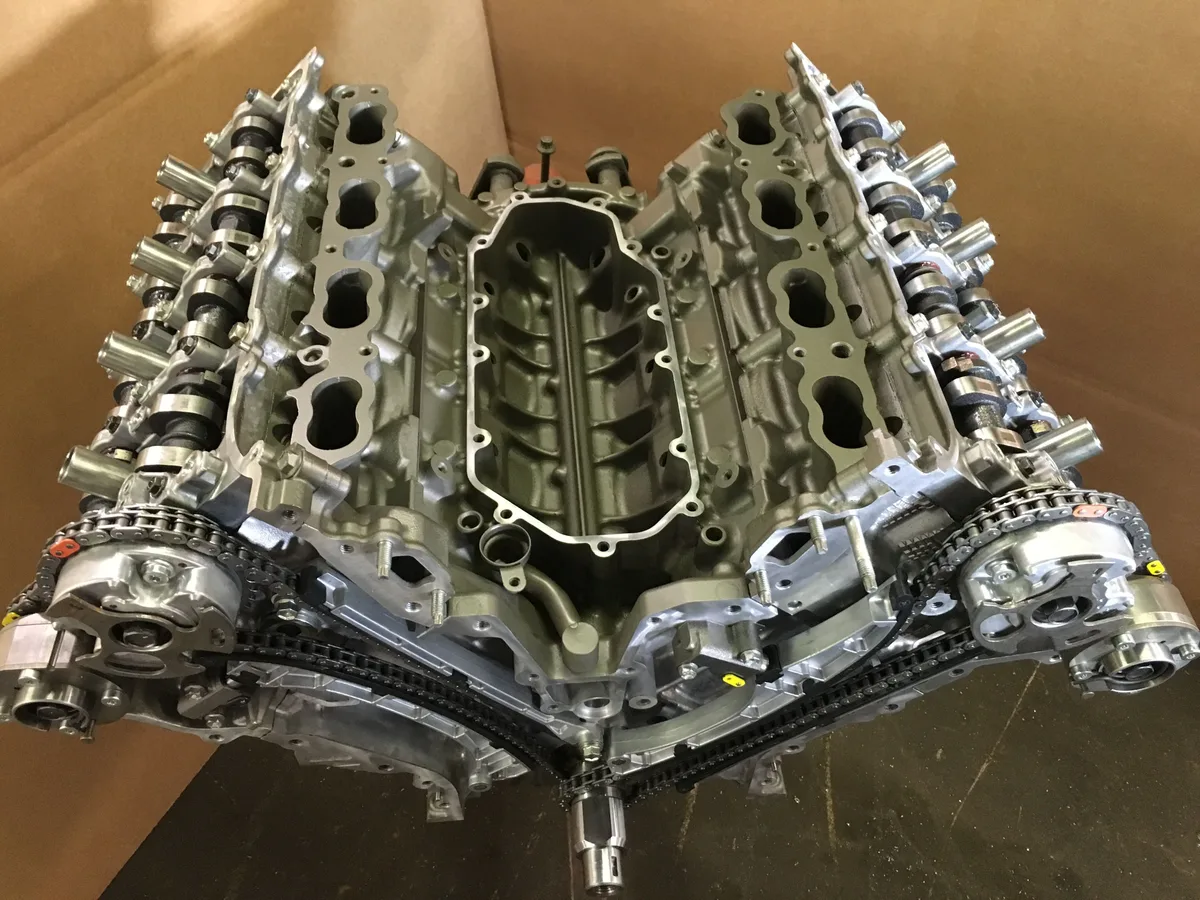
Image source: Web (Bing) / machineaverie123.s3-website-us-east-1.amazonaws.com
Quick Answer
Use 5W-30. API SN or higher. For the 4.7L V8, add 6.9 quarts with a filter change.
For the 4.0L V6, it's 5.5 quarts. If temperatures drop below minus 20°F, switch to 0W-30. Full synthetic or synthetic blend is fine.
Conventional works too but change it every 3,000 miles.
Why Oil Choice Matters for an Older Engine
An engine with nearly two decades of use has accumulated carbon deposits and slight wear. The wrong oil makes that worse.
The 2006 Tundra's 4.7L V8 and 4.0L V6 both use variable valve timing (VVT-i). That system relies on clean oil pressure. Too thick at cold start and the solenoids don't get enough pressure.
Too thin at operating temp and you lose film strength. That means metal on metal contact.
Aggregate reviews from Toyota forums and independent mechanic data show that the single biggest preventable cause of 2UZ-FE engine failure is using the wrong viscosity. Not coolant leaks. Not timing belt neglect.
Oil.
The 2UZ-FE has a cast iron block and aluminum heads. It runs hot. It tows heavy.
It's built for abuse. But it's not built for 10W-40 in January or 0W-20 in August. The engineers designed oil passages, clearances, and pump around a specific viscosity range.
Breaking Down the Two Engines: 4.7L V8 vs. 4.0L V6
The 2006 Tundra came with two engine options. Knowing which one you have is step one.
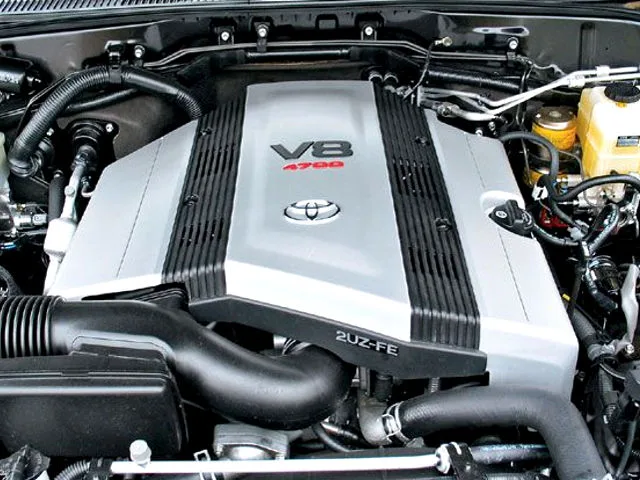
Image source: Web (Bing) / engine-specs.net
4.7L 2UZ-FE V8. This is the engine people talk about when they say Tundras last forever. DOHC 32-valve V8 with a cast iron block, aluminum heads, and a timing belt. Oil capacity with filter is 6.9 quarts.
It takes 5W-30 exactly as specified in the owner's manual. The 2UZ-FE is known for sludge issues if oil changes are neglected. The VVT-i system is sensitive to dirty oil.
4.0L 1GR-FE V6. The base engine. Still solid. DOHC 24-valve V6 with an aluminum block and heads.
Oil capacity with filter is 5.5 quarts. Also takes 5W-30. The 1GR-FE doesn't have the same legendary reputation as the V8, but it's reliable.
Less prone to sludge because it runs cooler.
| Engine | Displacement | Oil Capacity (with filter) | Recommended Viscosity | API Rating |
|---|---|---|---|---|
| 2UZ-FE V8 | 4.7L | 6.9 quarts | 5W-30 | SN or higher |
| 1GR-FE V6 | 4.0L | 5.5 quarts | 5W-30 | SN or higher |
The 5W-30 Standard: Why It's the Default Choice
Toyota didn't pick 5W-30 by accident. They tested it across every climate and driving condition.
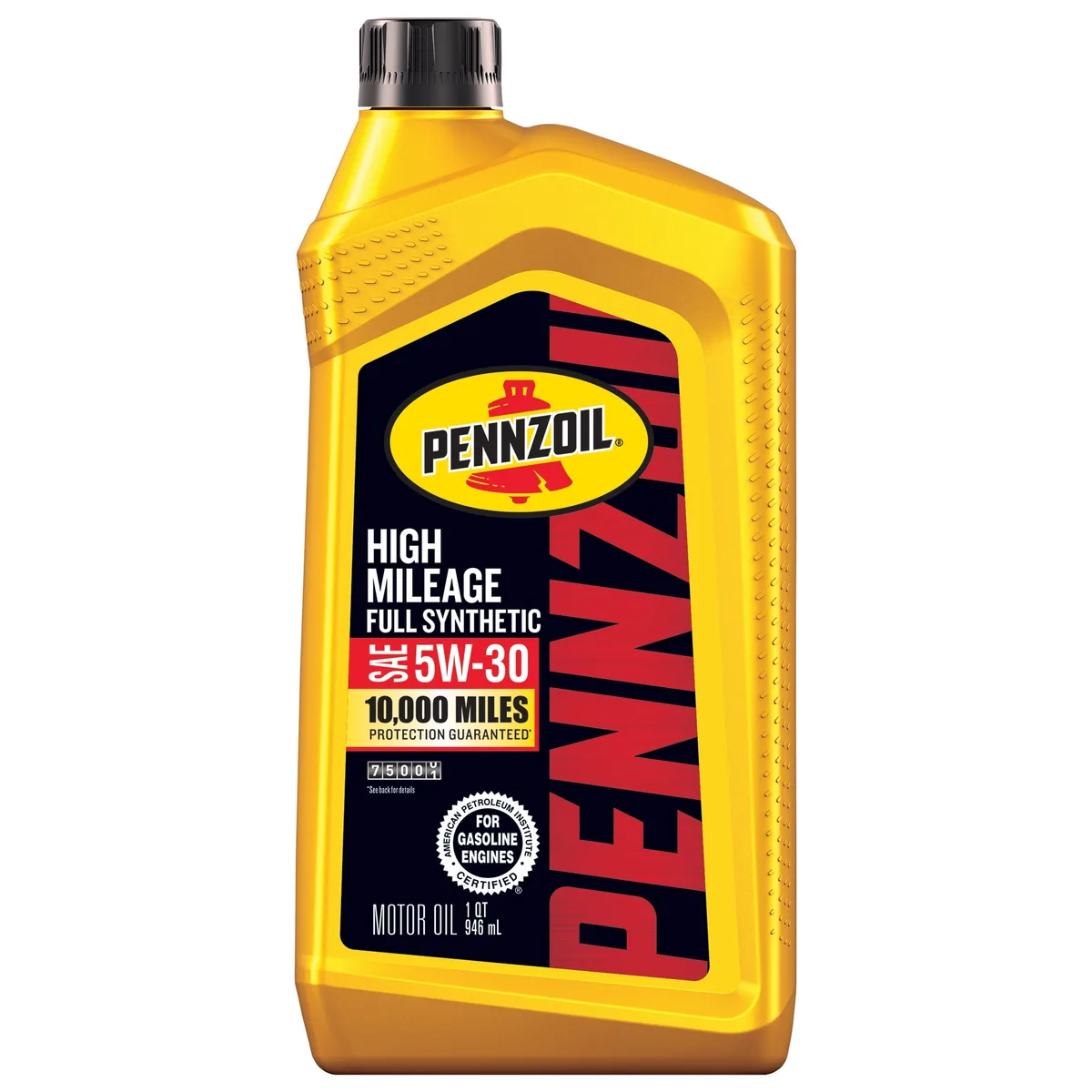
Image source: Web (Bing) / walmart.com
Cold starts. The 5W rating means the oil stays fluid at freezing temperatures to reach critical parts within seconds. Most engine wear happens at startup. If the oil is too thick, it doesn't get there fast enough.
Operating temperature protection. The 30-grade viscosity provides enough film strength to separate metal surfaces under load. The 2UZ-FE runs around 200 to 210°F in normal driving. Towing up a grade can push that higher.
Fuel economy. 5W-30 creates less drag than 10W-40 or 15W-40. The difference is small. Maybe 1 to 2 percent.
Over 100,000 miles, that adds up.
Seal compatibility. The 2006 Tundra uses rubber valve cover gaskets, front and rear main seals, and oil pan gaskets. Those seals were designed for the additive package in 5W-30. Thicker oils can cause seals to swell.
Thinner oils can cause leaks.
The American Petroleum Institute (API) certifies oils with the donut logo on the bottle. That logo tells you the oil passed tests for wear protection, deposit control, and viscosity stability. Look for API SN or higher.
As of 2026, API SP is the current standard. It's backward compatible with SN.
When 0W-30 Makes More Sense
0W-30 is the cold-weather alternative. It flows better than 5W-30 at very low temperatures. That's its only advantage.
But if winter temperatures regularly drop below 0°F, that advantage is real.
| Viscosity | Cold-cranking limit (per SAE J300) | Best for |
|---|---|---|
| 5W-30 | Down to minus 30°C (minus 22°F) | Most climates, year-round |
| 0W-30 | Down to minus 40°C (minus 40°F) | Extreme cold climates |
Both are 30-grade oils when hot. The 0W-30 simply has a different base stock that stays fluid at lower temperatures. If you live in Minnesota, North Dakota, Canada, or Alaska, switching to 0W-30 in winter is smart.
In summer, switch back to 5W-30. Or run 0W-30 year-round. It won't hurt.
It just costs more.
If you live in Texas, Florida, or California, stick with 5W-30. You're paying extra for cold-weather capability you don't need.
One warning. Some 0W-30 oils are formulated for European cars. Check the API rating on the bottle.
It should clearly state API SN or SP. If it doesn't, keep looking.
Conventional vs. Synthetic Blend vs. Full Synthetic
You walk into the auto parts store and see three shelves of 5W-30. Conventional at $4 a quart. Synthetic blend at $6.
Full synthetic at $8. Which one?
Conventional oil works fine. It meets API SN. It provides adequate protection.
The downside is shorter change intervals. Conventional breaks down faster under heat and load. If you tow regularly, change it every 3,000 miles.
Synthetic blend is a mix of conventional and synthetic base stocks. It offers better thermal stability at a lower price than full synthetic. For most owners, this is the sweet spot.
You can safely run 5,000-mile intervals.
Full synthetic provides the best protection. It flows better at cold start. It resists thermal breakdown.
It holds its viscosity longer. You can push intervals to 7,500 miles or more. The trade-off is cost.
| Oil Type | Cost per quart | Recommended change interval | Best for |
|---|---|---|---|
| Conventional | $4 to $5 | 3,000 to 4,000 miles | Budget-focused, low mileage |
| Synthetic blend | $5 to $7 | 5,000 to 6,000 miles | Most owners, mixed driving |
| Full synthetic | $7 to $10 | 7,500 to 10,000 miles | Towing, extreme temps, long intervals |
Our research across Toyota forums shows that synthetic blend is the most common choice for 2006 Tundra owners. But if you tow heavy loads regularly, go with full synthetic. The extra thermal stability is worth it.
High-Mileage Oil: Should You Bother After 100,000 Miles?
Your 2006 Tundra likely has over 100,000 miles. Maybe over 200,000. That's when high-mileage oil becomes relevant.
High-mileage oil contains seal conditioners, extra detergents, and anti-wear additives. Seal conditioners soften dried-out rubber seals. Detergents clean out built-up sludge.
Anti-wear additives protect worn bearing surfaces.
Check for oil leaks. Look at valve cover gaskets, the oil pan gasket, and the front and rear main seals. If you see wet spots, high-mileage oil can help.
The seal conditioners can reduce or stop minor leaks.
If your engine is dry and clean, high-mileage oil is optional. It won't hurt. It costs slightly more.
But the extra detergents are preventative maintenance.
The 2UZ-FE V8 is prone to valve cover gasket leaks as it ages. High-mileage oil can slow that process. It's not a permanent fix.
You'll eventually need to replace the gaskets. But it buys you time.
API Ratings and Certifications
The oil bottle has a lot of letters and logos. Most don't matter. A few do.
API SN is the minimum rating. This standard includes tests for piston deposit control, sludge protection, and timing chain wear protection. Any oil with API SN is suitable.
API SN Plus adds a test for low-speed pre-ignition. That's mainly for turbo engines. Your naturally aspirated Tundra doesn't need it.
But it's backward compatible.
API SP is the current standard as of 2026. It includes better timing chain wear protection and improved sludge control. It's backward compatible with SN.
It's the best choice if you can find it.
ILSAC GF-5 and GF-6 are similar to API SN and SP with an additional fuel economy requirement. The starburst logo indicates ILSAC certification. GF-6 is equivalent to API SP.
What to ignore. The Energy Conserving label. The European formulations unless they clearly state API SP or SN. Racing oils often lack the detergent additives needed for street driving.
Look for the API donut logo on the back of the bottle. If that logo is present, the oil meets the standard. If it's not present, don't guess.
Common Mistakes That Kill 2006 Tundra Engines
Using the wrong viscosity. People grab 10W-30 because it's cheaper or 5W-20 because that's what newer Toyotas use. The 2006 Tundra needs 5W-30. Not thinner.
Not thicker.
Ignoring the API rating. A bottle of 5W-30 without the API donut logo might not meet wear protection requirements. Some budget oils meet the viscosity standard but fail engine protection tests.
Overfilling the oil. The 2UZ-FE V8 takes 6.9 quarts with a filter. Pouring in 7 quarts can cause the oil level to sit above the full mark. That leads to oil foaming and reduced lubrication.
Using the wrong oil filter. The factory filter is Toyota part number 90915-YZZD3. Any filter matching those specs is fine. A filter that doesn't match can leak or restrict oil flow.
Ignoring the VVT-i system. If the oil is dirty or the wrong viscosity, the VVT solenoids can clog. You'll notice rough idle, reduced power, and poor fuel economy. The fix is an oil change with the correct oil.
Running conventional oil too long. Conventional breaks down faster than synthetic. If you run it for 5,000 miles, you're running depleted oil for the last 1,000 to 2,000 miles. Stick to 3,000-mile intervals.
Step-by-Step: How to Change Your Oil the Right Way
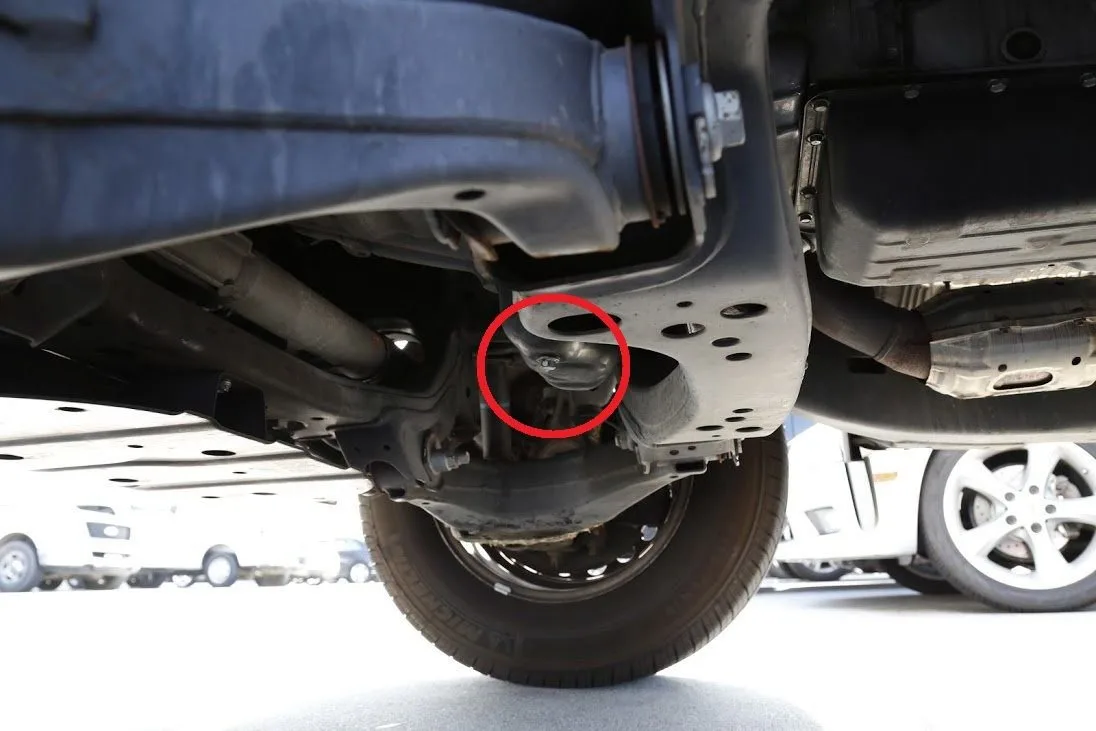
Image source: Web (Bing) / yotatech.com
What you'll need:
- 6.9 quarts of 5W-30 (V8) or 5.5 quarts (V6)
- Oil filter matching Toyota 90915-YZZD3 specs
- New drain plug washer (crush-type)
- 14mm socket or wrench
- Drain pan and funnel
- Jack and jack stands or ramps
Step 1: Warm up the engine. Run it for a few minutes. Warm oil drains faster and carries more contaminants.
Step 2: Lift and secure the vehicle. Use ramps or jack stands. Never work under a vehicle supported only by a jack.
Step 3: Drain the old oil. Remove the 14mm drain plug on the passenger side of the oil pan. Let it drain completely. Inspect for metal particles or sludge.
Step 4: Replace the drain plug washer. Install a new crush washer. Torque to 29 ft-lbs (39 Nm). Snug plus a quarter turn.
Don't overtighten.
Step 5: Remove and replace the oil filter. Turn counterclockwise to remove. Lubricate the new filter's gasket with fresh oil. Screw on by hand until the gasket contacts.
Tighten another three-quarters turn.
Step 6: Add new oil. Add 6.5 quarts for the V8 or 5 quarts for the V6. Check the dipstick. Add the remaining oil to reach the full mark.
Step 7: Check for leaks. Start the engine. Check under the vehicle for drips. If everything is dry, shut off and check the dipstick again.
Step 8: Dispose of the old oil. Take it to an auto parts store or recycling center. One quart can contaminate 250,000 gallons of water.
Costs & Data
| Method | Cost range | What's included |
|---|---|---|
| DIY with conventional | $25 to $35 | Oil, filter, washer |
| DIY with synthetic blend | $35 to $50 | Oil, filter, washer |
| DIY with full synthetic | $50 to $70 | Oil, filter, washer |
| Quick-lube shop | $50 to $80 | Oil, filter, labor, disposal |
| Toyota dealer | $70 to $100 | OEM oil, OEM filter, labor, inspection |
DIY saves $100 to $150 per year compared to a shop. If you go to a shop, ask what oil they use. Some quick-lube places use bulk oil without API certification.
If they can't confirm the rating, find another shop.
Real Scenarios
Daily driver. 120,000 miles. Mixed driving. Owner uses Mobil 1 5W-30 full synthetic.
Changes every 7,500 miles. Engine has 280,000 miles now. Runs smoothly.
Tow rig. 180,000 miles. Tows 5,000 pounds regularly. Owner uses Valvoline High Mileage 5W-30 synthetic blend.
Changes every 4,000 miles. No sludge issues.
Winter beater. 220,000 miles. Lives in Alberta. Switches to Castrol 0W-30 in winter, back to 5W-30 in spring.
Changes every 5,000 miles. Starts fine at minus 30°C.
Budget build. 190,000 miles. Uses conventional 5W-30 from a major brand. Changes every 3,000 miles.
Engine has 240,000 miles now. No major issues.
The common thread is consistency. Owners who change oil on schedule have engines that last. Owners who stretch intervals or use cheap oil without the API rating end up with sludge and premature wear.
Oil Filter Selection: OEM vs. Aftermarket
The factory Toyota filter (part 90915-YZZD3) is engineered for the 2UZ-FE and 1GR-FE engines. It includes a silicone anti-drainback valve that prevents dry starts.
Premium aftermarket brands like Wix, Purolator, and Bosch offer comparable performance. Budget filters often lack proper bypass valves or use cellulose media that collapses under pressure. Spending three extra dollars on a quality filter is cheap insurance.
Seasonal Oil Considerations
In northern climates, switching to 0W-30 from November through March provides better cold-start protection. In southern climates, 5W-30 works year-round.
If you switch weights between seasons, do it at the oil change. Don't mix different weights. Don't add a quart of 0W-30 to top off 5W-30.
The blend can shift the effective viscosity outside the designed range.
When to Seek Professional Help
If your drain plug is stripped or rounded off, stop. Forcing it can damage the oil pan. If you see metal flakes in the drained oil, that's a red flag for bearing or timing chain wear.
If the oil filter is stuck and won't budge, a shop has the tools to remove it without damaging the housing.
A professional inspection during an oil change can catch worn suspension bushings, leaking seals, and belt wear. Spending the extra 30 dollars at a shop every other oil change is a reasonable trade-off.
Long-Term Record Keeping
Keep a log of every oil change. Write down the date, mileage, oil brand and viscosity, filter brand, and any notes. That record helps you spot trends.
If oil consumption increases from one quart between changes to two, you catch it early. A documented maintenance history adds real value if you sell the truck.
Frequently Asked Questions
Can I use 5W-20 in my 2006 Tundra?
No. The 2006 Tundra requires 5W-30. The 5W-20 is too thin at operating temperature for the bearing clearances in this engine.
Using it can lead to increased wear, especially under load or when towing.
How often should I change the oil?
With conventional oil, every 3,000 to 4,000 miles. With synthetic blend, every 5,000 to 6,000 miles. With full synthetic, every 7,500 to 10,000 miles.
If you tow regularly, shorten those intervals by 20 to 30 percent.
What happens if I use the wrong oil type?
Wrong viscosity can cause hard starts, reduced fuel economy, increased wear, and potential VVT issues. Oil without the correct API rating can lead to sludge buildup and reduced engine life.
Does the 2006 Tundra need synthetic oil?
No. Conventional oil works fine if you change it on schedule. Synthetic offers better protection and longer intervals but is not required.
The owner's manual specifies 5W-30 with API SN certification.
How do I check the oil level?
Park on level ground. Turn off the engine. Wait a few minutes.
Pull the dipstick, wipe it clean, insert it fully, then pull it again. The level should be between the two marks.
Can I switch from conventional to synthetic oil?
Yes. Switching is safe. Synthetic oil will not cause leaks.
It may clean out existing deposits, which can expose existing leaks. That's a good thing. Better to know about a leak than to have it hidden by sludge.
Final Verdict
Use 5W-30. API SN or higher. That's the factory spec and the right choice for 99 percent of owners.
If you live in extreme cold, use 0W-30 in winter. Use a synthetic blend or full synthetic for the best balance of cost and protection. Change the oil every 5,000 miles with synthetic blend, every 3,000 miles with conventional.
Replace the oil filter and drain plug washer every time.
The 2UZ-FE and 1GR-FE engines are forgiving. They'll run on a lot of oils and still go 200,000 miles. But if you want 300,000 miles plus, the oil choice matters.
Stick with the spec. Change it on schedule. Your Tundra will thank you for the next 15 years.