
If you own a 2013 Toyota Venza, the single most important thing you can do for its engine is use the right oil. Using the wrong 2013 toyota venza oil type can lead to sludge buildup, poor fuel economy, and in the worst cases, premature engine failure. Fortunately, this is one of the easiest things to get right once you know the spec.
Manufacturer specifications indicate the Venza requires 0W-20 full synthetic oil that meets API SN certification and ILSAC GF-5 standards. That spec applies to both engine options found in the 2013 model year. As of 2026, this remains the recommended viscosity, though there is one safe alternative we will cover.
Let us walk through exactly what you need, engine by engine.
Quick Answer
The 2013 Toyota Venza requires 0W-20 full synthetic motor oil. This applies to both the 2.7L four-cylinder and the 3.5L V6. The oil must carry the API Starburst certification seal and meet ILSAC GF-5 standards.
Capacity varies by engine at 4.5 quarts for the four-cylinder and 6.4 quarts for the V6. Do not substitute conventional oil or a different viscosity without understanding the risks.
What Oil Does a 2013 Venza Take? The Quick Answer
The short answer is 0W-20 full synthetic motor oil. Toyota engineered the Venza's dual VVT-i variable valve timing system specifically around this viscosity. That thin oil flows quickly during cold starts, reaching critical engine components like the timing chain tensioners and VVT actuators before thicker oil would.
0W-20 Synthetic – The Official Spec
The owner's manual for the 2013 Venza lists 0W-20 as the preferred viscosity. This is not a suggestion. Toyota designed the piston ring clearances, oil pump volume, and bearing tolerances around this weight.
When you pour in 0W-20 synthetic, the oil pressure stays within the engineered range at both idle and highway speeds.
You need to look for two things on the bottle label. First, the API Starburst certification mark. Second, the ILSAC GF-5 rating.
Any major brand that carries those marks will protect your engine properly. Think Mobil 1, Pennzoil Platinum, Castrol EDGE, or Valvoline Advanced. The brand matters less than the certification.
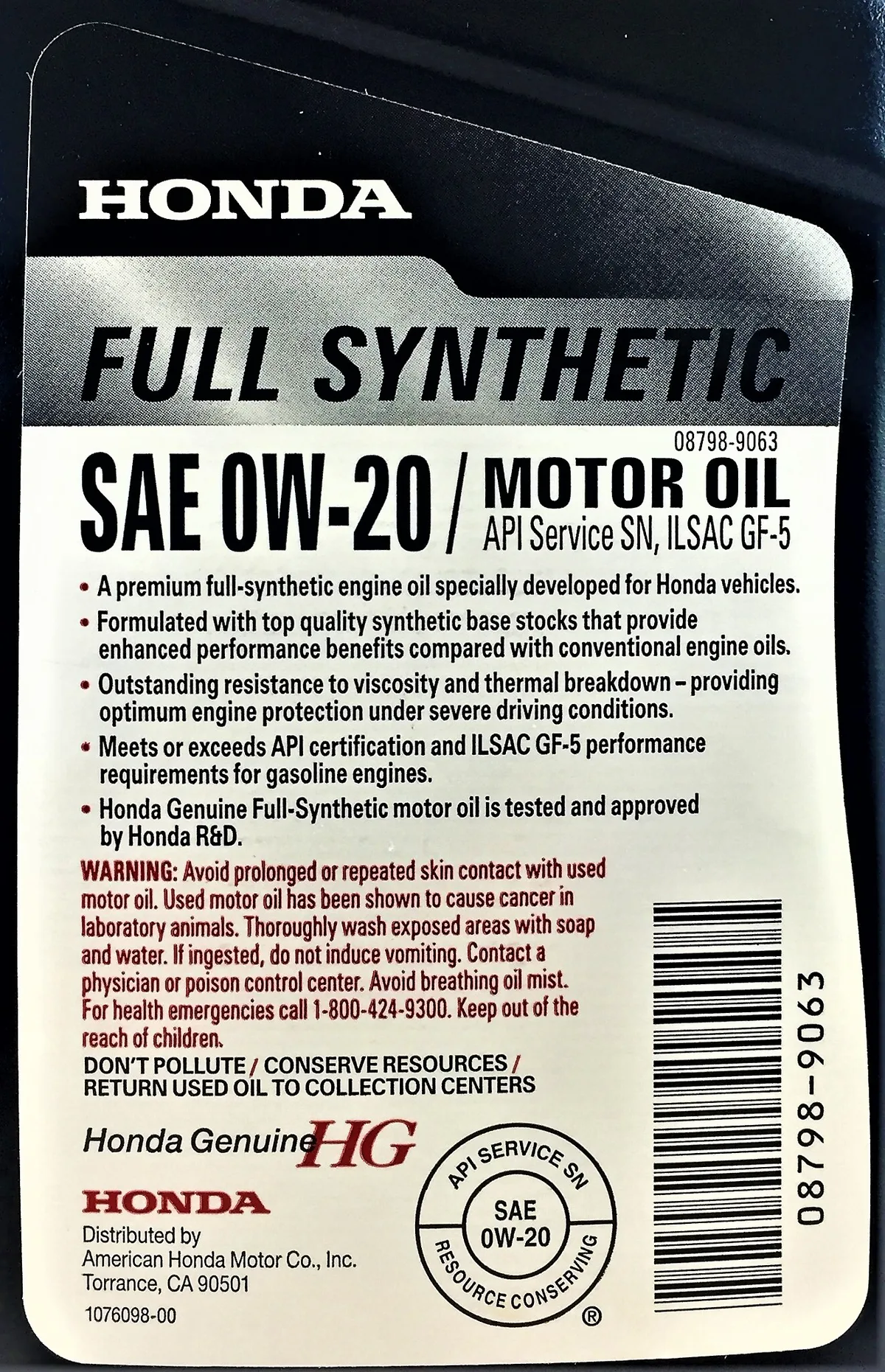
Image source: Web (Bing) / micoope.com.gt (Web image (fair-use with source credit))
5W-30 – When It's Safe to Use Instead
Toyota does list 5W-30 as an acceptable alternative for the 2013 Venza. This appears in the owner's manual under a specific note. You can use 5W-30 if 0W-20 is not available.
But there is a catch. You should switch back to 0W-20 at the next oil change.
Our research indicates that 5W-30 is thicker at startup temperatures. That means slightly slower oil flow to the timing chain and VVT components during the first few seconds after ignition. In warm climates this is rarely an issue.
In cold winter conditions, especially below freezing, the extra thickness can cause noticeable timing chain rattle on startup.
If you live in a very hot climate like Arizona or Texas and do significant towing, some owners and mechanics prefer 5W-30 for the added high-temperature film strength. That is a judgment call. Manufacturer specs still recommend 0W-20 regardless of climate.
2.7L Four-Cylinder vs 3.5L V6 – Any Difference?
The oil type is identical for both engines. Both use 0W-20 full synthetic with API SN and ILSAC GF-5 certification. The only difference is capacity and filter part numbers.
The 2.7L 1AR-FE engine holds 4.5 quarts with filter. The 3.5L 2GR-FE engine holds 6.4 quarts with filter.
The filter for the 2.7L is a cartridge-style filter, not a spin-on can. You need the OEM Toyota filter part number 04152-YZZA1 or a comparable aftermarket equivalent. The 3.5L V6 uses a traditional spin-on metal can filter.
Part number 04152-38020 or a quality aftermarket replacement.
The Two Engines: Oil Capacity and Viscosity by the Numbers
Let us get the exact specs on paper. Having these figures handy makes buying oil easier and prevents overfilling or underfilling, both of which can damage your engine.
1AR-FE (2.7L) – Capacity and Filter Specs
| Spec | Value |
|---|---|
| Engine code | 1AR-FE |
| Oil type | 0W-20 full synthetic |
| Capacity with filter | 4.5 quarts (4.3 liters) |
| Capacity without filter | 4.2 quarts (4.0 liters) |
| API certification | SN or newer |
| ILSAC standard | GF-5 or newer |
| Oil filter type | Cartridge (inside housing) |
| OEM filter part | 04152-YZZA1 |
| Drain plug torque | 33 ft-lbs |
| Filter housing torque | 18 ft-lbs |
The cartridge filter on the four-cylinder requires a special socket, usually a 64.5mm or 65mm cap-style tool. Do not try to remove it with pliers. You will damage the housing.
2GR-FE (3.5L) – Capacity and Filter Specs
| Spec | Value |
|---|---|
| Engine code | 2GR-FE |
| Oil type | 0W-20 full synthetic |
| Capacity with filter | 6.4 quarts (6.1 liters) |
| Capacity without filter | 6.1 quarts (5.8 liters) |
| API certification | SN or newer |
| ILSAC standard | GF-5 or newer |
| Oil filter type | Spin-on (metal can) |
| OEM filter part | 04152-38020 |
| Drain plug torque | 33 ft-lbs |
| Filter torque | Hand-tight plus 3/4 turn |
The V6 holds nearly 50 percent more oil than the four-cylinder. That means you need two 5-quart jugs for a full change with a quart left over for top-offs.
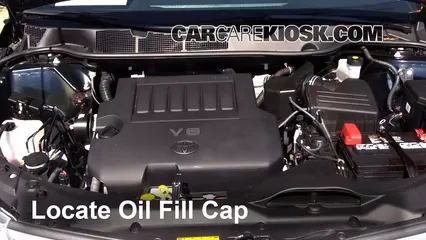
Image source: Web (Bing) / carcarekiosk.com (Web image (fair-use with source credit))
API and ILSAC Certifications – Why the Starburst Seal Matters
The API Starburst certification seal is not just marketing. It guarantees the oil has passed a specific set of engine tests for deposit control, wear protection, oxidation stability, and fuel economy. Oils without this seal may still work, but no one has verified they meet the minimum protection standards for modern engines.
The ILSAC GF-5 standard adds further requirements specific to fuel economy and timing chain wear. The 2013 Venza does not have a turbocharger, but the GF-5 specification also addresses low-speed pre-ignition and sludge control. Both are relevant to the Venza's 2.7L and 3.5L engines.
Look for the Starburst logo on the front of the bottle and the ILSAC GF-5 text on the back label. If you see those, you are buying oil that meets Toyota's spec. If you see only the API donut service symbol without the Starburst, that oil may not be energy-conserving enough for your Venza.
Oil manufacturers like Mobil, Pennzoil, Castrol, and Valvoline all produce 0W-20 synthetic that carries both certifications. The store brand from a major retailer also works as long as the bottle shows the Starburst seal.
Image source: Web (Bing) / motoroilguide.com (Web image (fair-use with source credit))
Common Risks and Mistakes with Venza Oil Changes
Most engine damage from oil changes does not come from using a borderline brand. It comes from simple, avoidable mistakes. Here are the most common ones we see with the 2013 Venza.
Using the Wrong Viscosity
This is the biggest mistake by far. The Venza engine uses hydraulic tensioners for the timing chain. These tensioners rely on oil pressure to keep the chain tight.
Thicker oil like 10W-30 does not flow into the tensioner passages quickly enough on cold starts. The result is a rattling timing chain that sounds like a diesel engine for the first few seconds.
Over time, that rattle stretches the timing chain. A stretched chain can skip teeth and cause catastrophic engine failure. The repair on a 2GR-FE V6 typically runs between 2500 and 4000 dollars.
All because someone used the wrong oil.
Overfilling or Underfilling
Overfilling the engine with oil causes the crankshaft to dip into the oil pan. This whips air into the oil, creating foam. Foam does not lubricate well.
Bearings and camshafts can starve for oil pressure even though the dipstick shows a full level.
Underfilling is equally dangerous. Low oil level means the oil pickup tube can suck air during hard cornering or steep inclines. Air in the oil pump kills bearings fast.
Always check the level with the dipstick after you fill. Run the engine for 30 seconds, shut it off, wait two minutes, then check. The level should sit between the low and full marks, closer to full.
Skipping the Crush Washer Replacement
The crush washer on the drain plug is a single-use part. It compresses to form a seal when you tighten the plug. Reusing a crushed washer causes a slow drip.
Over weeks, that drip can drain enough oil to cause low oil pressure.
A new crush washer costs about a dollar from any auto parts store or the Toyota dealer. Replace it every oil change.
Cheap Filters That Collapse or Bypass
The oil filter is not the place to save two dollars. Cheap filters use cardboard end caps and low-quality filter media. When the oil is cold and thick, the pressure differential can collapse the filter.
That sends unfiltered oil through the engine.
Stick with OEM Toyota filters or well-known brands like Wix, Purolator, or Mobil 1. Avoid no-name filters from discount stores.
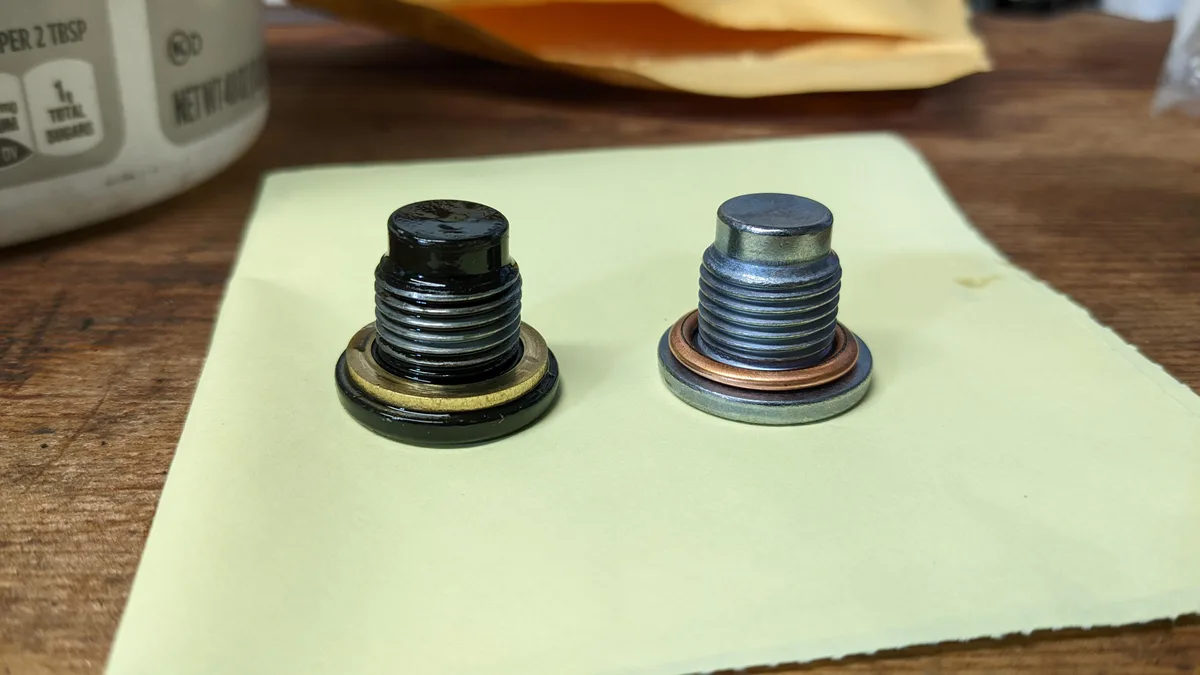
Image source: Web (Bing) / hitchesguide.com (Web image (fair-use with source credit))
Synthetic vs Conventional vs High-Mileage – Which One Should You Use?
Toyota recommends synthetic oil for the 2013 Venza. Conventional oil is technically acceptable but not advisable. Here is why.
Full synthetic oil handles higher temperatures without breaking down. It flows better in cold weather. It resists sludge formation over long drain intervals.
The Venza's VVT system runs cleaner and quieter on synthetic oil.
Conventional oil works fine in older engines with simpler designs. But the Venza's 1AR-FE and 2GR-FE engines have tighter tolerances. Conventional oil can leave varnish deposits on the VVT solenoids over time.
That causes trouble codes and rough idle.
High-mileage oil is designed for engines with over 75,000 miles. It contains seal conditioners that help reduce leaks around valve cover gaskets and rear main seals. If your Venza has high mileage and shows signs of oil seepage, switching to a high-mileage formula makes sense.
Just make sure it still carries the API Starburst and ILSAC GF-5 certifications in 0W-20.
Our research suggests that most Venza owners are best served by a full synthetic 0W-20 from a reputable brand. High-mileage is a good choice if you are already seeing small leaks. Conventional oil is a downgrade worth avoiding unless you change oil every 3,000 miles religiously.
Step-by-Step: How to Change the Oil Yourself (With Key Torque Specs)
Changing the oil on a 2013 Venza is a straightforward job. You need basic hand tools, a jack and jack stands, and about 45 minutes.
What you will need:
- Correct amount of 0W-20 full synthetic oil
- New oil filter for your engine
- New crush washer for the drain plug
- 19mm socket or wrench for the drain plug
- Oil filter wrench
- Drain pan, funnel, jack and jack stands
Step 1: Prepare the vehicle.
Run the engine for two minutes to warm the oil. Warm oil drains faster and carries more contaminants. Shut the engine off.
Lift the front of the Venza and secure it on jack stands. Never crawl under a car supported only by a jack.
Step 2: Drain the old oil.
Place the drain pan under the oil pan. Loosen the drain plug with a 19mm socket. Turn it counterclockwise by hand once loose.
Let the oil drain fully, about five minutes. Clean the drain plug threads and install the new crush washer. Torque the plug to 33 ft-lbs.
Do not overtighten.
Step 3: Replace the oil filter.
For the 2.7L cartridge filter, remove the housing cap with the special socket. Pull out the old cartridge and o-rings. Lubricate the new o-rings with fresh oil and install the new cartridge.
Torque the housing cap to 18 ft-lbs. For the 3.5L spin-on filter, unscrew it by hand. Lubricate the gasket on the new filter with oil.
Screw it on hand-tight, then give it another three-quarter turn.
Step 4: Add new oil.
Remove the oil fill cap on the valve cover. Insert a funnel. Pour in the correct amount of oil.
Replace the fill cap. Start the engine and let it run for 30 seconds. Check for leaks around the drain plug and filter.
Step 5: Check the level.
Shut the engine off. Wait two minutes for the oil to settle. Pull the dipstick, wipe it clean, insert it fully, and pull it again.
The level should be between the low and full marks. Add oil if needed.
When to Seek Professional Help
Most Venza owners can handle an oil change. But some situations call for a shop.
If you cannot safely lift and support the vehicle, do not attempt it. Ramps are easier than jack stands for the Venza. If you do not have either, let a shop handle the job.
If the drain plug is stripped or rounded off, stop immediately. A rounded plug requires extraction tools or a new oil pan. A shop can handle this without damaging the pan.
If you see metal flakes in the drained oil, that is a red flag. Metallic debris means internal wear. Have a mechanic inspect the engine before you fill it with fresh oil.
Our research indicates that a DIY oil change on a 2013 Venza saves about 30 to 50 dollars compared to a quick-lube shop. The savings are real. But they disappear if you make a mistake that requires a repair.
Real-World Scenario: What Happens When You Use 5W-30 in a Cold Climate
A 2013 Venza with the 2.7L engine lives in Minneapolis. The owner runs 5W-30 because a friend told him thicker oil protects better. Winter temperatures drop to minus ten degrees Fahrenheit.
The car sits outside overnight.
When the owner starts the engine, he hears a loud rattling noise for two to three seconds. That is the timing chain slapping against the guides. The hydraulic tensioner has not received oil pressure because the 5W-30 is too thick at those temperatures.
After several weeks, the rattle lasts longer. The timing chain guide wears down. Plastic debris circulates through the oil.
The owner eventually gets a check engine light with a variable valve timing code. The repair involves replacing the timing chain, tensioners, and guides. The bill comes to about 2,800 dollars.
This scenario is preventable. Using 0W-20 synthetic keeps the oil flowing at minus twenty degrees. The hydraulic tensioners pressurize within one second of startup.
The timing chain stays quiet and the engine stays healthy.
If you live in a cold climate and have been using 5W-30, switch back to 0W-20 at your next change.
Costs and What to Buy
Here is what you can expect to spend on a 2013 Venza oil change as of 2026.
| Item | Estimated Cost |
|---|---|
| 5 quarts 0W-20 full synthetic | 25 to 40 dollars |
| OEM oil filter | 8 to 12 dollars |
| Aftermarket quality filter | 6 to 10 dollars |
| Crush washer (pack of 5) | 5 to 8 dollars |
| Total DIY cost | 40 to 65 dollars |
| Quick-lube shop estimate | 70 to 100 dollars |
For the 3.5L V6, you need two 5-quart jugs. That brings the DIY cost to about 55 to 80 dollars.
Oil recommendations.
Stick with 0W-20 full synthetic from Mobil 1, Pennzoil Platinum, Castrol EDGE, or Valvoline Advanced. All carry the API Starburst and ILSAC GF-5 marks.
Filter recommendations.
For the 2.7L cartridge filter, use OEM Toyota part 04152-YZZA1 or a Wix 57047. For the 3.5L spin-on filter, use OEM 04152-38020 or a Wix 51356.
Crush washer.
Buy a pack of Toyota drain plug gaskets (part 90430-12031) or a generic aluminum washer pack.
Venza Oil Change Interval – Severe vs Normal Service
Toyota recommends a 10,000-mile oil change interval for the 2013 Venza under normal driving conditions. But most driving falls under severe service according to Toyota's own definition. Severe service includes short trips under five miles, stop-and-go traffic, extreme temperatures, dusty roads, and towing.
If your Venza sees any of these conditions, Toyota recommends changing the oil every 5,000 miles.
Normal service.
You take highway trips of 20 miles or more. The engine reaches full operating temperature on every drive. You rarely sit in traffic.
You live in a moderate climate. You can stretch the interval to 7,500 or 10,000 miles with full synthetic oil.
Severe service.
You drive mostly short trips. Your Venza sits in commuter traffic daily. You live where summers hit 100 degrees or winters drop below freezing.
You tow a trailer or carry heavy loads. You should change the oil every 5,000 miles.
Our research suggests that 5,000 miles is the safe bet for most Venza owners. Oil is cheap. Engines are expensive.
Changing at 5,000 miles with full synthetic gives you a margin of safety if you forget a change or two over the life of the car.
Frequently Asked Questions
Can I use 5W-30 if 0W-20 isn't available?
Yes, but only as a temporary measure. Toyota's owner manual lists 5W-30 as an acceptable alternative when 0W-20 is not available. Switch back to 0W-20 at your next oil change.
In cold climates, 5W-30 can cause timing chain rattle on startup.
Does using the wrong oil void my warranty?
For the 2013 Venza, most factory warranties have expired. But if your vehicle is still under an extended warranty, using oil that does not meet Toyota's specifications can void coverage. Always use 0W-20 with API Starburst and ILSAC GF-5 certification.
How do I reset the oil maintenance light on a 2013 Venza?
Turn the ignition to the ON position without starting the engine. Press the trip button until the odometer displays. Turn the ignition OFF.
Hold the trip button while turning the ignition back to ON. Continue holding for about five seconds until the maintenance light flashes and turns off.
What brand of oil does Toyota recommend?
Toyota does not endorse a specific brand. The manufacturer recommends any oil that meets the viscosity and certification requirements. Toyota Genuine Motor Oil is available at dealers.
Mobil 1, Pennzoil, Castrol, and Valvoline all work equally well when they carry the correct specs.
How much oil does a 2013 Venza take?
The 2.7L four-cylinder takes 4.5 quarts with a filter change. The 3.5L V6 takes 6.4 quarts with a filter change. Always check the dipstick after filling.
Can I switch from synthetic to conventional oil?
You can, but you should not. The Venza's VVT system performs best with synthetic oil. Conventional oil can leave deposits on the VVT solenoids over time.
If you switch, expect shorter oil change intervals and potentially more engine wear.
Expert Bottom Line
Stick with 0W-20 full synthetic oil that carries the API Starburst certification and meets ILSAC GF-5 standards. Use a quality filter. Change the oil every 5,000 miles for severe service or 7,500 miles for normal highway driving.
Replace the crush washer each time. Check the level between changes.
The 2013 Venza is a reliable crossover that can easily reach 200,000 miles with proper maintenance. The oil you choose directly affects that outcome. The extra few dollars for quality synthetic oil and a good filter are the cheapest insurance you can buy for your engine.
Skip the guesswork. Follow the spec. Your engine will reward you with smooth operation and a long, trouble-free life.
For more practical maintenance advice on other vehicles, check out our section on routine upkeep that covers the same straightforward approach.