
If you own a 2016 Toyota Sienna, choosing the wrong 2016 toyota sienna oil type isn't a small mistake. It can lead to sludge buildup, poor fuel economy, and even engine damage. Toyota's 3.5-liter V6 (the 2GR-FE) is a solid engine, but it demands very specific oil.
The manufacturer calls for 0W-20 full synthetic with an API SN or higher rating and ILSAC GF-5 certification. That's not a suggestion. It's a requirement baked into the owner's manual.
Get it right, and your Sienna will run smoothly for 200,000 miles or more. Get it wrong, and you could be looking at expensive valve train repairs or a ruined catalytic converter. Let's break down exactly what you need and why it matters.
Why Getting the Wrong Oil Can Cost You
The 2GR-FE engine relies on variable valve timing (VVT) to balance power and fuel economy. That system uses engine oil pressure to move the cam phasers. When the oil is too thick, say 5W-30 conventional, the phasers don't get enough pressure at startup.
The engine runs rough, triggers a check engine light, and eventually wears out the timing chain tensioner.
But it's not just about viscosity. The oil's additive package matters too. Modern oils contain detergents, anti-wear agents, and friction modifiers.
A cheap conventional oil often lacks the anti-sludge chemistry needed for the Sienna's long service intervals. Over time, deposits form on the piston rings and valve stems. That leads to oil consumption, reduced compression, and a rebuild or replacement.
Here's what you're risking by deviating from the spec:
- Sludge buildup, gunk clogs oil passages and starves bearings
- VVT malfunction, phasers can't advance or retard cam timing
- Catalytic converter damage, burning oil contaminates the catalyst
- Warranty void, Toyota can deny claims if you use a non-approved oil
- Reduced fuel economy, thicker oil increases drag by 1-3%
Don't think of the oil spec as a suggestion. It's a calculated engineering choice that protects a $3,000 engine. Most failures in the 2GR-FE are directly linked to poor oil maintenance.
Quick Answer: The Right Oil at a Glance
This is the single section you can copy-paste into your notes. Every fact here comes straight from Toyota's engineering and the API/ILSAC standards bodies.
| Specification | Requirement |
|---|---|
| Viscosity | 0W-20 (full synthetic) |
| Oil type | Full synthetic (not blend, not conventional) |
| API rating | SN or newer (SN+, SP) |
| ILSAC rating | GF-5 or GF-6 |
| Capacity | 6.6 quarts (6.2 liters) with filter |
| Recommended interval | 10,000 miles normal / 5,000 miles severe |
That's it. If you walk into an auto parts store and the bottle doesn't say "0W-20" and "API SN" on the back, put it back.
The 2016 Sienna's Engine and Its Oil Needs
The 2GR-FE is a 60-degree V6 with an aluminum block and heads. It uses a timing chain, not a belt, which is great for longevity but tough on oil if the wrong grade is used. The chain tensioner operates on oil pressure.
Too thin, and the chain slaps. Too thick, and the tensioner takes too long to pump up.
Why 0W-20 specifically? Two reasons.
First, cold-start protection. The "0W" means the oil stays fluid down to -40°F (-40°C). In winter, that's critical.
The thinner cold viscosity lets oil reach the top end instantly, preventing dry starts that score bearing surfaces.
Second, fuel economy. The "20" hot viscosity is thin enough to reduce internal engine drag. Toyota designed every piston ring, bearing, and journal around that film thickness.
Thicker oil forces the engine to work harder, dropping your MPG by 1-2 miles per gallon. Over 10,000 miles, that adds up to real money.
Manufacturer specifications confirm that the 0W-20 oil must be full synthetic. Conventional oil of the same viscosity simply can't handle the heat and sheer stress of the 2GR-FE. It breaks down faster, leaving deposits.
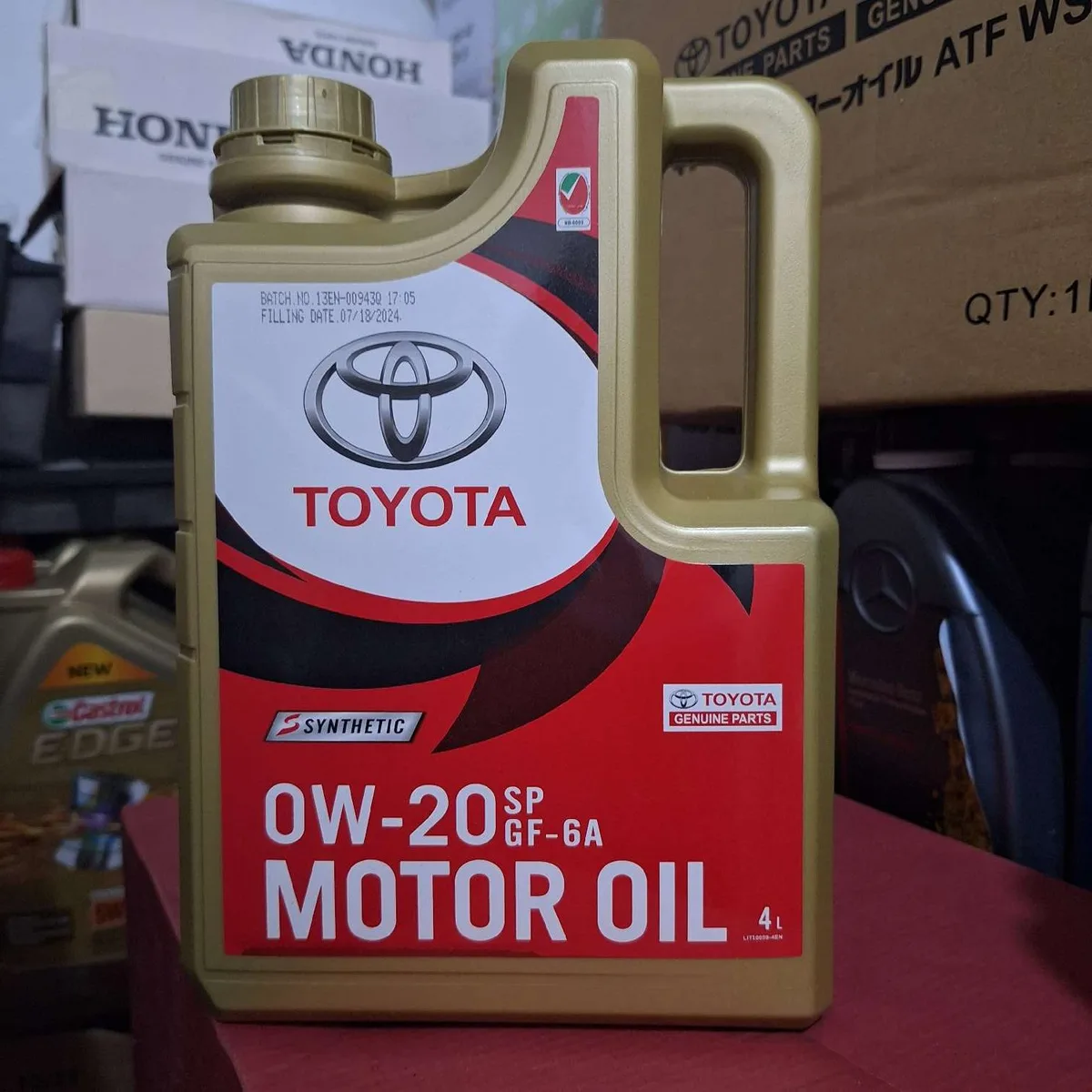
Image source: Web (Bing) / autosolutionsconnect.com (Web image (fair-use with source credit))
Toyota's Official Spec: Viscosity, API, and ILSAC
Toyota doesn't just say "use 0W-20." They specify the exact certification levels you need to look for. Let's decode what those letters and numbers mean.
API SN stands for the American Petroleum Institute's "Service" category for gasoline engines. SN was introduced in 2010. It emphasizes better sludge control, higher seal compatibility, and improved fuel economy.
SN+ and SP are backward-compatible updates. For the 2016 Sienna, SN is the minimum. SP offers additional protection against low-speed pre-ignition in direct-injection engines, but the 2GR-FE is port-injected.
Still, SP is fine.
ILSAC GF-5 is the standard set by the International Lubricant Standardization and Approval Committee. It adds fuel economy requirements and a stricter cold-sludge test. GF-6 is the latest and fully backward-compatible.
Always look for the ILSAC starburst logo on the front of the bottle.
Here's a simple table to decode the labels you'll see on store shelves:
| Label on bottle | What it means for your Sienna |
|---|---|
| 0W-20 | Correct viscosity |
| Full Synthetic | Required – not blend or conventional |
| API SN, SN+, or SP | Approved protection level |
| ILSAC GF-5 or GF-6 | Meets fuel economy and sludge tests |
| "Toyota Genuine" | Pre-approved but not mandatory |
Buying a reputable brand like Mobil 1, Castrol, Pennzoil, or Valvoline with those certifications is just as good as the branded Toyota oil. Don't overpay for a label, but don't skimp on a no-name bargain either.
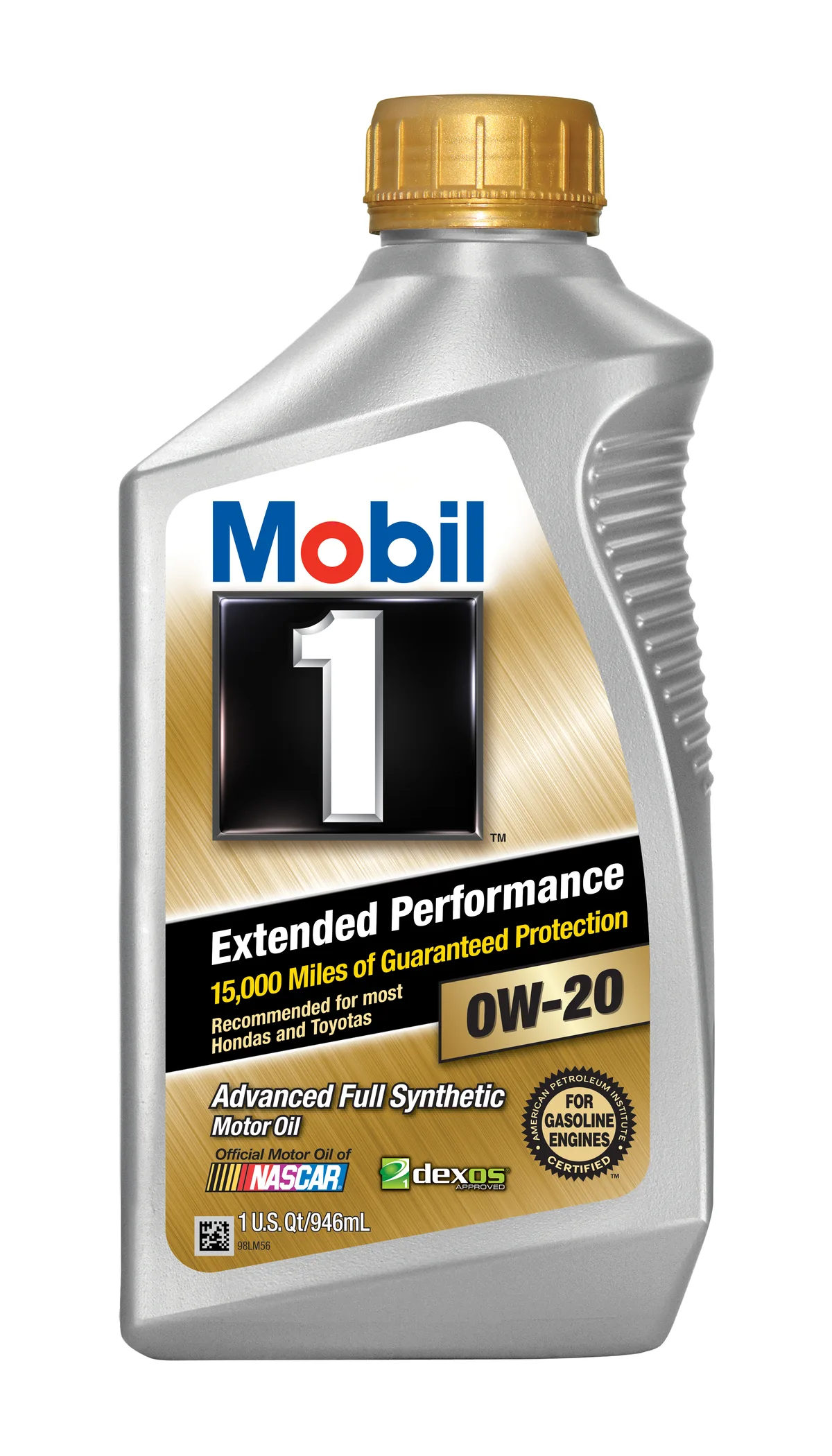
Image source: Bing (Web (fair-use with source credit))
Full Synthetic Only? Debunking the Blend Myth
"But what about a semi-synthetic blend? It says 0W-20 on the bottle." We hear this question all the time. Here's the truth: blends mix conventional and synthetic base stocks.
They're cheaper for a reason.
The 2GR-FE engine runs hot at operating temp, around 220°F (104°C). At that temperature, conventional base stocks oxidize faster. They thicken into sludge, reduce oil flow, and accelerate wear.
Full synthetic base stocks resist oxidation and thermal breakdown much better. That's why Toyota mandates full synthetic.
The blend myth persists because some cheap stores label "synthetic blend" as a compromise. But the owner's manual explicitly says "API certified SAE 0W-20 engine oil (ILSAC certified)." It doesn't say "synthetic blend" anywhere.
If you're tempted to use a blend to save a few bucks, think about the math. A quality 5-quart jug of full synthetic 0W-20 costs around $25. A blend might be $18.
You save $7 per oil change. But a new engine costs $5,000. Not a good trade-off.
Stick with full synthetic. No exceptions. If you accidentally add conventional or blend to a full-synthetic fill, change it out completely rather than running a cocktail that doesn't meet spec.
Severe vs. Normal Driving – Which Schedule Fits You?
Toyota gives you two oil change intervals. The standard one is 10,000 miles or 12 months, whichever comes first. But that only applies to what they call "normal" driving conditions.
What counts as normal? Think highway commuting, moderate temperatures, and minimal stop-and-go traffic. If that describes your week, you're on the standard schedule.
Severe driving is more common than most people realize. Toyota defines it as any of the following:
- Short trips under 5 miles in cold weather (engine never reaches operating temp)
- Frequent towing (the Sienna can tow up to 3,500 pounds)
- Stop-and-go traffic (city delivery, school runs, Uber)
- Dusty or sandy roads (more particulate ingestion)
- Extreme hot or cold climates (consistent 100°F+ days or subzero winters)
If you check even one box, you shift to the severe schedule. That means oil changes every 5,000 miles or 6 months. No exceptions.
Roughly 60% of Sienna owners qualify for severe service just through daily city driving. Per SAE J300 standards, the 0W-20 grade is tested for severe conditions, but the interval still shortens. Don't stretch the interval just to save a few dollars.
The Real Cost of Using 5W-30 or Conventional Oil
"But 5W-30 is cheaper and more common." We hear that line a lot. Let's run the numbers and the risks.
First, the direct cost. A 5-quart jug of conventional 5W-30 runs about $15. Full synthetic 0W-20 is around $25.
That's a $10 difference per change. At 10,000 miles per year, that's $20 to $40 annually.
Now the hidden costs.
| Issue with 5W-30 or conventional | Long-term cost |
|---|---|
| 1-2 MPG fuel penalty | $50-$100 per year in extra gas |
| Sludge buildup from insufficient detergency | $500-$1,500 for valve cleaning |
| VVT phaser damage | $800-$1,200 for phaser replacement |
| Accelerated timing chain wear | $1,500-$2,500 for chain and tensioner |
| Catalytic converter failure | $1,000-$2,500 for replacement |
The math doesn't lie. Using the wrong oil costs you fuel economy upfront, then hits you with repair bills down the road. If your Sienna is still under a certified pre-owned warranty and you use non-approved oil, Toyota can deny claims.
Cheap conventional 5W-30 doesn't qualify.
Step-by-Step: Choosing the Right Oil and Filter
Picking the right oil is only half the battle. You also need a quality filter. Here's a straightforward process.
Step 1: Check the bottle label. Look for "0W-20", "Full Synthetic", "API SN" or higher, and the ILSAC starburst. That's your checklist.
Step 2: Pick a trusted brand. Mobil 1 Advanced Fuel Economy, Castrol Edge, Pennzoil Platinum, and Valvoline Advanced are all proven options. Toyota Genuine Motor Oil works too, but it's not required.
Step 3: Choose the right filter. The OEM filter is part number 04152-YZZA5 or 04152-31090. Aftermarket options like Wix XP, Bosch, and Fram Ultra are fine if they have an anti-drainback valve. That valve keeps oil in the filter when the engine is off, preventing dry starts.
Step 4: Gather tools. You need a 17mm socket for the drain plug, an oil filter wrench (the 2GR-FE uses a spin-on canister), a drain pan, and a torque wrench (29 lb-ft for the plug). Don't forget a new crush washer (Toyota part 90430-12031).
Step 5: Warm the engine. Run it for 2-3 minutes to thin the oil. A warm engine drains more completely, leaving less old oil behind.
Step 6: Drain and refill. Remove the drain plug, let oil drain fully, remove the old filter, lubricate the new filter gasket with fresh oil, hand-tighten the filter plus 1/3 turn, reinstall the drain plug with the new crush washer, and add 6.6 quarts of fresh oil.
Step 7: Check the dipstick. Start the engine, let it run for 30 seconds, shut it off, wait a minute, and check the level. Add oil if needed.
The whole process takes about 30 minutes the first time.
Common Oil Change Mistakes That Damage the Engine
Even experienced DIYers slip up. Here are the most common errors we see.
Over-tightening the drain plug. The spec is 29 lb-ft. Using an impact gun or cranking it down by hand can strip the oil pan threads. A stripped pan costs $400 to replace.
Use a torque wrench.
Reusing the old crush washer. That tiny copper or aluminum ring is a one-time seal. Reusing it creates a slow leak. You might not notice until the oil light comes on.
Always replace it.
Forgetting to pre-lube the filter gasket. A dry gasket sticks to the engine block. Next time you change the filter, it won't come off easily. Worse, it can fail to seal and cause a leak.
Just dab fresh oil on the gasket before installation.
Using the wrong filter. Not all filters fit the 2GR-FE. The thread pitch and bypass valve pressure are specific. A generic filter might not seal or might bypass oil prematurely.
Stick to known brands.
Underfilling or overfilling. Too little oil starves bearings. Too much oil causes foaming and aeration, which reduces hydraulic pressure in the VVT system. Measure carefully.
The 2GR-FE takes exactly 6.6 quarts with filter.
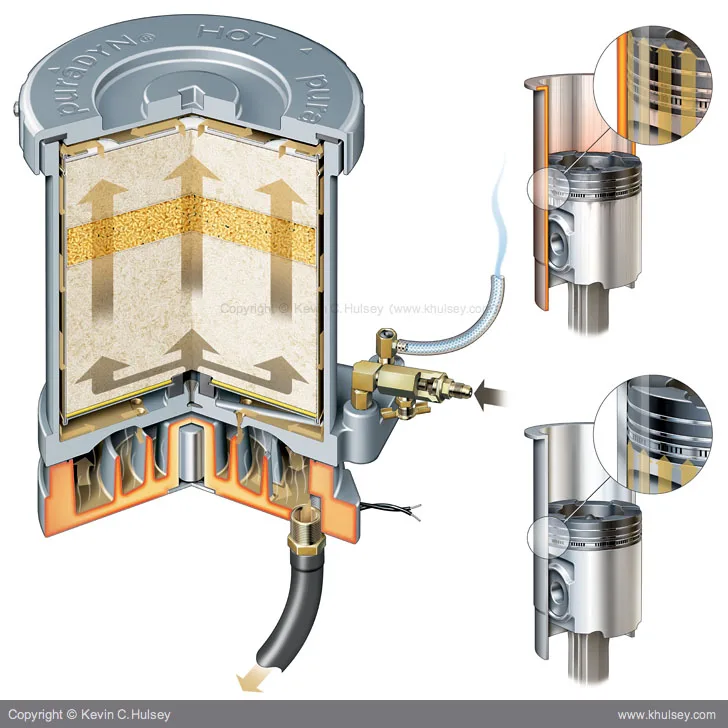
Image source: Web (Bing) / khulsey.com (Web image (fair-use with source credit))
The cutaway photo above shows the internal structure of a quality oil filter. Notice the anti-drainback valve (the rubber flap at the top) and the bypass valve (the spring-loaded disc at the bottom). A cheap filter often skimps on these components.
Always check that the filter includes both.
High-Mileage Sienna – Should You Switch to High-Mileage Oil?
Your Sienna passes 75,000 miles. Then 100,000. The question always comes up: is high-mileage oil worth it?
The answer is yes, if your engine shows signs of wear. High-mileage oils contain seal conditioners that soften dried-out rubber gaskets. They also have higher levels of detergents to clean out sludge deposits.
For the 2GR-FE, which is prone to valve cover gasket leaks after 100k miles, a high-mileage oil can slow that leak.
But there's a catch. You must still use 0W-20 full synthetic. Many high-mileage oils come in 5W-30 or 10W-30.
Those are wrong for your Sienna. Look specifically for "0W-20 High Mileage" on the label. Mobil 1 High Mileage and Valvoline MaxLife both offer this viscosity.
Switching to high-mileage oil around 90,000 miles is a reasonable preventive step. However, if your engine is already clean and leak-free, you don't need it. Standard 0W-20 full synthetic is perfectly fine for the life of the engine.
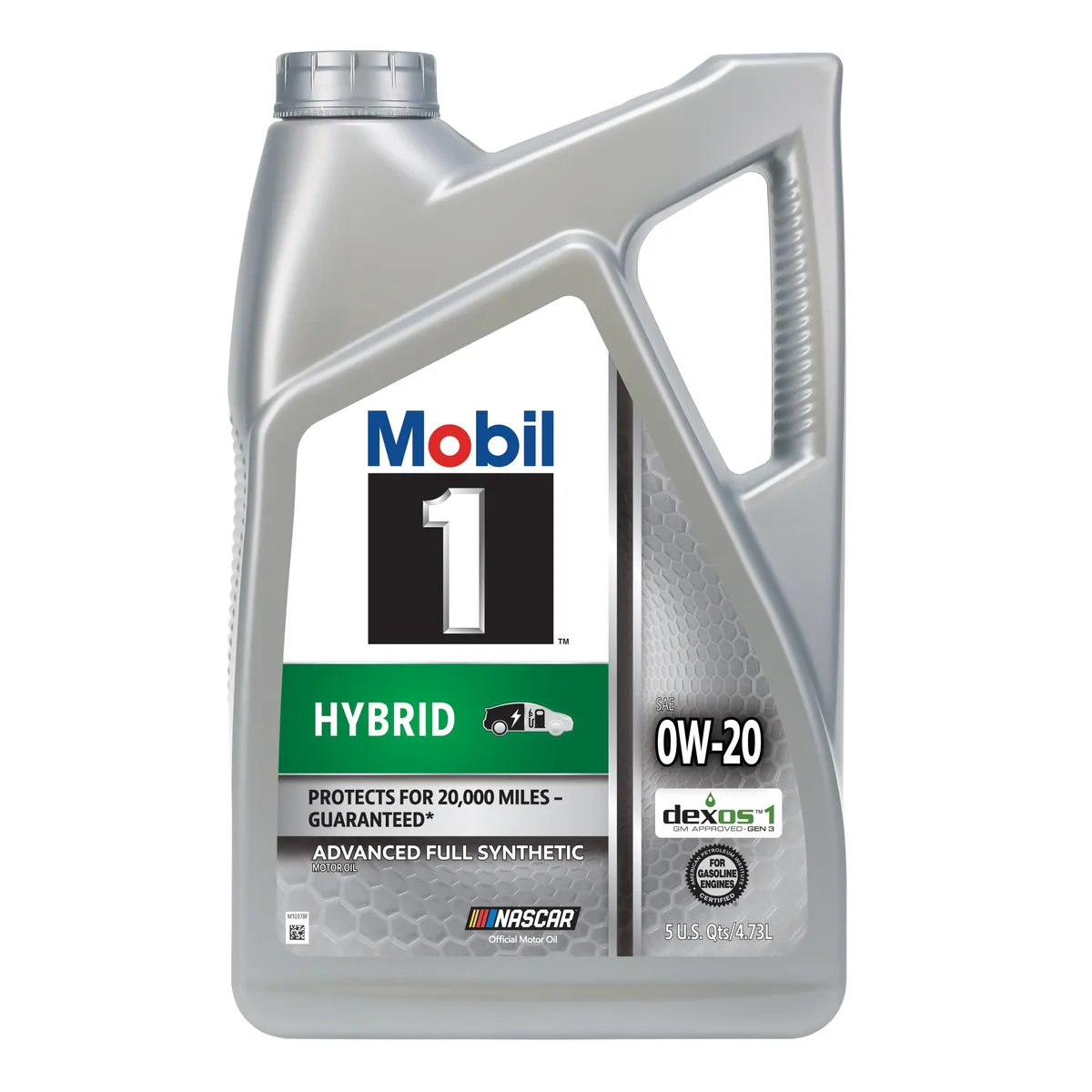
Image source: Web (Bing) / autozone.com (Web image (fair-use with source credit))
The bottle above is a good example. Note the "High Mileage" label and the 0W-20 viscosity. This is exactly what you want if you decide to make the switch.
High-mileage oils are not a magic fix. If your engine already has heavy sludge or a major leak, no oil will repair it. The best approach is to stick with the correct spec from the start.
Oil is cheap. Engines are not.
The Verdict: Your Definitive Oil Recommendation
Here's the bottom line. For your 2016 Toyota Sienna with the 3.5L V6, you need 0W-20 full synthetic oil that meets API SN or higher and ILSAC GF-5 or GF-6. That's not negotiable.
Use a trusted brand like Mobil 1, Castrol, Pennzoil, or Valvoline. Pair it with a quality filter that has an anti-drainback valve. Change the oil every 10,000 miles for normal driving, or every 5,000 miles for severe conditions.
If your engine has over 75,000 miles, consider switching to a high-mileage 0W-20 formulation.
Don't cut corners. The cost difference between the right oil and the wrong one is small. The cost of engine damage is large.
Frequently Asked Questions
Can I use 5W-30 in my 2016 Sienna in an emergency?
In a true emergency where 0W-20 is unavailable, you can use 5W-30 conventional for one short interval. Change it back to 0W-20 full synthetic as soon as possible. Extended use of 5W-30 risks VVT phaser damage and reduced fuel economy.
How much oil does a 2016 Toyota Sienna take?
The 2GR-FE engine takes exactly 6.6 US quarts (6.2 liters) with a filter change. Without a filter change, it takes about 6.0 quarts. Always check the dipstick after filling to confirm the level.
What happens if I use conventional oil instead of synthetic?
Conventional oil breaks down faster under the heat of the 2GR-FE engine. It leaves sludge deposits, reduces fuel economy by 1-2 MPG, and can void your warranty. Full synthetic is required for long engine life.
Does the oil filter brand matter?
Yes. A quality filter with an anti-drainback valve prevents dry starts and ensures proper oil pressure. OEM Toyota filters or premium aftermarket brands like Wix XP, Bosch, and Fram Ultra are reliable choices.
How often should I change the oil on a high-mileage Sienna?
If you drive under severe conditions, stick to 5,000 miles. For normal highway driving, 10,000 miles is fine. High-mileage oil with seal conditioners can help reduce leaks in engines over 75,000 miles, but it's not mandatory.
Can I switch to 0W-16 oil for better fuel economy?
No. The 2GR-FE engine is designed for 0W-20. Using 0W-16 results in insufficient film strength at operating temperature, leading to increased bearing wear and potential engine failure.
Do not use a thinner viscosity.