
Image source: Web (Bing) / business.walmart.com (Web image (fair-use with source credit))
Why Getting the Oil Right Matters for Your 2007 Camry
If you're behind the wheel of a 2007 Toyota Camry, you've already got one of the most reliable sedans ever built. But keeping that 2.4L or 3.5L engine running smoothly comes down to one simple thing: using the right oil. Get it wrong, and you're looking at sludge buildup, increased wear, or worse, a costly repair bill.
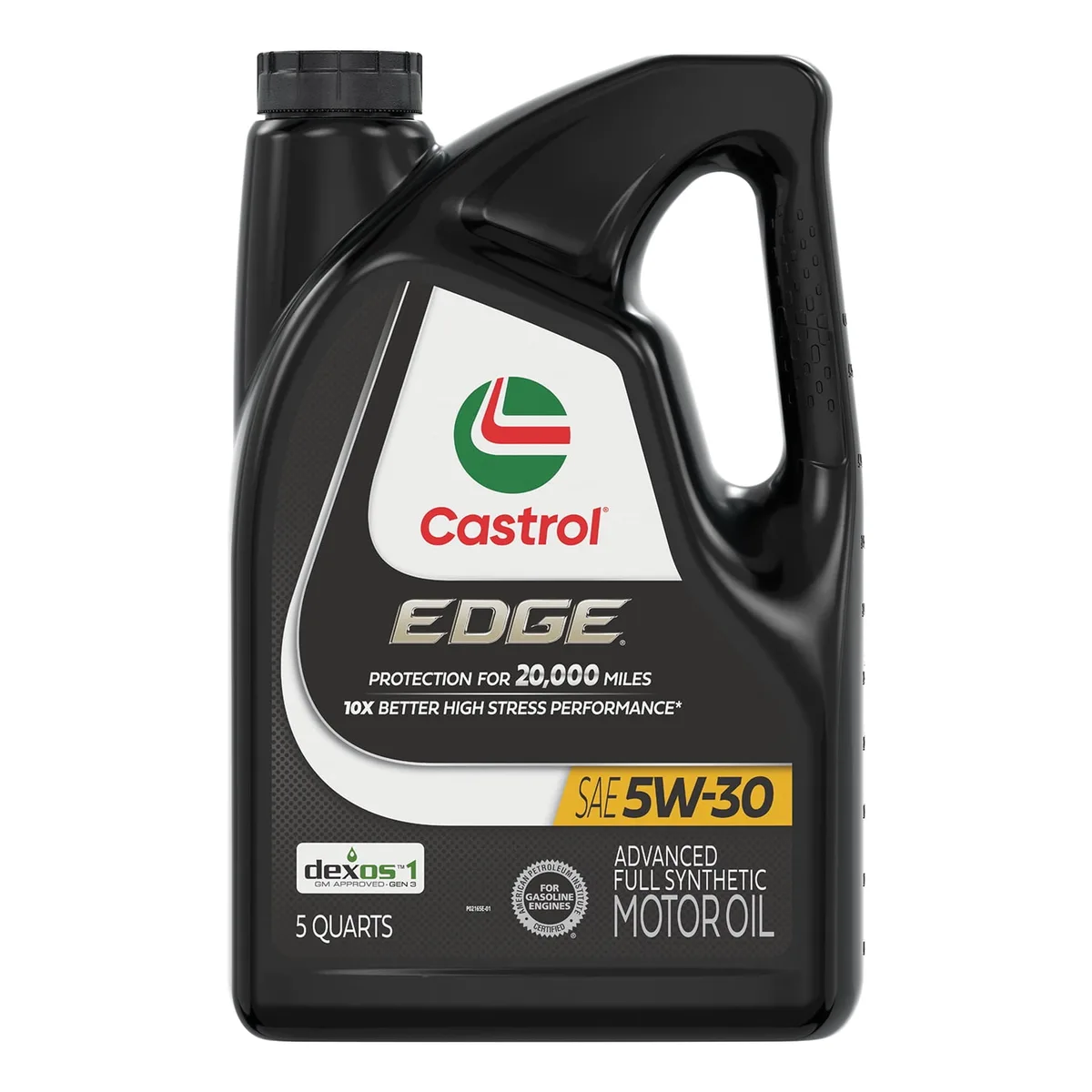
The 2007 Toyota Camry oil type isn't a mystery, but there's more to it than grabbing any bottle with "5W-30" on the label. Manufacturer specifications call for SAE 5W-30 viscosity with an API certification of SN or newer. As of 2026, that means you're looking for an oil that meets both the API SN Plus or SP standard and ILSAC GF-5 or GF-6 ratings.
Let's break down exactly what your Camry needs, why it matters, and how to avoid the common mistakes that send people searching for a new engine.
Quick Answer
Your 2007 Toyota Camry needs SAE 5W-30 motor oil. The API rating must be SN or newer. The ILSAC rating should be GF-5 or higher.
Use 4.5 quarts for the 2.4L four-cylinder engine. Use 5.7 quarts for the 3.5L V6. Synthetic or conventional both work, but synthetic offers better protection.
High-mileage oil is a smart choice if you're past 100,000 miles.
Why Getting the Oil Right Matters for Your 2007 Camry
This isn't just about following the manual. The 2.4L 2AZ-FE engine in the 2007 Camry has a known reputation for oil consumption and sludge problems. These issues flare up when owners use the wrong viscosity or skip regular changes.
The 3.5L 2GR-FE V6 is more forgiving, but it still relies on proper lubrication to keep its timing chain and variable valve timing system happy.
Think of engine oil as your Camry's blood. The wrong type can't circulate properly when it's cold. It won't protect at high temperatures.
Over time, it leaves deposits that clog passages and starve critical parts. A 2007 Camry with regular oil changes using the right spec can easily hit 250,000 miles. One running on 10W-40 or cheap no-name oil?
That's a different story.
The stakes are real. Replacing a sludge-clogged 2.4L engine runs anywhere from $3,000 to $5,000. A full oil change with quality synthetic costs about $40.
Do the math.
Two Engines, Two Personalities: 2.4L vs 3.5L
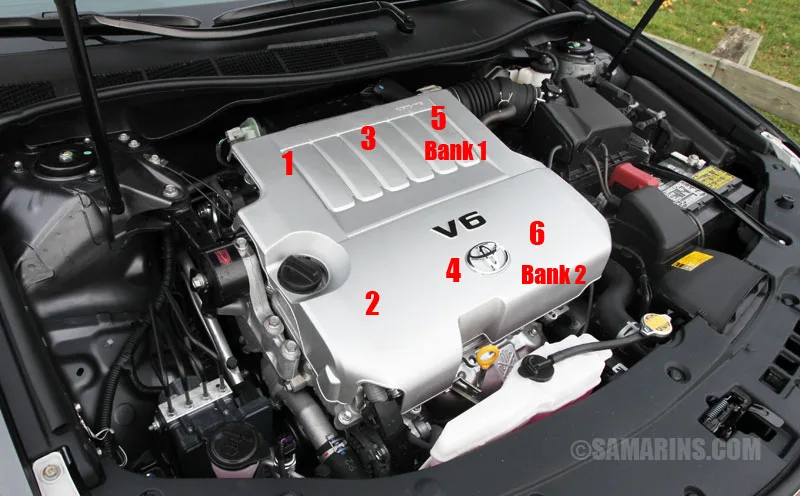
Image source: Bing (Web (fair-use with source credit))
Your 2007 Camry came with one of two engines, and they're not interchangeable when it comes to oil habits. The 2.4L four-cylinder (2AZ-FE) is the one that needs more attention. It's a solid engine, but it runs hot and tends to burn oil as it ages.
Many owners report adding a quart between changes after 100,000 miles. That's normal for this engine, but it means you need to check your oil level regularly.
The 3.5L V6 (2GR-FE) is different. It's smoother, cooler-running, and rarely burns oil even at higher mileage. But it takes more oil per change, 5.7 quarts versus 4.5 quarts for the four-cylinder.
The oil filter location is also different, which matters if you're doing the job yourself.
Quick way to tell which engine you have: Look at the engine cover. The 2.4L has a plastic cover that says "VVT-i" and sits flat across the top. The 3.5L has a larger cover with "DOHC V6" cast into it.
Or just check your VIN, the 8th digit tells you: "E" means the 2.4L, "F" means the 3.5L.
The Viscosity Debate: 5W-30 vs 0W-20
This is where things get confusing. Toyota originally specified 5W-30 for the 2007 Camry. But in later years, many Toyota models switched to 0W-20 for better fuel economy.
So which one should you use?
5W-30 is the safe bet. It's what the owner's manual says. It's what Toyota dealerships put in. It provides excellent protection across the temperature ranges most of us drive in.
From -22°F up to 100°F+, 5W-30 flows properly at startup and maintains its thickness at operating temperature.
0W-20 is thinner. It flows even better in extreme cold, which is why some owners in Canada or Alaska use it. But here's the catch: your 2007 Camry wasn't designed for 0W-20. The piston rings and bearing clearances are set up for 5W-30.
Using 0W-20 in a high-mileage 2.4L can increase oil consumption because it's thin enough to slip past worn rings.
| Viscosity | Best For | Considerations |
|---|---|---|
| 5W-30 | All 2007 Camrys | Factory spec; safe for all climates |
| 0W-20 | Extreme cold climates | May increase consumption in high-mileage engines |
| 10W-30 | Hot climates only | Avoid in cold weather; not recommended by Toyota |
Stick with 5W-30. If you live somewhere it hits -30°F regularly, 0W-20 might help with startup wear. Otherwise, don't overthink it.
Conventional vs Synthetic vs High-Mileage: What's Best for You
Here's where personal driving habits and budget come into play. All three types work in your 2007 Camry, but they're not created equal.
Conventional oil is the cheapest option. It meets the minimum requirements. It will protect your engine if you change it every 3,000 to 5,000 miles.
But it breaks down faster under heat, and it doesn't clean as well as synthetic. For a 2.4L engine prone to sludge? We'd skip it.
Full synthetic oil is worth the extra money. It flows better at cold starts, resists thermal breakdown, and keeps engines cleaner. Many synthetic oils are rated for 7,500 to 10,000 miles between changes.
For a 2007 Camry that's now 19 years old, synthetic oil helps compensate for normal engine wear. It's especially beneficial for the 2.4L, where sludge prevention is key.
Synthetic blend sits in the middle. It's a mix of conventional and synthetic base oils. You get some benefits of synthetic at a lower price.
Many Toyota dealerships use synthetic blends in their service bays. It's a solid middle-ground choice.
High-mileage oil is formulated for engines over 75,000 or 100,000 miles. It contains seal conditioners that help reduce leaks and additives that combat sludge. If your Camry is past 100,000 miles, this is a smart choice.
Brands like Mobil 1 High Mileage, Valvoline MaxLife, and Castrol GTX High Mileage are popular options.
Our take: If your Camry has under 75,000 miles and you change oil every 5,000 miles, a synthetic blend is fine. Over 75,000 miles, go with full synthetic high-mileage oil. The extra $10 to $15 per change buys real protection.
The Oil Filter and Crush Washer: Small Parts, Big Difference
Here's something that catches DIY owners off guard. Your oil choice doesn't matter much if the filter is junk. And that little crush washer on the drain plug?
It's not optional.
The original equipment oil filter for a 2007 Camry is the Toyota 90915-YZZD3 or 90915-YZZF1. These are genuine Toyota filters with the right bypass valve pressure and anti-drainback valve. Aftermarket filters from brands like Mobil 1, Purolator, and Bosch are fine substitutes.
Avoid ultra-cheap no-name filters. We've seen collapsed filter media and stuck bypass valves.
What the crush washer does: That small copper or aluminum ring seals the drain plug. Without it, or if you reuse an old one, you risk a slow drip. Replace it every oil change.
Torque matters too. The drain plug on the 2.4L engine needs to be tightened to 29 ft-lbs. The aluminum oil pan threads strip easily if you over-tighten. Hand-tight plus a quarter turn on the oil filter is standard.
Use a torque wrench on the drain plug to be safe.
Replacing these small parts adds maybe $5 to your oil change cost. Skipping them can lead to leaks, low oil pressure, and engine damage.
How Much Oil Does It Take? Exact Capacities for Both Engines
This is where a lot of DIY owners mess up. You buy five quarts of oil, pour in the whole bottle, and suddenly you're overfilled.
For the 2.4L four-cylinder: you need exactly 4.5 US quarts with a filter change. That includes the oil that fills the new filter. If you're just topping off between changes, add about 0.5 to 1 quart.
For the 3.5L V6: the capacity jumps to 5.7 US quarts with filter. That's roughly five and three-quarter quarts. You'll need a 6-quart jug or a 5-quart jug plus a separate quart bottle.
Here's the practical trick. Pour in about 80 percent of the expected amount. Check the dipstick.
Add the rest slowly. You can always add more oil, but draining excess is a mess.
| Engine | Capacity With Filter | Recommended Viscosity | API Rating |
|---|---|---|---|
| 2.4L 2AZ-FE | 4.5 quarts | 5W-30 | SN or newer |
| 3.5L 2GR-FE | 5.7 quarts | 5W-30 | SN or newer |
Most experienced mechanics go by the dipstick rather than trusting bottle markings.
Step-by-Step: Your 2007 Camry Oil Change Checklist
You can do this yourself in about 30 minutes. Here's the sequence that works for both engines.
What you'll need:
- 5 quarts of 5W-30 oil (buy 6 for the V6)
- Oil filter (Toyota 90915-YZZD3 or equivalent)
- New crush washer (Toyota 90430-12031 or generic 12mm)
- 14mm socket or wrench for the drain plug
- Oil filter wrench
- Drain pan, funnel, and gloves
The process:
- Run the engine for two minutes. Warm oil drains faster.
- Park on level ground. Use jack stands if you need clearance.
- Locate the drain plug under the oil pan. Place your drain pan underneath.
- Remove the plug with a 14mm socket. Let it drain for at least five minutes.
- Remove the oil filter. Let it drain. Wipe the mounting surface.
- Lubricate the new filter gasket with fresh oil. Hand-tighten. Turn another quarter turn.
- Install the new crush washer on the drain plug. Torque to 29 ft-lbs.
- Pour in the new oil. Add 4 quarts for the 2.4L or 5 quarts for the 3.5L first.
- Check the dipstick. Add oil in half-quart increments until it reaches the full mark.
- Run the engine for one minute. Check for leaks.
- Turn off the engine. Wait two minutes. Check the dipstick again and top off if needed.
The one thing most people skip: write the mileage and date on the oil filter with a sharpie. You'll thank yourself later.
Common Mistakes That Cost You an Engine
Our research into owner forums and mechanic reports shows the same errors repeating year after year.
Using the wrong viscosity. Someone grabs 10W-40 because it's on sale. Or they use 0W-20 thinking thinner is better. Neither is right.
Stick with 5W-30.
Overfilling the oil. Too much oil creates foam. Foam doesn't lubricate. Your engine starts knocking.
Check the dipstick. Drain excess if needed.
Skipping the crush washer. That little ring costs maybe a dollar. Reusing an old one causes slow leaks. You lose a quart over a month.
Forgetting to prime the filter. A dry filter means the engine starts with zero oil pressure for a few seconds. Fill the new filter with oil before installing it.
Using a sketchy aftermarket filter. Cheap ones have cardboard end caps and flimsy bypass valves. They collapse under pressure. Stick with OEM Toyota or reputable brands.
Ignoring the 2.4L oil consumption issue. This engine burns oil. Check your oil level every other gas fill-up. Letting it run low accelerates wear.
When to Stick with the Manual and When to Adjust
The owner's manual is your starting point. It's not the final word for every situation.
Follow the manual for: viscosity grade, API certification requirements, and oil filter specifications.
Adjust for mileage. Over 100,000 miles, high-mileage oil is a smart upgrade. The seal conditioners help reduce leaks. The extra detergents clean out deposits.
Adjust for climate. If winter temperatures drop below -20°F consistently, use 5W-30 synthetic. It flows better at extreme cold.
Adjust for driving conditions. Short trips and stop-and-go traffic count as "severe service." Drop to 5,000 miles between changes. Or use synthetic and extend to 7,500 miles.
What you should never adjust: the API rating. If the bottle doesn't have the API donut certification, don't buy it.
Reading the Label: What the API Donut and ILSAC Ratings Tell You
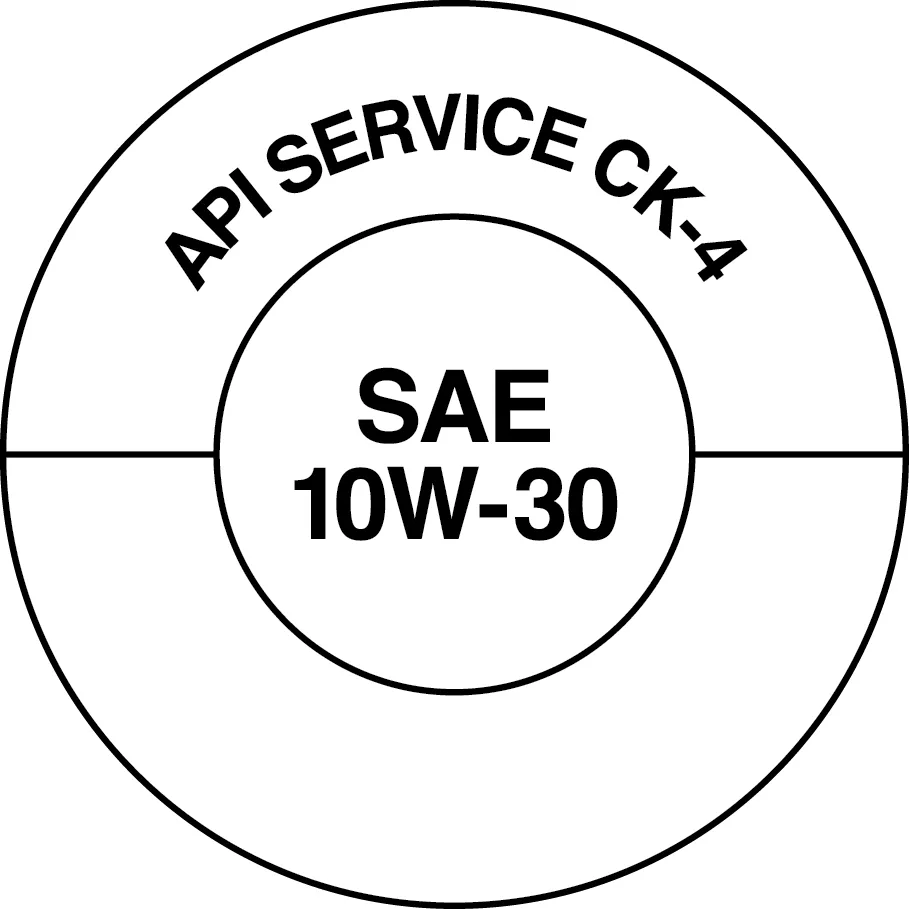
Image source: Web (Bing) / trucknews.com (Web image (fair-use with source credit))
Walk into any auto parts store and you're staring at a wall of oil bottles. The label tells you everything you need to know.
The API donut is that circular symbol on the back or side of the bottle. It has three parts:
- The center shows the API service category. For your 2007 Camry, you want SN, SN Plus, or SP.
- The top arc shows the performance level. "Resource Conserving" means it meets fuel economy standards.
- The bottom arc shows engine test results.
The ILSAC starburst is a separate symbol. Look for GF-5 or GF-6. These ratings mean the oil meets stricter fuel economy and emissions standards.
What to avoid: bottles that only say "meets or exceeds API SN" without the actual certification mark. If the donut isn't printed on the bottle, walk away.
Viscosity grade is the big number on the front. 5W-30 is what you want. The "5W" means it flows like a 5-weight oil when cold. The "30" means it thickens to a 30-weight at operating temperature.
Signs Your Camry Is Telling You Something About the Oil
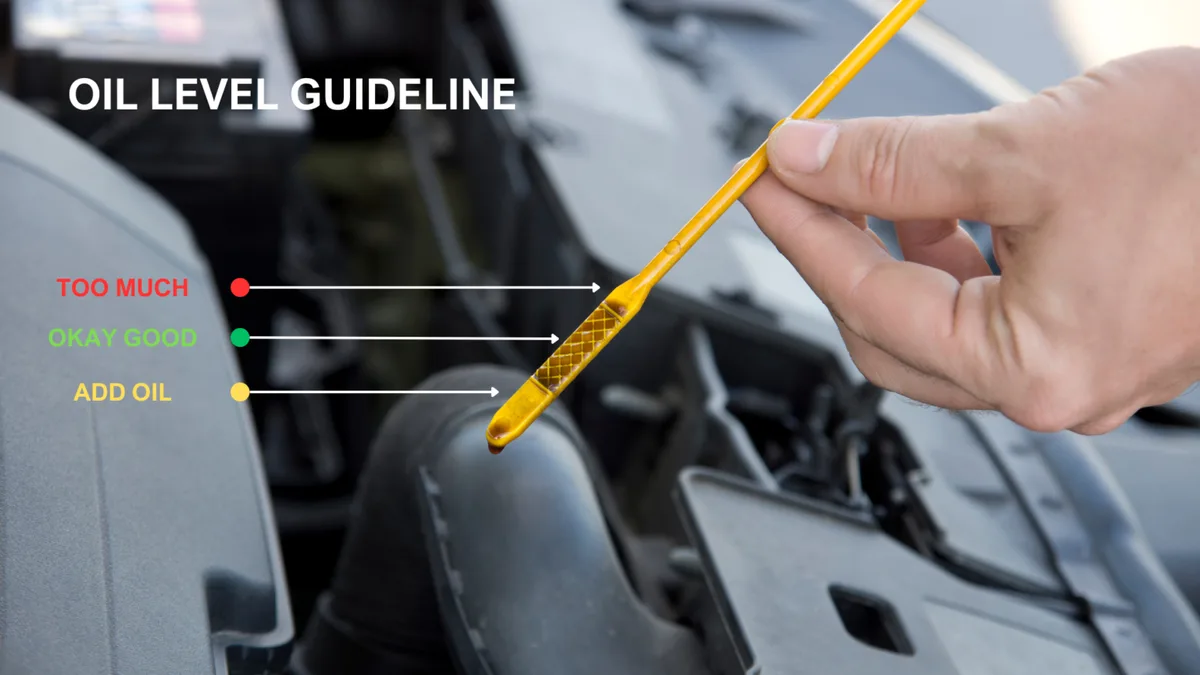
Image source: Web (Bing) / hitchesguide.com (Web image (fair-use with source credit))
Your car talks. Here's what to listen for.
Low oil pressure warning light. If that red oil can icon comes on while driving, pull over immediately. Shut the engine off. Check the dipstick.
Driving with low oil pressure can destroy your engine in minutes.
Ticking or knocking sounds. A light tick at idle often means low oil level. A deeper knock under acceleration means bearings are starved.
Blue smoke from the exhaust. That's oil burning in the combustion chamber. Common on high-mileage 2.4L engines. Switch to high-mileage oil with seal conditioners.
Dark, sludgy oil on the dipstick. Fresh oil is amber and translucent. If yours looks like black grease, you've waited too long between changes.
FAQ: Quick Answers to the Most-Asked Questions
Can I use synthetic oil in my 2007 Camry after using conventional?
Yes. Switching to synthetic is safe at any mileage. It won't cause leaks.
Synthetic cleans better than conventional, so you might notice some initial oil consumption as deposits are cleaned out. That's normal.
How often should I change the oil?
Every 5,000 miles for conventional oil in normal driving. Every 7,500 miles for synthetic. For short trips or stop-and-go traffic, drop those intervals by 2,000 miles.
What happens if I use 0W-20 instead of 5W-30?
Your engine will run. But you'll likely see increased oil consumption, especially in the 2.4L engine. The thinner oil slips past worn piston rings.
Does the brand of oil matter?
The brand matters less than the certification. A store brand with API SN certification and the correct viscosity is better than a premium brand with the wrong spec.
My Camry burns oil. Should I use thicker oil?
No. Thicker oil won't fix worn piston rings or valve seals. Use 5W-30 high-mileage oil.
Check your oil level weekly. If consumption exceeds one quart every 1,000 miles, it's time for mechanical repairs.
Final Verdict: One Oil Recommendation for Each Situation
For a 2007 Camry 2.4L with under 100,000 miles: 5W-30 full synthetic, API SN Plus or SP. Change every 7,500 miles. Check oil every other fill-up.
For a 2007 Camry 2.4L with over 100,000 miles: 5W-30 high-mileage full synthetic. Change every 5,000 miles. Check oil every fuel fill-up.
For a 2007 Camry 3.5L V6 at any mileage: 5W-30 full synthetic. Change every 7,500 miles. Check oil every third fill-up.
For extreme cold climates: 5W-30 full synthetic. No change needed. The synthetic flows well enough at low temperatures.
That's it. Use the right oil, change it on time, check the level regularly. Do those three things and that engine will outlast the rest of the car.