
The first thing most owners discover is that their 2020 Toyota RAV4 doesn't take just any oil off the shelf. Get this wrong and you're looking at reduced fuel economy, potential engine wear, or in the worst case, serious internal damage. The 2020 Toyota RAV4 oil type depends entirely on which version you drive.
Per Toyota's official specifications, the gas model requires SAE 0W-20 full synthetic oil with API SN or SP certification. The hybrid model uses a different oil entirely: SAE 0W-16 full synthetic. As of 2026, these specs remain current and critical to your engine's health.
Let's walk through exactly what you need, why it matters, and how to avoid costly mistakes.
Quick Answer
The 2020 RAV4 gas engine takes 0W-20 full synthetic oil. The hybrid takes 0W-16 full synthetic. Both require API SN or SP certification with ILSAC GF-6 rating.
Use Toyota Genuine Motor Oil or any major brand meeting those specs. Capacity is 4.4 quarts for the gas model with filter change.
Why Getting the Oil Type Wrong Can Cost You an Engine
Modern Toyota engines are built with tight tolerances. They're designed around specific oil viscosities to maintain proper lubrication at operating temperature. Using the wrong oil isn't a minor mistake.
It's a gamble with your engine's lifespan.
The viscosity problem. Oil that's too thick won't flow properly through narrow passages during cold starts. Metal components rub together without proper lubrication for those first critical seconds. Over time, that adds up to accelerated wear on bearings, piston rings, and the valvetrain.
The hybrid difference is real. The 2020 RAV4 Hybrid uses a different engine than the gas model. It's the A25A-FXS, designed specifically to run on 0W-16 oil. This ultra-low viscosity reduces internal friction, which directly improves fuel economy.
Toyota didn't pick 0W-16 arbitrarily. The engine's oil pump, bearing clearances, and internal passages are all engineered around that specific weight.
Warranty implications. If you use oil that doesn't meet Toyota's specifications and an engine failure occurs, your warranty claim gets complicated fast. Dealerships check service records. They can tell what oil was used.
A denied claim on a vehicle still under powertrain warranty is an expensive lesson.
What actually happens inside the engine. Pour in 5W-30 conventional oil because it was on sale. On a cold January morning, that oil is thick like cold honey. Your oil pump struggles to push it through passages designed for thinner 0W oil.
Meanwhile, your engine is running, parts are moving, and lubrication is delayed. Do that for 50,000 miles and you've significantly shortened your engine's service life.
Manufacturer specifications exist for a reason. Toyota's engineers spent years testing and validating these requirements. Ignoring them doesn't save money.
It costs you in the long run.
The Two Engines, Two Different Oils: Gas vs. Hybrid
This is where most confusion happens. The 2020 RAV4 comes in two powertrain variants. Each has its own oil requirement.
There is no one-size-fits-all answer.
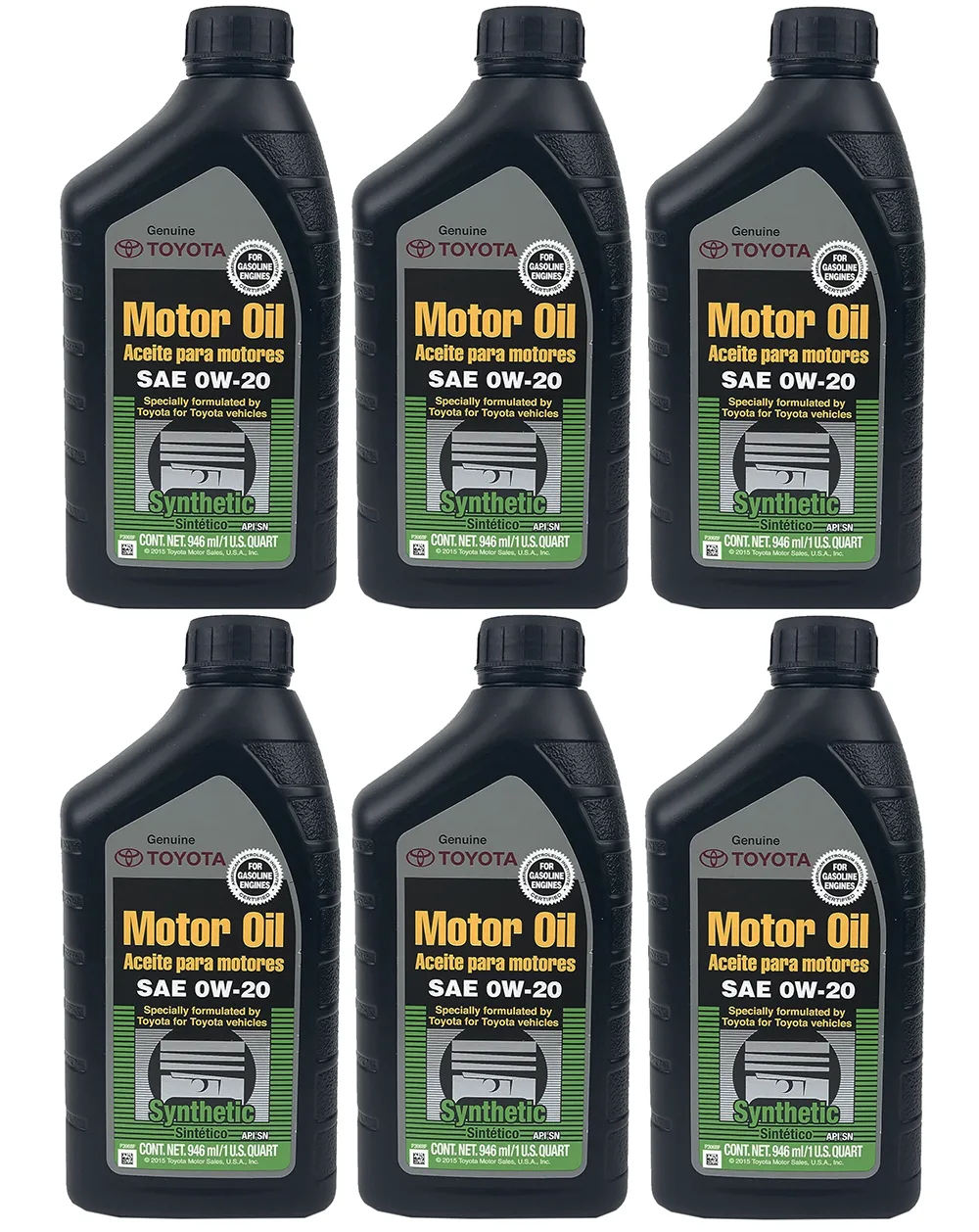
Image source: Web (Bing) / okpetroleummarketplace.com (Web image (fair-use with source credit))
2020 RAV4 Gas Model: 0W-20 Full Synthetic
The gas model uses the A25A-FKS 2.5-liter four-cylinder engine. This engine requires SAE 0W-20 full synthetic oil meeting API SN or SP standards with ILSAC GF-5 or GF-6 certification.
Key specs for the gas model:
| Specification | Detail |
|---|---|
| Oil type | SAE 0W-20 full synthetic |
| API rating | SN or SP "Resource Conserving" |
| ILSAC rating | GF-5 or GF-6 |
| Capacity (with filter) | 4.4 quarts (4.2 liters) |
| Recommended brand | Toyota Genuine Motor Oil or equivalent major brand |
Toyota recommends, but does not require, their own branded oil. Any major brand that meets the specs above works fine. Mobil 1, Pennzoil, Castrol, and Valvoline all make 0W-20 full synthetic that meets these requirements.
Just check the bottle label for the API donut and ILSAC starburst before you buy.
2020 RAV4 Hybrid Model: 0W-16 Full Synthetic
The hybrid model uses the A25A-FXS 2.5-liter engine. The "S" in FXS denotes the Atkinson-cycle variant designed for hybrid operation. This engine requires SAE 0W-16 full synthetic oil.
| Specification | Detail |
|---|---|
| Oil type | SAE 0W-16 full synthetic |
| API rating | SN or SP "Resource Conserving" |
| ILSAC rating | GF-6 |
| Capacity (with filter) | 4.6 quarts (4.4 liters) |
| Recommended brand | Toyota Genuine Motor Oil or equivalent major brand |
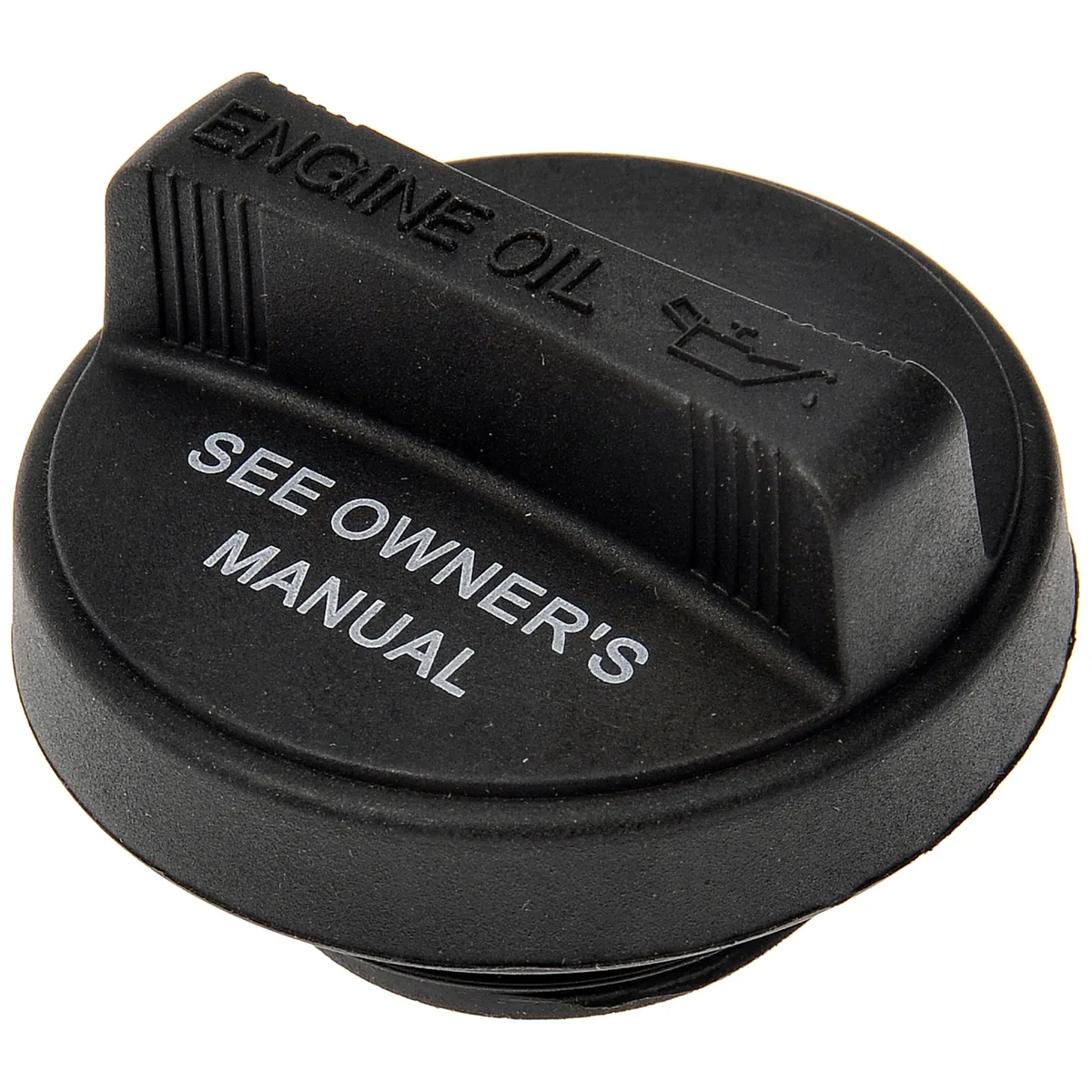
Image source: Web (Bing) / walmart.com (Web image (fair-use with source credit))
Why 0W-16 is different. This oil is even thinner than 0W-20 at operating temperature. That reduced viscosity cuts parasitic drag inside the engine, boosting the hybrid's already impressive fuel economy by a small but measurable amount. Combined with the electric motor assist, every bit of efficiency helps.
Availability matters. 0W-16 is less common than 0W-20. Not every auto parts store stocks it. Big-box retailers like Walmart almost always have it.
Specialty oil brands stock it. If you're in a rural area, you may need to order it online ahead of your oil change.
Can you use 0W-20 in a hybrid in an emergency? Toyota's own documentation allows 0W-20 if 0W-16 is unavailable, but only until your next oil change. Do not make it a permanent switch.
Why Viscosity Matters More Than You Think
Viscosity is the measure of an oil's resistance to flow. Lower numbers mean thinner oil. The "0W" part tells you how the oil behaves in winter.
The second number tells you how it flows at normal engine operating temperature, around 212 degrees Fahrenheit.
The 0W part is critical for cold starts. A 0W oil remains fluid at extremely low temperatures. When you start your RAV4 on a freezing morning, that oil needs to reach every moving part within seconds. A heavier oil like 5W or 10W takes longer to flow, leaving your engine unprotected during that warm-up period.
The second number determines hot protection. At operating temperature, the oil needs to maintain a film thick enough to keep metal surfaces separated. Too thin and parts touch. Too thick and the oil pump works harder, wasting fuel.
Toyota engineered your engine around 0W-20 or 0W-16 at operating temperature.
What happens with the wrong viscosity. Put 5W-30 in a RAV4 and you'll notice slightly worse fuel economy. The oil is thicker, creating more drag. The engine has to work harder.
Over time, the thicker oil may not reach every passage as designed, leading to hot spots and premature wear.
Go too thin and you risk inadequate film strength at high temperatures. Extended highway driving or towing in hot weather could push the oil past its limits, resulting in metal-on-metal contact. That's catastrophic engine damage territory.
Temperature ranges matter less than you think. Modern synthetic oils handle extreme temperatures far better than conventional oils. The 0W-20 or 0W-16 recommendation covers everything from subzero winters to desert summers. You don't need to change viscosity seasonally.
Toyota's spec works year-round in all climates.
The Certification You Need to Look For (API/ILSAC)
You've found a bottle of 0W-20 full synthetic at the store. Great. But not all 0W-20 is created equal.
The certifications on the back label tell you whether the oil actually meets Toyota's requirements.
The API donut. Look for the American Petroleum Institute service symbol, often called the donut. It's a circular mark on the back of the bottle. For your 2020 RAV4, you want API SN or API SP.
SP is the newer standard, introduced in 2020. Both work, but SP offers better protection against low-speed pre-ignition and timing chain wear.
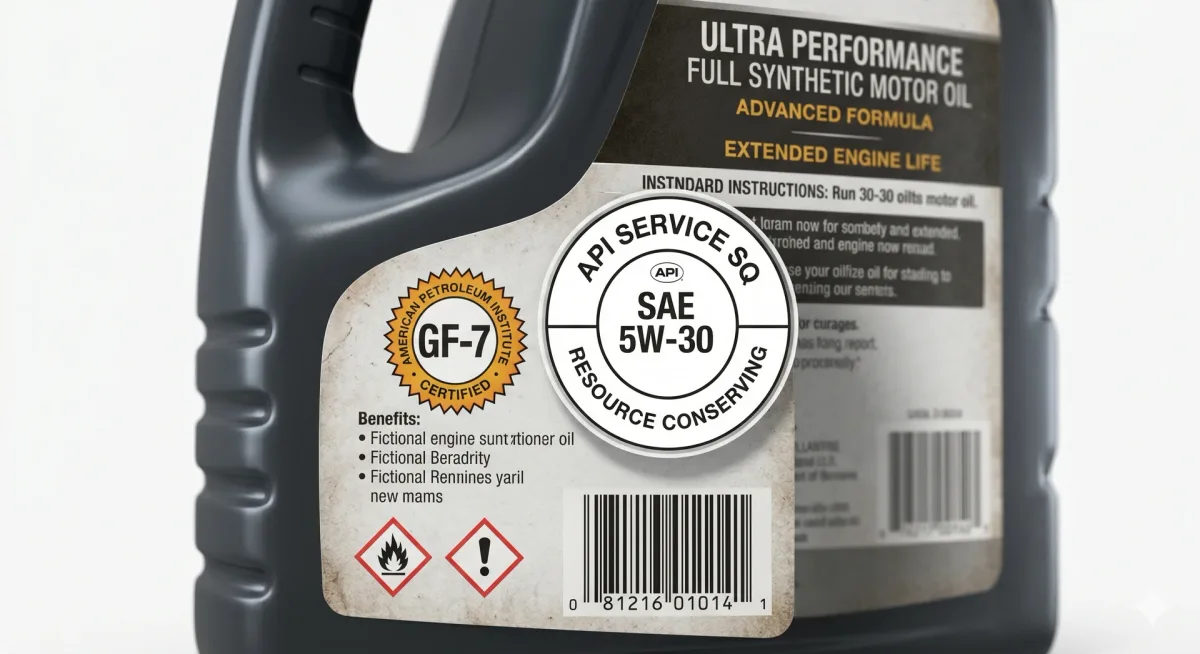
Image source: Bing (Web (fair-use with source credit))
The ILSAC starburst. The International Lubricant Standardization and Advisory Committee uses a starburst-shaped symbol. For your RAV4, look for GF-5 or GF-6. GF-6 is the current standard as of 2026.
It includes improved fuel economy, better deposit protection, and enhanced compatibility with modern engines.
What happens without these certifications. Oil without API or ILSAC certification may not meet the quality baseline Toyota requires. It might lack proper anti-wear additives. It might break down faster under heat.
It might not protect your engine during extended oil change intervals. Always buy oil from major, reputable brands. Generic or store-brand oil can work if it carries the proper certifications, but stick with names you trust.
How to verify on the bottle. Flip the container around. The API donut and ILSAC starburst are typically printed on the back label. If you don't see them, put the bottle back.
No exceptions. Toyota's owner's manual specifically calls out API-certified "Resource Conserving" oil. That phrase matters.
It means the oil includes additives that improve fuel economy and protect emission systems.
A quick reference:
| Certification | What It Means | Required for 2020 RAV4 |
|---|---|---|
| API SN | Introduced 2010, good protection | Yes (minimum) |
| API SP | Introduced 2020, improved protection | Yes (preferred) |
| ILSAC GF-5 | Fuel economy, deposit control | Yes (minimum) |
| ILSAC GF-6 | Latest standard, better wear protection | Yes (preferred) |
If you buy Toyota Genuine Motor Oil, these certifications are guaranteed. That's the safest option if you want zero uncertainty. But major brands with the proper certs work perfectly and typically cost less.
Step-by-Step: How to Check Your Current Oil Level
Before you change anything, know what you're working with. Checking your oil level is simple. Do it regularly.
Your RAV4's engine will thank you.
When to check. Warm engine, level ground. Park your car. Let it sit for five minutes after turning off the engine.
This allows oil to drain back into the pan for an accurate reading. Cold checks work too, but the level will read slightly lower.
Where to find the dipstick. Open the hood. The oil dipstick has a bright yellow or orange handle, usually on the driver's side of the engine. It's clearly labeled "Engine Oil" on most models.
Pull it straight out.
How to read it. Wipe the dipstick clean with a rag. Insert it fully, then pull it out again. Look at both sides.
The oil level should be between the two marks, typically labeled "L" and "F" or with crosshatching. Low means you're at the bottom mark. Full means you're at the top.
What to look for beyond the level. Clean oil is amber and transparent. Dark oil is still functional but getting old. Milky or frothy oil means coolant contamination, which requires immediate attention from a mechanic.
Gritty oil indicates internal wear or debris. If you see either of those, don't drive the car. Get it checked.
How often to check. Toyota recommends checking oil level at every fuel fill-up. Realistically, once a month is fine for most drivers. Before long trips, check it.
If you notice the oil level dropping between changes, you might have a consumption issue worth investigating.
A note on the dipstick reading. The 2020 RAV4's dipstick can be tricky to read on the first try. The oil film is thin with 0W synthetic oils. Wipe it clean, reinsert, and check again if you're unsure.
Reading the dipstick at eye level helps avoid parallax error.
Oil Capacity: How Much You'll Actually Need
Knowing how much oil to buy saves you a trip back to the store. The 2020 RAV4 gas model takes 4.4 quarts with a filter change. The hybrid takes 4.6 quarts.
Buy a full 5-quart jug and you'll have a small amount left over.
Why the hybrid needs more. The hybrid's oil pan is slightly larger to accommodate the extra cooling needs of the Atkinson-cycle engine. That extra 0.2 quarts matters. Underfilling by even half a quart can cause oil starvation during hard cornering or steep inclines.
What to buy. A single 5-quart jug of the correct oil covers either engine. Most major brands sell 0W-20 and 0W-16 in 5-quart containers. You'll use most of it.
Keep the leftover quart for top-offs between changes.
Don't forget the filter change. The capacity figures above assume you're replacing the oil filter. If you're only draining and refilling without a new filter, subtract about 0.2 quarts. But there's rarely a good reason to skip the filter.
They're cheap. Replace it every time.
Topping off between changes. Check your oil level monthly. If it's low, add a small amount of the same oil you used last time. Half a quart is usually plenty.
Overfilling is just as bad as underfilling. Too much oil creates foaming and puts extra pressure on seals.
The Oil Change Routine for a 2020 RAV4
Changing your own oil is straightforward. It saves money and gives you peace of mind knowing the job was done right. Here's what you need and how to do it.
Tools and Parts You'll Need
| Item | Detail |
|---|---|
| 0W-20 or 0W-16 full synthetic oil | 5 quarts, API SN/SP certified |
| Oil filter | Toyota 90915-YZZF1 or equivalent |
| Drain plug washer | Toyota 90430-12031 (copper crush washer) |
| 14mm socket or wrench | For the drain plug |
| Oil filter wrench | Cap-style or strap wrench |
| Drain pan | At least 6-quart capacity |
| Funnel | Long neck preferred |
| Torque wrench | 30-80 ft-lb range |
| Floor jack and jack stands | Or ramps |
| Shop rags | Plenty of them |
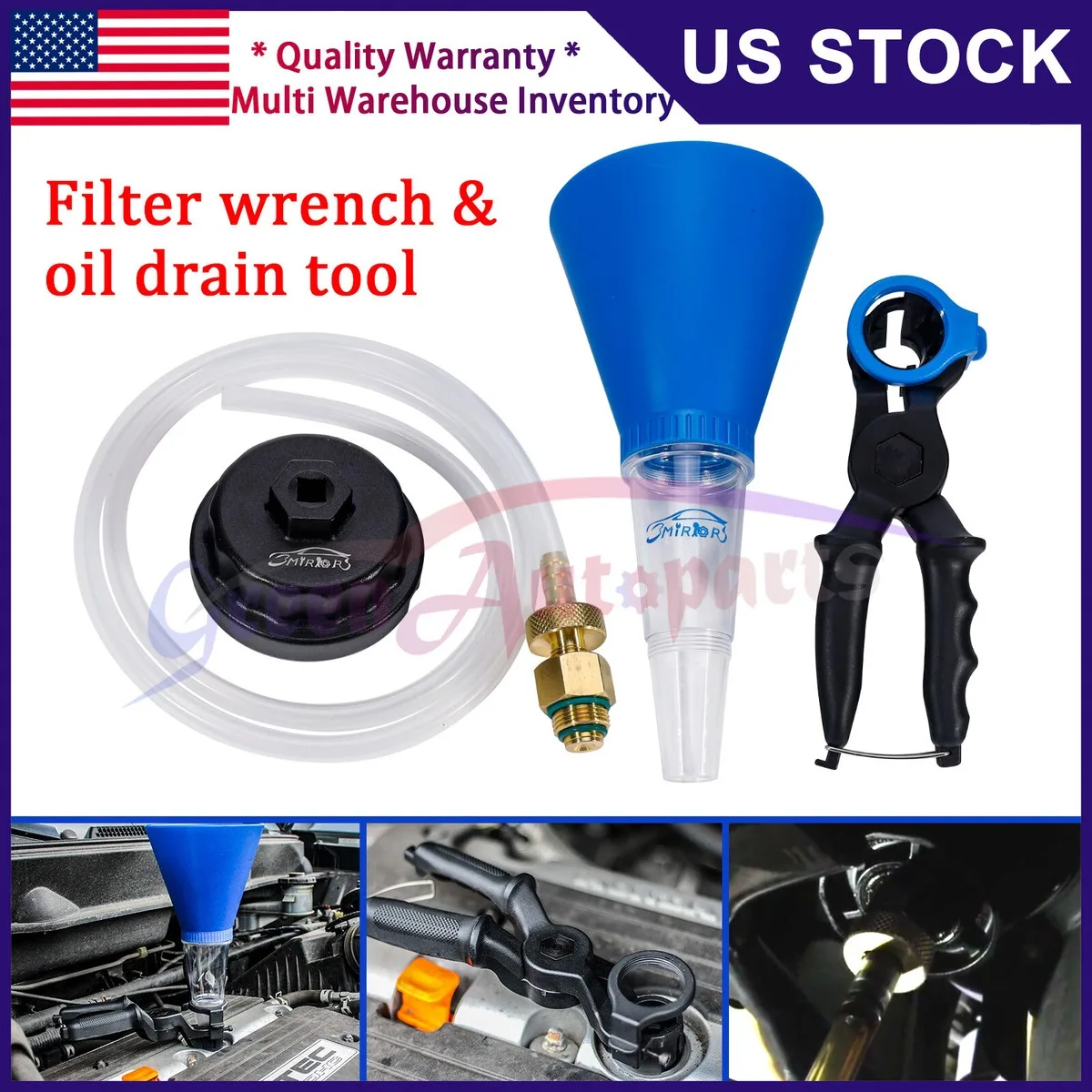
Image source: Bing (Web (fair-use with source credit))
Step-by-Step Change Process
Step 1: Warm up the engine. Run the engine for a few minutes. Warm oil drains faster and carries more suspended contaminants. Don't let it get hot enough to burn you.
Lukewarm is perfect.
Step 2: Lift and secure the vehicle. Use ramps or a floor jack with jack stands. Never work under a car supported only by a jack. Position the stands under the designated lift points on the frame rails.
Step 3: Drain the old oil. Place the drain pan under the oil pan. Use a 14mm socket to remove the drain plug. Turn it counterclockwise.
Let the oil drain completely. This takes 5 to 10 minutes.
Step 4: Replace the crush washer. The old washer is compressed and may not seal properly a second time. Install the new Toyota crush washer on the drain plug. Torque the plug to 29 ft-lb.
That's about a quarter turn past snug.
Step 5: Remove the oil filter. The filter is on the front of the engine, accessible from underneath or above depending on your model. Use a cap-style wrench for the factory filter. Turn counterclockwise.
Expect some oil to spill. Have rags ready.
Step 6: Install the new filter. Lubricate the new filter's rubber gasket with a little fresh oil. Screw it on by hand until the gasket contacts the mounting surface. Then tighten it another three-quarters turn by hand.
No tools needed for installation.
Step 7: Add new oil. Lower the vehicle. Remove the oil fill cap on top of the engine. Insert a funnel.
Pour in about 4 quarts initially. Check the dipstick. Add more slowly until the level reaches the full mark.
Step 8: Check for leaks. Start the engine and let it run for 30 seconds. Check under the vehicle for drips around the drain plug and filter. If you see any, tighten accordingly.
Step 9: Reset the maintenance light. Turn the ignition to ON without starting the engine. Make sure the odometer is showing. Switch the display to trip A.
Turn the ignition OFF. Hold the trip reset button while turning the ignition back to ON. Continue holding until the maintenance light flashes and goes out.
Common Mistakes DIY Owners Make
Even experienced DIYers slip up sometimes. Here are the most common errors and how to avoid them.
Using the wrong viscosity. This is the biggest one. The hybrid takes 0W-16, not 0W-20. The gas takes 0W-20, not 5W-30.
Double-check before you pour. Label the jug if you have multiple vehicles.
Over-tightening the drain plug. The drain plug torque is only 29 ft-lb. That's not very tight. Going much harder can strip the threads in the oil pan.
A stripped oil pan means a costly replacement. Use a torque wrench.
Forgetting the crush washer. Reusing the old crush washer is tempting but risky. The copper washer compresses to form a seal. Once compressed, it won't seal as well the second time.
Leaks develop slowly. You might not notice until the oil level drops dangerously low.
Overfilling the engine. Adding the entire 5-quart jug without checking the dipstick is a common mistake. Most engines need less than 5 quarts. Overfilling causes foaming, which reduces oil pressure and lubrication.
Always add slowly and check between pours.
Using the wrong filter. Not all oil filters are the same. A filter that doesn't fit properly can leak or restrict oil flow. Stick with the Toyota OEM filter or a high-quality equivalent from a major brand like Mobil 1, Fram Ultra, or Wix.
Skipping the filter change. Replace the filter every single time. It costs around $10. It holds about half a quart of dirty oil.
Leaving old oil in the system defeats the purpose of the change.
Severe Service vs. Normal Service: Which Schedule Fits You?
Toyota's standard oil change interval is 10,000 miles. But that only applies under normal driving conditions. Many drivers qualify for the severe service schedule, which cuts the interval to 5,000 miles.
What counts as severe service. Toyota defines severe service as any of the following:
- Repeated short trips under 5 miles in normal temperatures
- Short trips under 10 miles in freezing temperatures
- Extensive idling or stop-and-go traffic
- Driving on dusty, muddy, or unpaved roads
- Towing a trailer or carrying heavy cargo
- Using a car-top carrier
- Operating in extreme heat or cold
Who qualifies. If you drive in a city, you likely qualify. If you live in a cold climate, you likely qualify. If you tow anything, you definitely qualify.
If you're not sure, assume severe service. Most drivers fall into this category.
The 5,000-mile rule of thumb. Changing oil every 5,000 miles is cheap insurance. It costs about $40 to $50 for synthetic oil and a filter. An engine replacement costs thousands.
The math is clear.
The hybrid is different. The hybrid engine runs less often than a conventional engine. That doesn't mean it needs oil changes less frequently. Time-based intervals still apply.
Change the oil every 12 months regardless of mileage.
Can You Switch Between 0W-16 and 0W-20?
This question comes up constantly. Here's the honest answer.
For the hybrid: don't make it permanent. Toyota specifies 0W-16 for a reason. The hybrid's engine is optimized for that viscosity. Running 0W-20 permanently will reduce fuel economy slightly and may increase wear over the long term.
If you must use 0W-20 because 0W-16 isn't available, that's acceptable for one oil change interval. Switch back at the next change.
For the gas model: 0W-16 is not recommended. The gas engine's oil clearances and pump are designed for 0W-20. Using 0W-16 in the gas model could lead to inadequate film strength at high temperatures. Don't do it.
What about 5W-30? No. Do not use 5W-30 in either engine. It's too thick for the tight tolerances of modern Toyota engines.
You'll see reduced fuel economy and potentially increased wear during cold starts.
Mixing brands. You can mix different brands of the same viscosity and certification. If you have half a quart of Mobil 1 and need to top off with Castrol, that's fine. They're both 0W-20 full synthetic meeting API SN.
Don't make a habit of mixing, but it won't hurt in a pinch.
The bottom line on switching. Stick with what Toyota recommends. It's the safest choice for your engine's longevity. If you're in an emergency situation, a temporary substitution is acceptable.
Just don't make it your regular practice.
Choosing Between Toyota Genuine Oil and Brand-Name Synthetics
You've got options. Toyota Genuine Motor Oil works perfectly and removes all guesswork. Major brands like Mobil 1, Pennzoil, Castrol, and Valvoline also meet the specs.
The choice comes down to price and convenience.
Toyota Genuine oil is the safe bet. It's formulated specifically for Toyota engines. It carries the API SN and ILSAC GF-5 certifications Toyota requires. It costs a few dollars more per quart than generic options.
That premium buys peace of mind.
Brand-name synthetics work just as well. Mobil 1 Advanced Fuel Economy in 0W-20 or 0W-16 meets Toyota's requirements. Pennzoil Platinum and Castrol EDGE also pass the specs. Aggregate reviews show no performance difference between these and the OEM oil in normal driving conditions.
What to avoid. Store-brand oils from discount retailers may not carry proper certifications. Some off-brands skip the API testing to save costs. Look for the API donut and ILSAC starburst on the label.
If they're missing, keep shopping.
Our recommendation. Buy whichever certified option is cheaper and available. For the hybrid, 0W-16 can be harder to find. Toyota Genuine is often easier to locate for that viscosity.
For the gas model, any major brand's 0W-20 works fine.
When to Call a Mechanic Instead of Doing It Yourself
Oil changes are beginner-friendly. But some situations call for professional help.
You don't have the tools or space. Working on a sloped driveway without jack stands is dangerous. If you can't safely lift and secure the vehicle, pay a shop. It's not worth the risk.
You stripped the drain plug. This happens. The previous owner or a careless mechanic overtightened it. Now the threads are damaged.
A shop can install a thread repair kit or replace the oil pan. DIY thread repair is possible but tricky.
The oil filter is stuck. Factory filters sometimes weld themselves to the engine. A strap wrench won't budge them. Professional shops have specialized tools and penetrating oils to handle this without damaging the filter housing.
You want a full inspection. An oil change is a good time to check other components. Mechanics look for leaks, worn belts, and fluid condition. If you're due for other maintenance, bundling it with the oil change saves time.
The cost difference is small. A DIY oil change costs about $35 to $45 for oil and a filter. A quick-lube shop charges $60 to $80. The extra $25 to $35 covers labor, disposal, and a quick check of other fluids.
For many drivers, that's money well spent.
Frequently Asked Questions
Can I use conventional oil instead of synthetic?
No. The 2020 RAV4 requires full synthetic oil. Conventional oil breaks down faster at high temperatures and doesn't flow as well in cold weather.
Using it can void your warranty and cause engine damage over time.
How do I reset the oil maintenance light?
Turn the ignition to ON. Make sure the odometer is showing. Switch the display to trip A.
Turn the ignition OFF. Hold the trip reset button while turning the ignition back to ON. Keep holding until the maintenance light flashes and goes out.
What happens if I put 5W-30 in my RAV4?
The oil will be too thick for the engine's tight clearances. You'll notice slightly worse fuel economy immediately. Over time, the thicker oil may not reach every passage during cold starts, leading to accelerated wear.
Drain and replace it with the correct oil as soon as possible.
How often should I check my oil level?
Toyota recommends checking at every fuel fill-up. Monthly checks are sufficient for most drivers. Check before long trips.
If you notice the level dropping between changes, have the engine inspected for oil consumption issues.
Does the hybrid really need 0W-16?
Yes. The hybrid's Atkinson-cycle engine is designed specifically for 0W-16 oil. Using 0W-20 is acceptable in an emergency for one change interval, but you should switch back at the next change.
The 0W-16 viscosity helps maximize the hybrid's fuel economy.
Can I use any brand of 0W-20 or 0W-16?
Any major brand that carries the API SN or SP certification with the ILSAC GF-5 or GF-6 starburst works. Toyota Genuine, Mobil 1, Pennzoil, Castrol, and Valvoline all meet these standards. Avoid store brands that don't show proper certifications on the label.
The Bottom Line
Use SAE 0W-20 full synthetic for the gas model and SAE 0W-16 full synthetic for the hybrid. Both need API SN/SP and ILSAC GF-5/GF-6 certification. Change the oil every 5,000 miles under severe service conditions.
Always replace the crush washer and filter with each change. Follow these rules and your RAV4's engine will run smoothly for years to come.