

Image source: Bing (Web (fair-use with source credit))
If you're maintaining a Toyota forklift, getting the oil wrong isn't a small mistake. It's the kind that costs you an engine rebuild or a hydraulic pump replacement. The "toyota forklift oil type" question comes up constantly, and for good reason.
These machines have three separate fluid systems, and each one demands a specific formulation.
Toyota's specifications, as of 2026, continue to recommend API CJ-4 or CK-4 diesel engine oil in 15W-40 for most internal combustion models. Hydraulic systems typically call for ISO VG 46. Transmission fluid varies by whether you're running electric or IC.
Skip the guesswork, and you'll save thousands in downtime.
Quick Answer
Toyota forklifts need three different fluids. Engine oil must be API CJ-4 or CK-4 rated. Use SAE 15W-40 for most climates.
Hydraulic fluid should be ISO VG 46. Transmission fluid depends on the model. Electric forklifts use Toyota Genuine Transmission Fluid.
Internal combustion models use Toyota Genuine ATF. Always check your model's spec plate first.
Why Choosing the Wrong Oil Can Cost You Thousands
Forklifts aren't cars. They run at idle for long stretches, haul heavy loads at low speeds, and operate in environments passenger engines never see. The oil in a Toyota forklift has to handle soot loading from diesel combustion, extreme pressure on gear teeth, and hydraulic cycles that spike pressure to 3,000 PSI.
Use the wrong viscosity, and you'll see consequences fast. Too thick in cold weather means the hydraulic pump cavitates. It sucks air instead of fluid and starts making a grinding noise.
Too thin in summer, and your engine oil shears down to useless within 100 hours. Either way, you're looking at component wear that shows up as metal shavings in the filter.
The real pain point is downtime. A forklift that's down for a week costs a warehouse thousands in lost productivity. Replacement engines for Toyota's popular 4Y and 1DZ models run anywhere from $3,000 to $6,000 installed.
A hydraulic pump failure from wrong fluid runs $800 to $1,500 plus labor.
Aggregate reviews from fleet maintenance forums confirm that most oil-related failures trace back to one thing. Someone used the wrong spec. Usually because they grabbed what was on the shelf without checking the plate.
The Three Fluids Your Toyota Forklift Needs (and Why They're Different)
A Toyota forklift has three completely separate fluid circuits. You cannot mix them. You cannot substitute one for another.
Each system has its own reservoir, its own pump, and its own set of tolerances.

Image source: Web (Bing) / shuntecpress.com (Web image (fair-use with source credit))
Engine Oil
This is the most straightforward of the three. Toyota's internal combustion forklifts use diesel engines. The 4Y runs on gasoline or LPG.
The 1DZ and 2Z are diesels. All require API CJ-4 or CK-4 rated oil.
Why those specific API ratings? Modern diesel engines have exhaust gas recirculation and, on newer models, diesel particulate filters. The oil has to handle soot without thickening.
It has to keep detergency high to prevent sludge in an engine that spends hours at low idle.
The most common viscosity is SAE 15W-40. That covers ambient temperatures from about -10°F to 100°F. If you're operating in a cold storage warehouse below that range, choose SAE 10W-30.
Hydraulic Fluid
The hydraulic system powers the mast, the forks, and any attachments. Toyota specifies ISO VG 46 for most models.
ISO VG 46 means the oil has a kinematic viscosity of 46 centistokes at 40°C. It's a mid-weight hydraulic oil. Not too thin to lose film strength under load.
Not too thick to flow through control valves at startup.
Some cold-storage operations drop to ISO VG 32. Some heavy outdoor applications like lumber yards bump to ISO VG 68. But 46 is the factory standard for the vast majority of Toyota models.
Never use engine oil in a hydraulic system. The additive packages are completely different. Engine oil has detergents that can foam and cause cavitation in hydraulic pumps.
Transmission Fluid
This is where things get model-specific. Electric Toyota forklifts use Toyota Genuine Transmission Fluid. It's a light, low-friction oil designed for gearboxes and differentials.
Internal combustion Toyota forklifts with automatic transmissions use Toyota Genuine ATF, which is Dexron III compatible. Manual transmissions and gear drives use Toyota Genuine Gear Oil, typically SAE 80W-90.
The worst mistake is using engine oil in the transmission. It lacks the friction modifiers that wet clutches need and will cause slipping within hours.
How to Find the Exact Oil Spec for Your Model
You can't just look up "Toyota forklift oil type" online and call it done. The spec depends on the year, the engine model, and whether you're running electric or internal combustion. Here's how to find the exact answer for your specific machine.
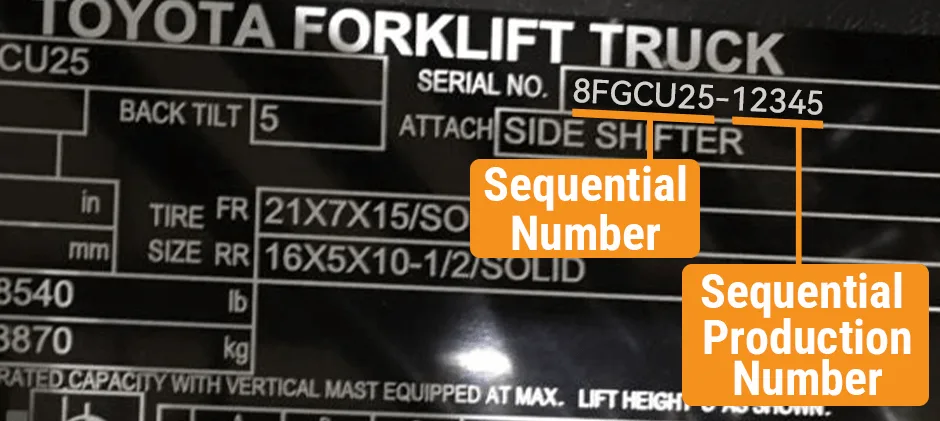
Image source: Web (Bing) / uk.fridayparts.com (Web image (fair-use with source credit))
Step 1: Locate the Model and Serial Number Plate
Every Toyota forklift has a metal plate riveted to the frame. On most models, it's on the cowl below the steering column or on the left side of the chassis near the operator's seat. The plate shows the model number, serial number, engine type, and year of manufacture.
Write these down.
Step 2: Check the Oil Spec Sticker
Toyota puts a fluid specification decal under the hood or near the hydraulic reservoir. It lists the engine oil API grade and viscosity, hydraulic fluid ISO VG grade, and transmission fluid number. If the sticker is worn off, look for a sticker on the frame rail near the fuel tank.
Step 3: Use the Service Manual
Toyota's official service manuals are available through their dealer network. Most independent shops can also pull specs by model number. If you're managing a fleet, keep a digital copy of the manuals for your specific models.
Step 4: When in Doubt, Call the Dealer
Toyota Material Handling dealers can look up your exact spec from the serial number in about two minutes. It's free. Do this before you buy a 55-gallon drum of the wrong oil.
Understanding Viscosity: What the Numbers Really Mean
Viscosity is the oil's resistance to flow. Get it right, and the oil forms a protective film between moving parts. Get it wrong, and you get metal-to-metal contact.
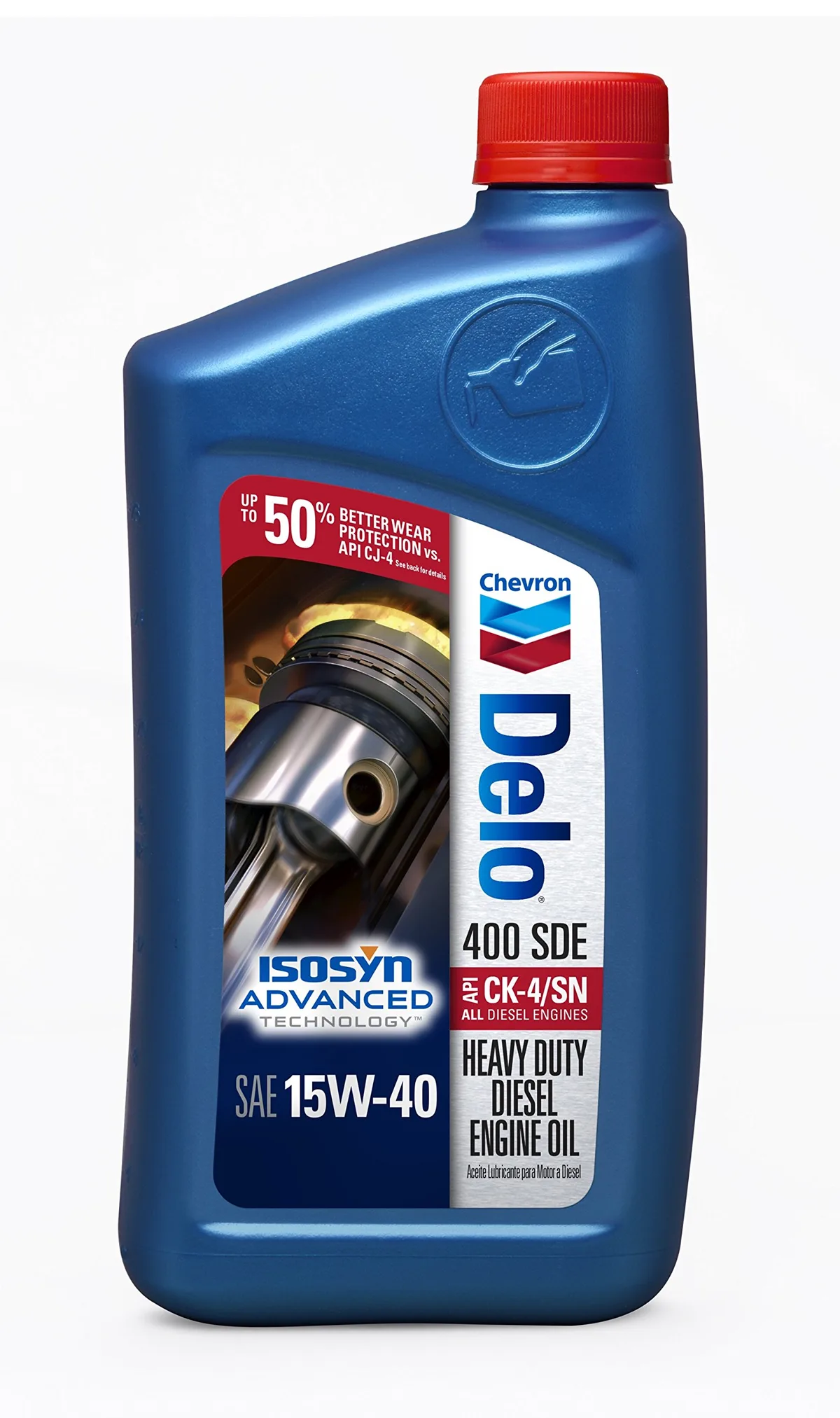
Image source: Web (Bing) / desertcart.in (Web image (fair-use with source credit))
SAE 15W-40 breaks down like this. The "15W" is the winter rating. It tells you how the oil flows at low temperatures.
A 15W oil pumps well down to about -10°F. The "40" is the hot rating. It tells you the oil's viscosity at 212°F.
A 40-grade oil is thick enough to protect engine bearings at operating temperature.
Toyota forklifts operate in a wide range of environments. Here's a simple guide.
| Ambient Temperature | Recommended Engine Oil | Recommended Hydraulic Fluid |
|---|---|---|
| Above 32°F | SAE 15W-40 | ISO VG 46 |
| 10°F to 32°F | SAE 10W-30 | ISO VG 32 |
| Below 10°F | SAE 5W-30 | ISO VG 32 (low-temp) |
Run 15W-40 in a freezer warehouse at -10°F, and the oil becomes like cold honey. The engine starter struggles. The hydraulic pump cavitates.
Seals leak because pressure builds in the wrong places.
Run 5W-30 in a hot outdoor yard in July, and the oil thins out. The engine loses oil pressure at idle. The hydraulic control valves start slipping, and the mast drifts down under load.
Manufacturer specifications indicate that staying within the recommended viscosity range adds 20% to 30% more life to pumps and engines. That's the difference between a pump that lasts 5,000 hours and one that fails at 2,000.
Synthetic vs. Conventional
Synthetic oils flow better in cold and resist viscosity loss in heat. If you operate in extreme temperatures, synthetic is worth the premium. For a warehouse that stays between 50°F and 95°F year-round, conventional oil at the correct viscosity performs perfectly well within the recommended change intervals.
The Real Risk of Using Passenger Car Motor Oil
This mistake happens more than you'd think. Someone grabs a jug of 5W-30 off the shelf because it's what they put in their pickup truck. They dump it in the forklift's hydraulic system or engine.
Within a few shifts, problems start.
Passenger car motor oil is formulated for gasoline engines. Toyota forklifts with diesel engines need API CJ-4 or CK-4 oil. These grades have higher levels of anti-wear additives like zinc and phosphorus.
They also have better soot-handling detergents.
Gasoline engine oil, API SN or SP, lacks these additives. Run it in a diesel forklift engine, and you'll see accelerated camshaft wear. The flat tappets in Toyota's 1DZ engine are especially sensitive.
That wear shows up as valve train noise and lost compression within about 500 hours.
Using engine oil in the hydraulic system is equally damaging. Engine oil contains detergents and dispersants that can foam under hydraulic pressures. Foam causes spongy control response and cavitation damage in pumps.
The right hydraulic fluid has anti-foam agents, demulsifiers, and anti-wear additives matched to hydraulic pressures. ISO VG 46 hydraulic fluid is not expensive. A five-gallon pail runs about $40 to $60.
That's cheap insurance against a $1,500 pump replacement.
Some operators try universal tractor hydraulic fluid as a shortcut. It is not the right choice for Toyota forklifts. UTTO has friction modifiers designed for wet brakes on farm equipment.
Those modifiers can cause clutch slip in Toyota transmissions.
Safe Practices for Changing Forklift Oil (Without Voiding Warranty)
Changing oil on a Toyota forklift is straightforward. But there are specific steps you need to follow to keep your warranty intact and prevent contamination.
Gather the Right Materials
You need more than just the oil itself. Before you start, have these on hand.
- Oil in the correct spec and viscosity
- A new oil filter for the engine
- A clean drain pan with at least 8-quart capacity for engine oil, 15-gallon capacity for hydraulics
- Ratchet, socket set, and filter wrench
- Shop rags and gloves
The Engine Oil Change Process
Warm up the engine for about five minutes. Warm oil drains faster and carries more suspended contaminants. Park the forklift on level ground and set the parking brake.
Locate the drain plug under the engine. Place your drain pan, remove the plug, and let the oil drain completely. This takes about five minutes on a warm engine.
Remove the old oil filter. Clean the mounting surface. Apply a thin film of fresh oil to the new filter's gasket.
Screw it on by hand until the gasket contacts, then tighten another three-quarters turn.
Replace the drain plug. Refill with the correct amount of new oil. Toyota's 4Y engine takes about 4.5 quarts with a filter change.
The 1DZ takes about 6 quarts. Check the dipstick, start the engine, let it idle for a minute, then check again.
Hydraulic Fluid Change
Hydraulic fluid changes require more planning. The system holds 6 to 12 gallons depending on the model. You need a clean container large enough to catch the old fluid.
Locate the hydraulic tank drain. Some models have a valve at the bottom. Others require you to remove a plug.
Drain the old fluid completely.
Clean or replace the hydraulic return filter. This is often overlooked but critical. Contaminated return filters can push debris back into the system within hours of a fresh fluid change.
Refill with the correct ISO VG grade. Run the engine and cycle the mast up and down several times to bleed air from the system. Check the sight glass or dipstick and top off as needed.
Warranty Considerations
Toyota's warranty terms require that any fluid you use meets their published specifications. Using a fluid that doesn't meet the spec can void coverage on the affected system. Keep records of every oil change, including the brand, grade, and date.
When to Call a Dealer vs. DIY
Not every maintenance task is a DIY job. Knowing the line between what you can handle and what needs a dealer saves both time and money.
DIY-Friendly Tasks
- Engine oil and filter changes
- Hydraulic fluid changes with proper equipment
- Transmission fluid changes
- Fluid level checks and top-offs
Any of these tasks are straightforward with basic mechanic skills. The tools required are standard shop tools, and the procedures are documented in Toyota's owner manuals.
When to Call the Dealer
- You cannot find the original spec decal and don't have the service manual
- The engine has signs of internal wear such as knocking or low compression
- The hydraulic pump is making noise or the mast drifts down under load
- The transmission is slipping after a fluid change
- You need to flush a system that received the wrong fluid
Dealer diagnostic time runs about $150 to $250 per hour as of 2026. That sounds expensive until you compare it to the cost of guessing wrong. A misdiagnosed hydraulic issue can lead to replacing a pump that was fine and missing the actual problem in the control valve.
The Hybrid Approach
Many fleet managers use a hybrid model. They handle routine oil changes in-house with a bulk oil contract. They send the machine to a dealer for its annual or 2,000-hour major service.
That major service includes fluid analysis, which catches problems before they become failures.
Fluid analysis costs about $25 to $40 per sample. It tests for viscosity, contamination, and wear metals. A single analysis can tell you whether your 15W-40 is still in grade or has sheared down to a 30-weight.
That kind of data pays for itself the first time it catches a coolant leak into the oil before the engine fails.
Common Mistakes Even Experienced Mechanics Make
You'd be surprised how often seasoned mechanics grab the wrong jug. Forklifts look simple on the surface, but their fluid systems have quirks that catch people off guard.
Using ATF in the Hydraulic System
Automatic transmission fluid is red and familiar. Some mechanics assume it works fine in forklift hydraulics. It doesn't.
ATF has different friction modifiers and a different viscosity profile than ISO VG 46 hydraulic fluid. Run ATF in the hydraulics, and you'll get seal swelling, erratic mast response, and eventual pump cavitation.
Ignoring the Hydraulic Return Filter
A hydraulic fluid change without replacing the return filter is a half-done job. The return filter catches wear particles from the pump and cylinders. If you change the fluid but leave a clogged filter in place, the fresh oil gets contaminated within the first few cycles.
Replace it every time.
Overfilling the Hydraulic Tank
Hydraulic fluid expands as it heats up. Overfill the tank, and the fluid pushes out through the breather cap at operating temperature. You end up with oil on the floor and a low-fluid condition that causes aeration.
Fill to the cold mark on the sight glass.
Mixing Oil Brands at Top-Off
Topping off with a different brand is usually fine if the API rating and viscosity match. But it's not ideal. Different brands use different additive packages.
Over time, mixing brands during top-offs creates an unpredictable additive blend. Stick with one brand for the life of the fluid.
Skipping the Warm-Up
Cold hydraulic fluid is thick. If you crank a cold forklift and immediately cycle the mast at full speed, you're putting extreme pressure on seals and pump components. Let the machine idle for three to five minutes in warm weather, longer in cold.
Let the fluid circulate before working it hard.
Quick Reference: Oil Specs for Toyota's Most Popular Engines
Here is the cheat sheet for Toyota's three most common forklift engines.
| Engine Model | Fuel Type | Engine Oil (API) | Engine Oil Viscosity | Hydraulic Fluid | Transmission Fluid |
|---|---|---|---|---|---|
| 4Y | Gasoline/LPG | API SL or higher | SAE 10W-30 or 15W-40 | ISO VG 46 | Toyota ATF Dexron III |
| 1DZ | Diesel | API CJ-4 or CK-4 | SAE 15W-40 (10W-30 cold) | ISO VG 46 | Toyota ATF Dexron III |
| 2Z | Diesel | API CJ-4 or CK-4 | SAE 15W-40 | ISO VG 46 | Toyota ATF Dexron III |
Toyota's 4Y engine runs on gasoline or LPG. It is less demanding on oil than the diesel engines. You can use API SL or higher passenger car oil in a pinch, but heavy-duty diesel oil provides better protection under sustained load.
The 1DZ and 2Z are true industrial diesels. They need diesel-rated oil with strong soot-handling ability. Never put gasoline engine oil in either of these engines.
For electric models, the hydraulic fluid remains ISO VG 46. The transmission uses Toyota Genuine Transmission Fluid, a special low-viscosity gear oil. Always confirm with the service manual for your specific electric model number.
Frequently Asked Questions
What happens if I use 10W-30 instead of 15W-40 in my Toyota forklift?
In moderate climates, it works fine. Below 32°F, 10W-30 is actually better. Above 90°F, 15W-40 provides better hot viscosity protection.
Switch based on your operating temperature.
Can I use hydraulic oil in the engine?
No. Hydraulic oil lacks detergents and anti-wear additives designed for combustion engines. It will cause rapid carbon buildup and valve train wear.
Never put hydraulic fluid in the crankcase.
How often should I change the oil in a Toyota forklift?
Toyota recommends engine oil changes every 250 hours for diesel models and every 500 hours for LPG models. Hydraulic fluid changes are typically every 1,000 to 2,000 hours. Check your specific model's service schedule.
Is Toyota Genuine Fluid worth the extra cost?
For warranty period maintenance, yes. Toyota Genuine Fluid is formulated specifically for their seals and tolerances. After the warranty expires, high-quality aftermarket fluids that meet the same API or ISO spec are a cost-effective alternative.
What does the API CJ-4 rating mean?
CJ-4 is a diesel engine oil category introduced in 2006. It provides protection for engines with exhaust gas recirculation and diesel particulate filters. It is backward compatible with older API categories.
Toyota recommends CJ-4 or CK-4 for all modern diesel models.
How do I know if my hydraulic fluid is contaminated?
Check the sight glass. Clean hydraulic fluid looks clear or slightly amber. If it looks milky, you have water contamination.
If it smells burnt, the fluid has degraded from heat. If you see dark particles, the pump or cylinders are wearing. Send a sample for analysis to confirm.
Final Verified Summary
Here is the bottom line. Toyota forklifts run on three separate fluids. Engine oil requires API CJ-4 or CK-4 at SAE 15W-40 for most conditions.
Hydraulic fluid is ISO VG 46. Transmission fluid is Toyota ATF for internal combustion models and Toyota Genuine Transmission Fluid for electric models.
Always check the model plate before buying oil. Never guess based on another machine. Never use passenger car motor oil in a diesel engine or hydraulic system.
Change filters with every fluid change. Keep records of every service for warranty purposes.
The right oil is cheaper than the repair. A $60 pail of hydraulic fluid beats a $1,500 pump replacement every time. Stick to the specs, change on schedule, and your Toyota forklift will run past 10,000 hours without a major issue.