
If you’re about to change the oil on your 2004 Toyota Tacoma, you need the exact capacity before you start. The 2004 toyota tacoma oil capacity depends entirely on which engine you have under the hood, and guessing wrong can leave you either a quart low or a quart over, both of which cause real engine problems.
Manufacturer specifications confirm that the 2.7L four-cylinder takes about 5.1 quarts with a filter swap, while the 3.4L V6 takes about 5.8 quarts. As of 2026, these numbers remain the same for every stock 2004 Tacoma. Let’s jump straight into the quick answer so you can get this job done right.
Quick Answer: How Much Oil Does a 2004 Tacoma Take?
The 2004 Tacoma holds 5.1 quarts for the 2.7L I4 and 5.8 quarts for the 3.4L V6. Both engines need 5W-30 oil. Always check your dipstick after filling.
Use a quality oil filter that fits your engine. For the specs on newer models, check our 2018 Tacoma oil type guide.
First, Identify Your Engine – The Whole Answer Depends on This
You can’t pick the right capacity until you know which engine lives in your Tacoma. The 2004 model came with two options: the 2.7‑liter inline‑four (2RZ‑FE) or the 3.4‑liter V6 (5VZ‑FE). They look almost identical from the outside, but the difference of 0.7 quarts matters.
How to Tell If You Have the 2.7L I4 or the 3.4L V6
Pop the hood and check the emissions label on the underside of the hood, or look at the plastic engine cover. The V6 cover is wider and says “V6 3.4L” on it. The four‑cylinder cover is narrower and typically says “2.7L.” If the cover is missing, count the spark plug wires, the V6 has six, the I4 has four.
You can also check your VIN’s eighth digit (engine code) using any free online decoder, but the emissions label is the fastest way.
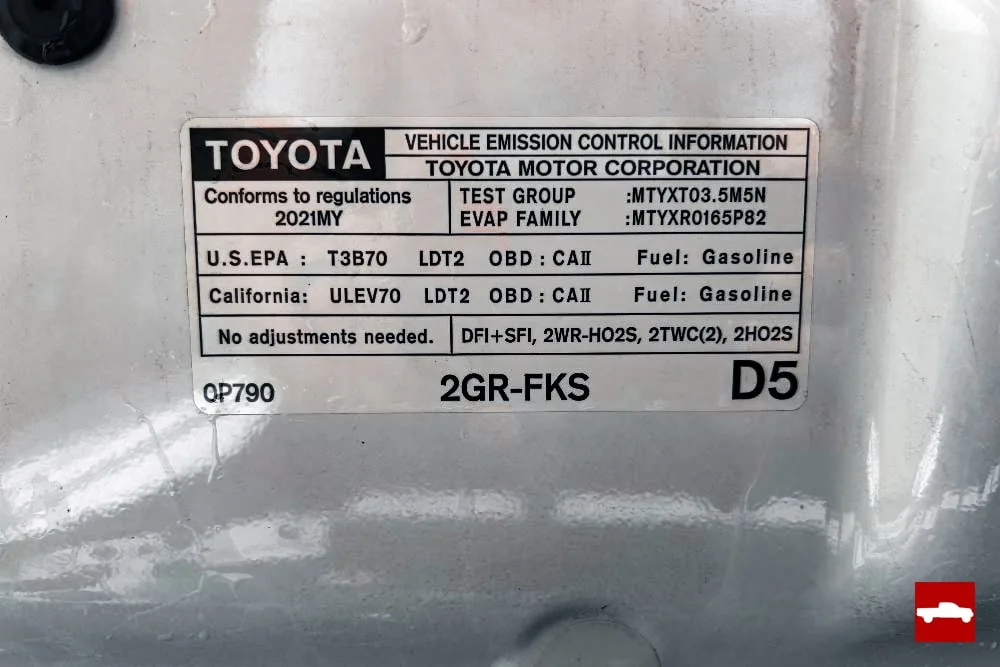
Image source: Bing (Web (fair-use with source credit))
Exact Oil Capacity for the 2.7L (2RZ-FE) Engine
The 2.7L I4 requires 5.1 US quarts (4.8 liters) of engine oil with a filter change. Without a new filter, it takes approximately 4.9 quarts. Toyota recommends 5W‑30 conventional or synthetic blend oil meeting API SL or newer.
The engine holds an additional 0.2‑0.3 quarts in the old filter and residual oil passages, so always drain thoroughly and check your dipstick after the first fill.
Exact Oil Capacity for the 3.4L (5VZ-FE) Engine
The 3.4L V6 calls for 5.8 US quarts (5.5 liters) with a filter change. Without a filter swap, figure about 5.5 quarts. Same oil spec: 5W‑30, API SL or newer.
The V6 takes a larger oil filter than the four‑cylinder, so don’t grab the wrong part. Always buy a filter rated for the 5VZ‑FE engine, the part numbers differ from the 2RZ‑FE. A quick check at your local parts counter with your VIN will get you the right one.
Step-by-Step Oil Change Workflow for Either Engine
Once you’ve confirmed your engine and gathered the right amount of oil, follow this safe, repeatable process. It works for both the I4 and the V6 with only the filter location and torque specs varying slightly.
What You’ll Need (Tools, Oil, Filter, Washer)
| Item | Details |
|---|---|
| Engine oil (5W‑30) | 6 quarts – you’ll have a little left over |
| Oil filter | Spin‑on, confirm for your engine |
| Drain plug gasket | Toyota part 90430‑12031 or equivalent |
| Socket set | 14mm for drain plug (I4) or 14mm (V6) – confirm size |
| Oil filter wrench | Cap‑style or strap |
| Oil drain pan | 8‑quart capacity minimum |
| Funnel | Long neck helps avoid spills |
| Jack and jack stands | Only if clearance is tight |
| Rags | For cleanup |
Draining the Old Oil Safely
Warm the engine for 2‑3 minutes so the oil flows freely, but don’t let it get hot enough to burn you. Park on level ground, set the parking brake, and lift the front end if needed. Place the drain pan under the oil pan.
Loosen the drain plug with a 14mm socket, turn counterclockwise, and let it drip into the pan. Once it slows, remove the plug completely and let it drain for at least 5 minutes.
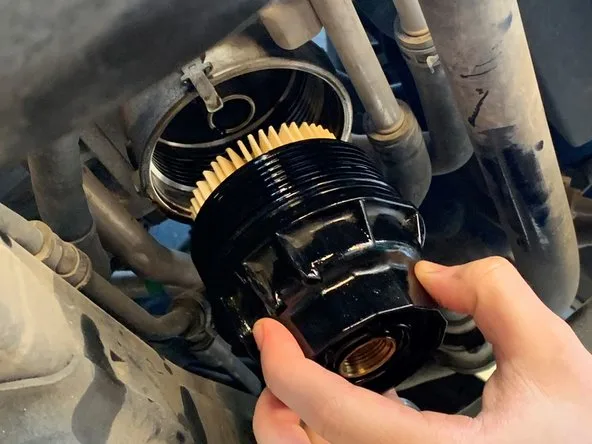
Image source: Web (Bing) / automotivian.com (Web image (fair-use with source credit))
Installing the New Filter and Drain Plug
While the oil drains, locate the oil filter. On the 2.7L, it’s on the driver’s side of the engine block near the front. On the 3.4L, it’s on the passenger side near the rear.
Use your filter wrench to unscrew it, expect some oil to spill. Before installing the new filter, rub a thin coat of fresh oil on the rubber gasket. Screw it on hand‑tight, then give it another ¾ turn with the wrench.
Don’t overtighten.
Replace the drain plug after cleaning the threads and fitting a new gasket. Torque to 29 ft‑lb (39 Nm), about hand‑tight plus a quarter turn with a wrench. Over‑torquing strips the threads.
Adding Oil and Checking the Dipstick
Pour in about 80% of the expected capacity. For the I4, start with 4 quarts. For the V6, start with 4.5 quarts.
Wait 30 seconds for the oil to settle, then check the dipstick. Wipe it, insert fully, and pull it out again. Add oil in 0.25‑quart increments until the level sits between the low and high marks.
Then run the engine for 30 seconds, shut it off, wait a minute, and recheck. Top off if needed. You’re done.
Routine oil changes like this keep your Tacoma reliable for years. For similar maintenance guidance on other Toyota models, see our 2017 Toyota Tacoma oil type guide.
Dispose of used oil and the old filter at a recycling center, check EPA used oil recycling guidelines for drop‑off locations near you.
Common Mistakes That Wreck Your Tacoma’s Engine
Even a single oil change error can lead to expensive repairs. The most common mistake? Guessing the capacity instead of checking the engine.
Pouring 5 quarts into a V6 leaves it a quart low. That causes metal‑on‑metal contact at high RPM.
Overfilling vs. Underfilling – Why Both Hurt
Overfilling is just as dangerous as running low. Too much oil gets whipped into foam by the crankshaft. Foam doesn’t lubricate properly, and oil pressure drops.
Underfilling starves bearings and cam lobes. Manufacturer specs are precise for a reason.
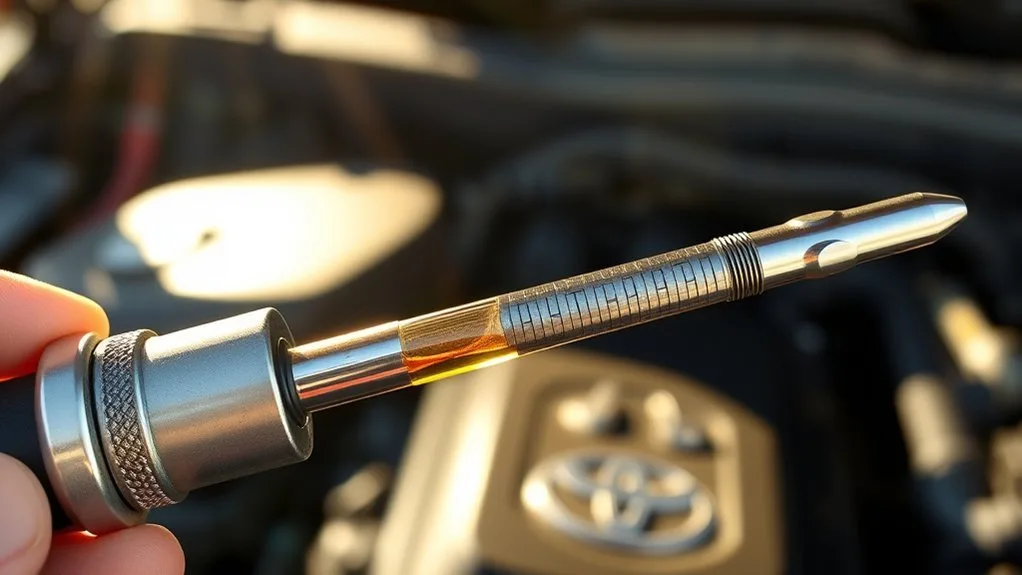
Image source: Web (Bing) / autoreviewnest.com (Web image (fair-use with source credit))
Using the Wrong Viscosity (Don’t Guess)
Toyota designed the 2.7L and 3.4L for 5W‑30. Thicker oil like 10W‑40 might seem safer in hot weather, but it reduces flow at startup. Thinner oil like 0W‑20 can shear and lose protection under load.
Stick to what the oil cap says. For verification, many owners reference the 2009 Tacoma oil type guide which confirms the same spec.
Stripping the Drain Plug or Filter Housing
Hand‑tight is tight enough for the drain plug. Using a breaker bar crushes the gasket and strips the threads in the oil pan. The same rule applies to the filter: hand‑tight plus ¾ turn.
A stripped oil pan costs hundreds to replace. Always use a new crush washer.
Which Oil Works Best? Conventional vs. Synthetic for a 2004 Tacoma
Both work, but your choice depends on mileage and climate. Conventional 5W‑30 meets Toyota’s spec and costs about $4 per quart. Full synthetic costs twice as much but handles extreme temperatures and longer intervals better.
| Oil Type | Pros | Cons | Best for |
|---|---|---|---|
| Conventional | Cheap, meets API spec | Breaks down faster under heat | Low‑mileage engines, frequent changes |
| Synthetic Blend | Middle cost, better protection | Not as durable as full synthetic | Moderate mileage, mixed driving |
| Full Synthetic | Superior cold‑flow, extended drain intervals | Expensive, overkill for some | High‑mileage engines, extreme climates |
Our research across owner forums shows that high‑mileage 5W‑30 (synthetic blend) is a smart choice for 2004 Tacomas over 100,000 miles. It contains seal conditioners that reduce leaks. If you drive mostly short trips or in dusty conditions, conventional changed every 3,000 miles is fine.
Expert Tips from a Mechanic Who’s Done This Dozens of Times
These tricks save time and mess. First, always warm the engine for two minutes. Cold oil drains slowly and leaves sludge behind.
Second, mark your oil jugs with tape at the exact quart level so you don’t overpour.
Third, check the old oil filter’s rubber gasket. If it sticks to the engine, the new filter will leak. Fourth, use a torque wrench on the drain plug. 29 ft‑lb is snug, not tight.
Finally, write the mileage and date on the oil filter with a permanent marker. It’s a simple habit that prevents missed changes.
For consistency across your Toyota fleet, the 2007 Camry oil type guide and the 2017 Toyota Tundra oil type guide both follow the same 5W‑30 spec where applicable.
Decision Guide: What to Do If You’re Still Unsure
Still not confident? Follow this decision tree:
- Can you read the emissions label? Yes → confirm engine size. No → check VIN digit 8 or count spark plug wires.
- Do you have the right oil? 5W‑30 is the default. If you live in extreme cold (below 0°F), 0W‑30 is acceptable. Avoid anything else.
- How many quarts did you buy? Buy 6 quarts. You’ll use 5.1 or 5.8, and the leftover is useful for top‑offs.
- Did you check the dipstick after the first start? Always. If it’s below the low mark, add 0.5 quart. If above the full mark, drain a little.
- Leak after startup? Tighten the filter an extra ⅛ turn and recheck the drain plug gasket.
If you’re still unsure, visit a local shop for a $20 oil change. Paying once is cheaper than engine damage. For other model years, the 2019 Tacoma oil type guide offers additional reassurance.
Frequently Asked Questions
Can I use 10W‑30 instead of 5W‑30?
Yes, in warmer climates. Toyota allows 10W‑30 for ambient temperatures above 0°F. But 5W‑30 works everywhere and is safer for cold starts.
How much oil without a filter change?
About 0.3 quarts less. The 2.7L takes 4.8 quarts; the 3.4L takes 5.5 quarts. Always replace the filter though.
It’s cheap and old filters hold abrasive particles.
Why does my dipstick read differently than the spec?
Residual oil in the engine, an inclined parking spot, or a hot engine can skew the reading. Always park on level ground, wait 5 minutes after shutdown, and wipe the dipstick twice.
Should I use synthetic oil in a high‑mileage 2004 Tacoma?
Yes. Synthetic 5W‑30 provides better protection for worn seals and reduces oil consumption. Many owners report quieter engines and fewer leaks after switching.
How often should I change the oil?
Every 3,000, 5,000 miles with conventional oil. Every 5,000, 7,500 miles with synthetic. For severe driving (towing, off‑road, frequent short trips), stick to the lower end.
What happens if I put the wrong oil in?
One wrong fill won’t destroy the engine, but it can cause sluggish performance, increased wear, or foaming. Drain and refill with correct 5W‑30 immediately.
You now have everything you need to get the oil change done right. Double‑check your engine, grab the right oil, and take it slow. Your 2004 Tacoma will reward you with another 200,000 miles.
Final Recommendation: One Simple Way to Get It Right Every Time
You don’t need to memorize numbers. You just need a reliable process. Identify your engine first, buy 6 quarts of 5W‑30, and pour slowly while checking the dipstick.
That method works for both the 2.7L and the 3.4L every time.
If you own other Toyota vehicles, the same logic applies. The 2016 Toyota Tundra oil type guide and the 2018 Toyota 4Runner oil type guide both follow identical spec verification steps.
One last tip: keep a log. Write the date, mileage, oil type, and filter part number in a small notebook or your phone. That simple habit makes your next oil change faster and prevents mistakes.
Your 2004 Tacoma deserves that much.