
Image source: Bing (Web (fair-use with source credit))
You pop the hood on your 2014 Toyota Camry, oil filter in hand, and suddenly freeze. How much oil does this thing actually take? It's one of those details you assume you know until you're standing in the auto parts aisle staring at jugs.
Get it wrong and you're either buying a second bottle or, worse, pouring in too much and damaging the engine.
The 2014 Toyota Camry oil capacity depends entirely on which engine is under your hood. The 2.5L four-cylinder takes 4.6 quarts (4.4 liters) with a filter change. The 3.5L V6 takes 6.4 quarts (6.1 liters).
Those numbers come straight from Toyota's factory specifications. Mix them up and you're either running the engine a quart low or flooding it. Neither is good.
Let's walk through exactly what you need to know before you touch that drain plug.
Why Getting the Oil Capacity Wrong Could Cost You an Engine
Engines are precision machines designed around specific oil volumes. The oil pan, the oil pump, and the passages that carry lubricant to bearings and camshafts all expect an exact fill level.
Here is what happens with the wrong amount:
- Overfilling. Too much oil lets the crankshaft whip the fluid into foam. Foam does not lubricate bearings the way liquid oil does. Air bubbles get sucked into the oil pump, pressure drops, and metal parts start touching metal parts. That kills engines.
- Underfilling. A quart low means the oil pickup tube can suck air during hard cornering or steep hills. Low oil pressure warnings come on. Bearing damage follows quickly.
- Wrong viscosity on top of wrong volume. If you pour in the wrong amount and the wrong weight, you double the risk. The engine runs hotter, wears faster, and burns more fuel.
Plenty of used 2014 Camrys are still on the road with over 150,000 miles as of 2026. The ones that make it to 200,000 miles have one thing in common: owners who paid attention to basics like oil capacity. The ones that died early often had a history of "close enough" oil changes.
Quick Answer: How Much Oil Does a 2014 Camry Need?
2014 Toyota Camry 2.5L 4-cylinder (2AR-FE engine)
- With filter change: 4.6 US quarts (4.4 liters)
- Dry fill (after rebuild or total loss): 5.1 quarts
- Oil viscosity: 0W-20 synthetic
2014 Toyota Camry 3.5L V6 (2GR-FE engine)
- With filter change: 6.4 US quarts (6.1 liters)
- Dry fill: 7.0 quarts
- Oil viscosity: 0W-20 synthetic
Write these numbers down. Stick them to your garage wall. When the auto parts clerk asks which engine you have, you will know the answer.
Meet Your Engine: 2.5L vs 3.5L – They're Not the Same
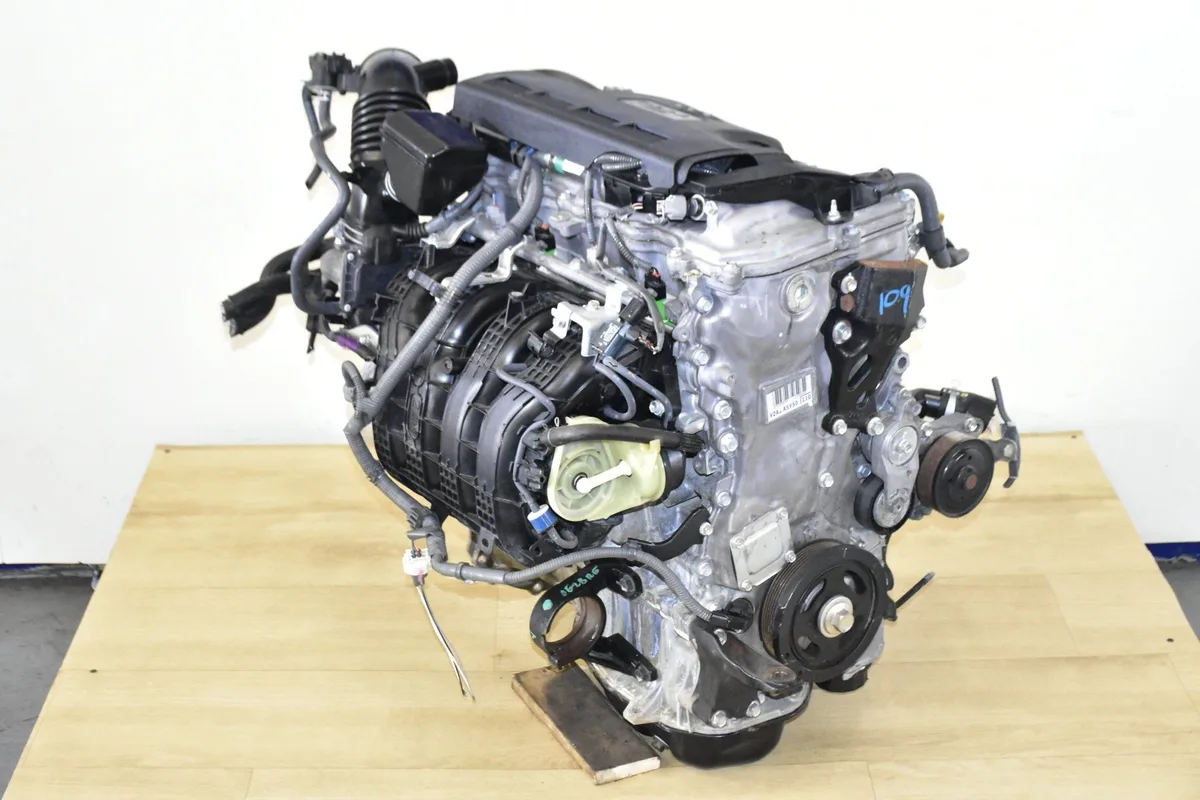
Image source: Bing (Web (fair-use with source credit))
The 2014 Camry came with two completely different engines. They do not share the same oil pan, oil filter, or capacity. If you own the 2.5L and pour in the V6 amount, you are overfilling by nearly two quarts.
If you own the V6 and pour in the 4-cylinder amount, you are running dangerously low.
How to identify your engine without guessing.
Open the hood and look at the engine cover. The 2.5L has a plastic cover that says "2.5L DOHC VVT-i." The 3.5L cover says "3.5L DOHC VVT-i" and is noticeably wider. The V6 takes up more space side to side.
Still unsure? Check your VIN or look at the emissions label under the hood. The engine code is printed there. 2AR-FE means 2.5L four-cylinder. 2GR-FE means 3.5L V6.
The owner's manual also lists capacities for both engines on the same page.
2.5L 4-Cylinder (2AR-FE) Specs
This engine came in the majority of 2014 Camrys. It is the fuel-efficient, reliable workhorse that helped make the Camry America's best-selling sedan.
- Displacement: 2.5 liters naturally aspirated
- Horsepower: 178 hp at 6,000 rpm
- Oil capacity (with filter): 4.6 quarts
- Recommended oil: 0W-20 full synthetic
- Oil filter type: Cartridge-style (plastic housing, replaceable element)
The 2.5L uses a cartridge oil filter rather than a traditional spin-on canister. That changes how you remove and install the filter. You need a 64mm socket or cap wrench to open the plastic housing.
3.5L V6 (2GR-FE) Specs
The V6 was optional and gives the Camry serious power. It shares the same chassis but needs more oil because it has more internal volume to lubricate.
- Displacement: 3.5 liters naturally aspirated
- Horsepower: 268 hp at 6,200 rpm
- Oil capacity (with filter): 6.4 quarts
- Recommended oil: 0W-20 full synthetic
- Oil filter type: Spin-on canister (traditional metal filter)
The V6 filter is the old-school twist-off style. No plastic housing to fuss with. That is a small difference, but it matters when you are lying under the car with oil dripping on your arm.
The Right Oil Matters Just as Much as the Right Amount
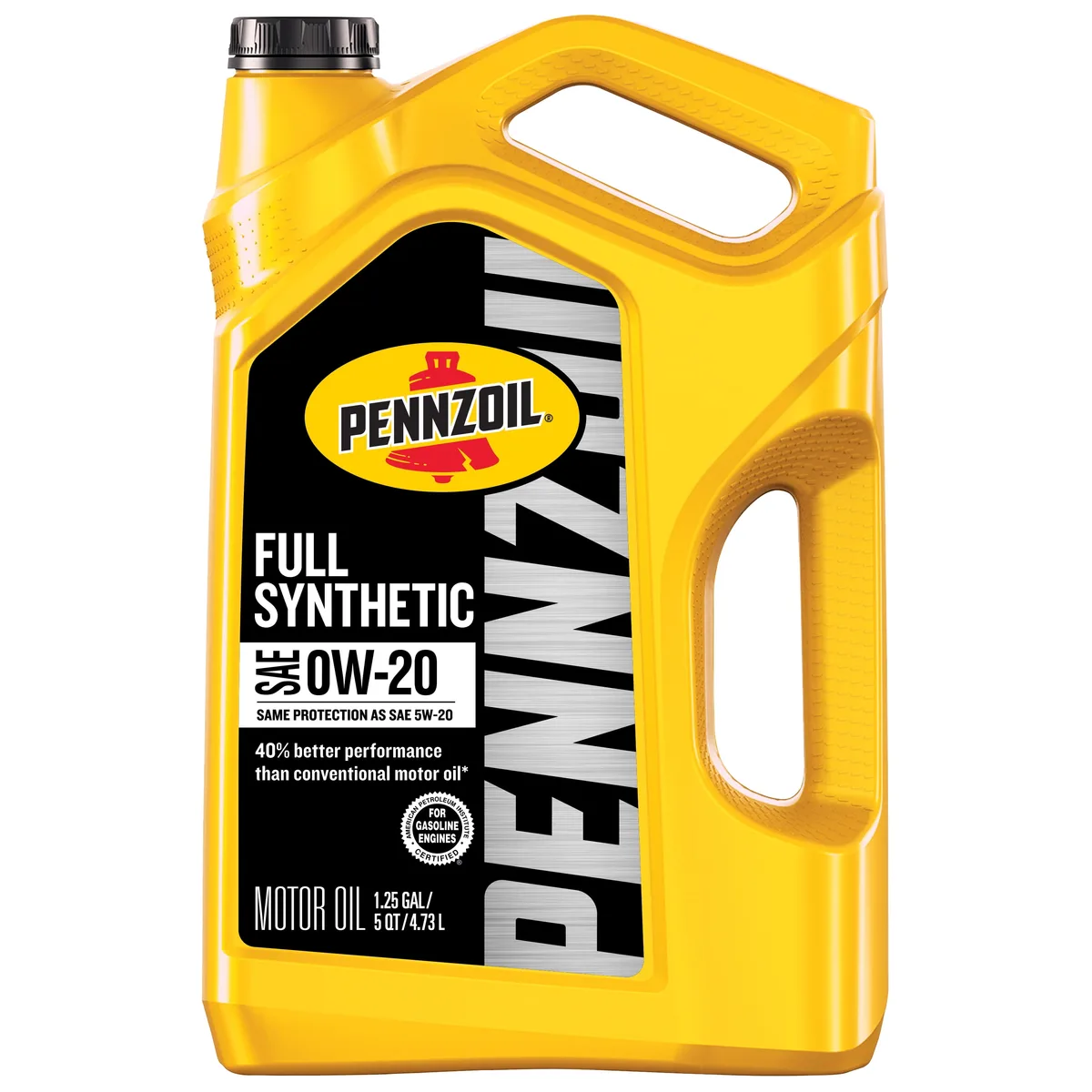
Image source: Bing (Web (fair-use with source credit))
Capacity is half the equation. The other half is what you pour into that capacity. Toyota specifies 0W-20 full synthetic for both engines in the 2014 Camry.
Not 5W-30. Not 10W-40. 0W-20.
Why 0W-20 and not something thicker?
Oil viscosity is a measure of how easily it flows at different temperatures. The "0W" means it stays thin in cold weather, flowing instantly on a freezing morning. The "20" means it maintains the right film strength at operating temperature.
Not so thin that it shears away from bearings, but thin enough to reduce drag and improve fuel economy.
Toyota designed these engines around 0W-20. The oil passages, the bearing clearances, and the variable valve timing actuators all expect that specific viscosity. Thicker oil reduces flow.
It can starve the VVT system of the hydraulic pressure it needs to adjust cam timing. It also increases operating temperature because thicker oil generates more internal friction.
What about API and ILSAC ratings?
Look for the API "donut" symbol on the bottle. You need API SN or SP. The SP rating came out after the 2014 model year but is backward-compatible and offers better protection.
The ILSAC GF-5 or GF-6 rating is the other one to spot. These standards ensure the oil meets modern fuel economy and engine protection requirements.
Toyota sells their own branded oil through dealers. Any major brand that meets API SN and the right viscosity works just as well. Mobil 1, Pennzoil, Valvoline, and Castrol all make 0W-20 that fits the spec.
Can you use conventional oil instead of synthetic?
You could, but do not. Conventional 0W-20 barely exists at parts stores. If it does, it degrades faster in the high heat these engines produce.
Synthetic oil resists oxidation, handles higher temperatures, and lasts longer between changes. The 10,000-mile oil change interval Toyota recommends assumes you are using synthetic. Conventional oil needs changing at half that distance.
Step-by-Step: How to Do the Oil Change Yourself Safely
This section assumes you have basic tools and a safe place to work. If you are not comfortable getting under your car, skip to the section on when to hand it to a pro.
What you need before you start.
- 4.6 quarts of 0W-20 synthetic (2.5L) or 6.4 quarts (3.5L)
- New oil filter (Toyota 04152-YZZA6 for 2.5L cartridge, 04152-31090 for 3.5L spin-on)
- New drain plug crush washer (Toyota 90430-12031 or equivalent)
- 14mm socket for the drain plug (2.5L) or 15mm (3.5L)
- Oil filter wrench or a 64mm filter cap wrench
- Drain pan, funnel, rags, jack stands
The step-by-step process.
- Warm the engine. Drive for five minutes to warm the oil. Warm oil drains faster and carries more contaminants out.
- Park on level ground. Engage the parking brake. Use jack stands if you need to lift the car. Never work under a car supported only by a hydraulic jack.
- Remove the oil fill cap. This breaks the vacuum and helps the oil drain faster.
- Drain the old oil. Place the drain pan under the engine. Loosen the drain plug with the correct socket. Unscrew it by hand once it is loose. Let it drain completely, about five minutes.
- Remove the old filter. On the 2.5L, use the 64mm cap wrench to unscrew the plastic filter housing. Remove the old element and both O-rings. On the 3.5L, spin off the metal canister with a filter wrench.
- Install the new filter. On the 2.5L, lubricate the new O-rings with fresh oil, install them on the housing, insert the new element, and tighten to 18 ft-lb. On the 3.5L, lubricate the gasket, screw it on hand-tight, then tighten another three-quarters of a turn.
- Install the drain plug with a new crush washer. Torque it to 29 ft-lb. Do not guess this. A loose plug drips. An overtightened plug strips the threads.
- Add the correct amount of oil. Pour in about 0.5 quarts less than the total capacity. Check the dipstick. Add the remaining oil in small increments until it reaches the full mark.
- Check for leaks. Start the engine and let it run for 30 seconds. The oil pressure light should turn off within a few seconds. If it stays on, shut down immediately.
- Recheck the oil level. Turn the engine off and wait two minutes. Check the dipstick again and top off if needed.
Torque specs you should not ignore.
| Component | Torque |
|---|---|
| Drain plug | 29 ft-lb (39 N·m) |
| 2.5L filter housing | 18 ft-lb (25 N·m) |
| 3.5L spin-on filter | Hand-tight plus 3/4 turn |
Using a torque wrench on the drain plug is the single best thing you can do to avoid stripping the oil pan threads. A stripped pan means a $200 repair minimum.
Common Mistakes That Wreck Camry Engines
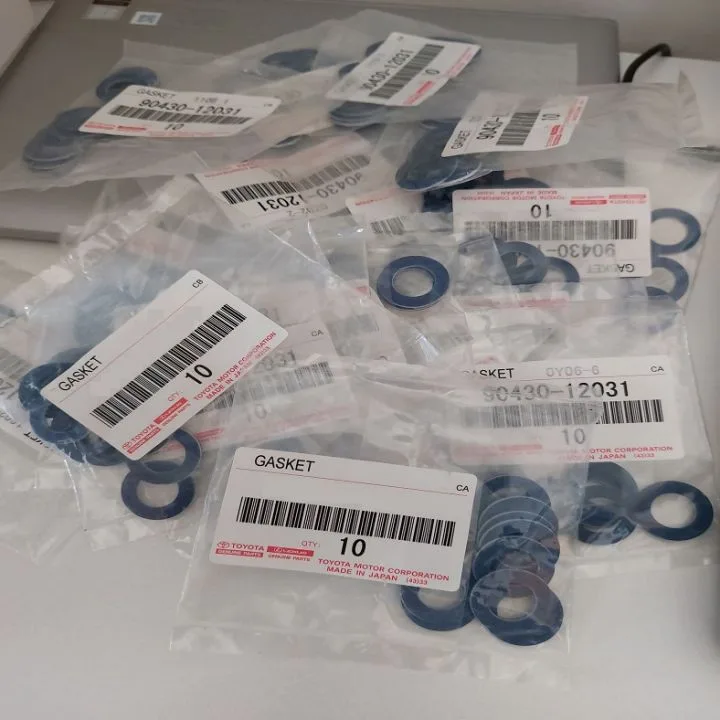
Image source: Web (Bing) / lazada.com.ph (Web image (fair-use with source credit))
You would think pouring oil into an engine is about as complicated as filling a gas tank. But service records tell a different story. Small mistakes stack up.
Over time, they turn a reliable 200,000-mile engine into a rebuild candidate at 120,000.
Overfilling, The Silent Killer
This is the most common error. Someone buys a 5-quart jug for their 2.5L engine, pours the whole thing in, and never checks the dipstick. That extra 0.4 quarts pushes the oil level above the full mark.
The crankshaft starts churning air into the oil. Foam forms. Foam does not lubricate bearings.
Within a few thousand miles, rod bearings start to wear. Eventually they knock. By then the damage is done.
The fix is simple. Pour in about 4 quarts, check the dipstick, and add the rest in small increments. The dipstick is your guide, not the bottle label.
Wrong Viscosity at the Wrong Mileage
Some owners switch to 5W-30 as the engine ages, thinking older engines need thicker oil. That logic came from engines built in the 1970s with loose clearances. Your 2014 Camry is not that engine.
Modern Toyota engines have tight bearing clearances designed for thin oil. Thicker oil flows slower through the VVT passages. The cam timing adjusters cannot move as quickly.
Fuel economy drops. The engine runs slightly hotter.
Stick with 0W-20. If you absolutely cannot find it, 5W-20 works in a pinch. Switch back at the next change.
The Crush Washer Tax, Why It Is Not Optional
That little aluminum ring on the drain plug costs about 50 cents at a dealership. Reusing the old one seems harmless. It is not.
The crush washer deforms slightly when you tighten it, creating a perfect seal. Use it twice and it cannot deform again. You either overtighten the plug trying to stop a drip, stripping the pan threads, or you leave it loose and oil seeps past.
Replace the crush washer every single oil change. Buy a 10-pack and keep them in your toolbox.
What About Severe Driving Conditions?
Toyota publishes two maintenance schedules. The normal schedule calls for oil changes every 10,000 miles or 12 months. The severe schedule cuts that to 5,000 miles or 6 months.
What counts as severe driving?
- Repeated short trips under 5 miles in normal temperatures or under 10 miles in freezing weather
- Extensive idling or stop-and-go traffic
- Driving on dusty, muddy, or salt-covered roads
- Towing a trailer or carrying heavy cargo
- Sustained high-speed driving in hot weather
How does this affect oil capacity?
It does not change the amount you pour in. The 2.5L still holds 4.6 quarts. The 3.5L still takes 6.4 quarts.
But it changes how often you change the oil.
Short trips never let the oil reach full operating temperature. Condensation builds up. Fuel dilutes the oil.
Acids form. The oil still protects adequately until about 5,000 miles under severe conditions, but by mile 7,000 it is struggling.
If your commute is three miles each way, change the oil every 5,000 miles. We have seen Camrys with severe-service histories that hit 250,000 miles without major repairs simply because the owner changed oil twice as often as the normal schedule.
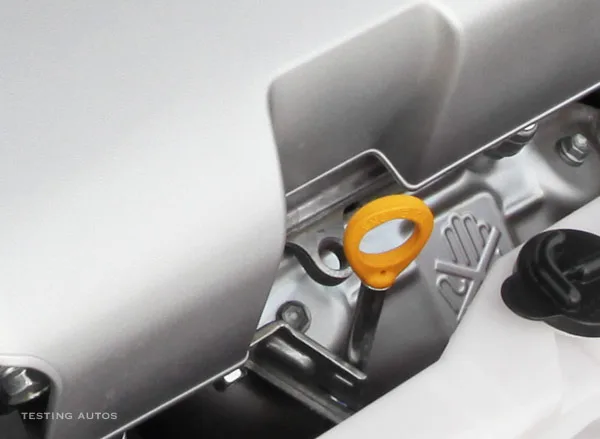
The Dipstick Does Not Lie — How to Read It Right
This sounds basic, but many DIYers read the dipstick wrong. Here is how to get an accurate reading every time.
The warm engine method.
Park on level ground. Warm the engine to operating temperature. Turn it off and wait two to three minutes.
This gives the oil time to drain back into the pan.
Pull the dipstick, wipe it clean, and reinsert it fully. Push it all the way in until the cap seats. Pull it out and read the level.
Where should the oil level be?
The oil should fall between the two marks near the bottom of the dipstick. Ideally it sits at the upper mark or slightly below it. If it is above the upper mark, you have overfilled.
If it is at or below the lower mark, add oil immediately.
Common reading errors.
- Reading on a cold engine. Cold oil drains into the pan, giving a false high reading. Always use the warm engine method.
- Reading on a slope. Even a slight incline shifts the oil. Park on flat ground.
- Using a linty rag. Fibers stick to the dipstick and make the line hard to read. Use a clean, lint-free cloth.
- Inserting the dipstick only partway. Push it all the way down.
If you find the level low by more than a quart, look for leaks. A healthy engine does not burn or leak a quart between changes.
When to Hand It to a Pro
Changing oil on a 2014 Camry is simple. The drain plug is easy to reach. The oil filter is accessible from underneath or the top.
Most DIY owners finish in 30 minutes.
But some situations call for a professional.
You should consider a shop if:
- You do not have a level place to park and safely raise the car.
- You lack a torque wrench for the drain plug.
- You are unsure which engine you have.
- The drain plug is stripped or rounded off.
- You notice metal particles in the old oil.
- You simply do not have the time.
What a shop should do.
A good shop drains the old oil, replaces the filter, installs a new crush washer, fills with the correct amount of 0W-20, and checks the level. They reset the maintenance reminder. The whole thing takes about 20 minutes on a lift.
Expect to pay $50 to $80 for conventional or $70 to $110 for synthetic. The V6 costs slightly more because it takes more oil.
Frequently Asked Questions
Can I use 5W-30 instead of 0W-20?
No. Use 0W-20. The tighter clearances in modern Toyota engines need that thinner oil to flow properly through the VVT system.
Thicker oil reduces flow, lowers fuel economy, and can cause timing chain tensioner issues. If you absolutely cannot find 0W-20, 5W-20 is an acceptable short-term substitute.
How often should I change the oil on a 2014 Camry?
Toyota says every 10,000 miles or 12 months under normal conditions. Under severe conditions, cut that to 5,000 miles or 6 months. Most Camry owners fall into the severe category without realizing it.
Short commutes and stop-and-go traffic both count. For max engine life, use 5,000-mile intervals.
What is the oil capacity for the hybrid model?
The 2014 Camry Hybrid uses a 2.5L engine similar to the non-hybrid version. It takes 4.6 quarts (4.4 liters) of 0W-20 synthetic with a filter change. Check your owner's manual as some hybrid variants can vary slightly.
My dipstick shows overfull — what now?
Do not drive it. Overfilled oil foams, and foamed oil kills bearings. Loosen the drain plug slightly to let a small stream of oil into your drain pan.
Drain about half a quart, retighten the plug, and recheck the dipstick. Repeat until the level drops to the full mark.
Should I use synthetic or conventional oil?
Synthetic. The 0W-20 viscosity is almost exclusively available as synthetic. Even if you found conventional, it would degrade faster.
The extra $15 to $20 per change is cheap insurance for a 200,000-mile engine.
Cost Breakdown: DIY vs Shop
| Item | DIY Cost | Shop Cost |
|---|---|---|
| 5 quarts 0W-20 synthetic | $25 to $35 | Included |
| Oil filter | $6 to $12 | Included |
| Crush washer | $0.50 | Included |
| Disposal fee | $0 (free at most parts stores) | Included |
| Labor | $0 | $30 to $50 |
| Total (2.5L) | $32 to $48 | $60 to $100 |
| Total (3.5L) | $36 to $52 | $70 to $110 |
DIY saves $30 to $50 per oil change. Over 100,000 miles at 5,000-mile intervals, that adds up to $600 to $1,000. Enough to buy a good floor jack, jack stands, and a torque wrench for future maintenance.
Final Takeaway: One Number, One Engine, No Shortcuts
The 2014 Toyota Camry is a reliable car that rewards attention to detail. The oil capacity is simple once you know which engine you have. 4.6 quarts for the 2.5L four-cylinder. 6.4 quarts for the 3.5L V6. Always 0W-20 full synthetic.
Every shortcut multiplies the risk. Skipping the crush washer. Guessing the torque.
Using the wrong viscosity. Pouring in the whole jug without checking the dipstick. Each one seems small in isolation.
Together they turn a bulletproof engine into a worn-out one.
Check your engine. Buy the right oil. Measure carefully.
Your Camry will reward you with miles that other cars only dream of reaching.