
If you own a 2015 Toyota Corolla, the single most important number to know for routine maintenance is the engine oil capacity. Get it wrong, and you risk overfilling the crankcase, which can cause foaming, seal damage, and rough running. Underfilling leads to oil starvation and expensive engine wear.
The official spec is clear: the 2015 Toyota Corolla oil capacity sits at exactly 4.4 US quarts (4.2 liters) when you replace the oil filter at the same time.
That number comes straight from Toyota's factory service documentation. It applies to the 1.8-liter 2ZR-FE four-cylinder engine found in every 2015 Corolla sold in North America. As of 2026, this remains one of the most reliable commuter engines on the road, provided you give it the correct oil in the right amount.
Why Getting the Oil Capacity Wrong Can Cost You an Engine
The 2ZR-FE engine was designed with tight internal clearances. The oil pan holds a specific volume so the rotating assembly can whip oil into a fine mist without the crankshaft slapping into a deep pool of excess fluid.
Add too much oil, and the crankshaft plows through it like a boat propeller through water. That creates foam, reduces oil pressure, and pushes oil past seals where it doesn't belong. Add too little, and the oil pickup tube can suck air during hard cornering or steep inclines.
Low oil pressure triggers the check engine light and, if ignored, scores bearings and seizes the engine.
The margin for error is smaller than you might think. Half a quart over or under can cause measurable differences in oil pressure and temperature. That's why the factory figure of 4.4 quarts is a specification, not a suggestion.
Quick Answer: 2015 Toyota Corolla Oil Capacity at a Glance
| Condition | Oil Capacity |
|---|---|
| With oil filter replacement | 4.4 US quarts (4.2 liters) |
| Without oil filter replacement | 4.2 US quarts (4.0 liters) |
| Oil type | SAE 0W-20 full synthetic |
| API certification | SN or higher (ILSAC GF-5 or GF-6) |
| Oil filter part number | 04152-YZZA1 (OEM) |
Most DIY oil change kits include a 5-quart jug of 0W-20. That's fine. You'll use roughly 4.4 quarts and have a little left over for top-ups between changes.
Just don't dump the whole jug in without checking the dipstick.
The 1.8L 2ZR-FE Engine: What Makes It Different
Toyota produced the Corolla with several engine variants over the years, and each has a different oil capacity. The 2015 model uses the 2ZR-FE, a 1.8-liter dual VVT-i four-cylinder. It is not the same engine found in earlier Corollas like the 1ZZ-FE, which holds a different volume of oil.
What makes the 2ZR-FE notable is its efficiency focus. It uses lightweight pistons, roller rocker arms, and a variable displacement oil pump. That pump adjusts flow based on engine speed and temperature, which is one reason the oil capacity matters so much.
The system is calibrated around that specific 4.4-quart volume.
The engine also runs hot by design to meet emissions standards. Full synthetic 0W-20 oil handles those temperatures better than conventional oil, which is why Toyota mandates synthetic rather than just recommending it.
Other Toyota models from the same era have different capacities. A Toyota Camry with the 2.5-liter engine holds more oil. A Toyota RAV4 with the same 2.5-liter has a different spec.
Each engine family has its own requirements.
Exact Oil Capacity Specs: With Filter vs. Without Filter
The 4.4-quart figure assumes you are replacing the oil filter. The filter holds roughly 0.2 quarts of oil that won't drain out when you pull the drain plug. If you skip the filter change, the engine needs about 4.2 quarts to reach the full mark on the dipstick.
Here is the practical breakdown:
- 4.4 quarts is what you add to a completely empty engine with a new filter.
- 4.2 quarts is what you add if you drain the oil but do not change the filter.
- 3.5 to 4.0 quarts is what you should add first before checking the dipstick.
The most common mistake is dumping the full 5-quart jug into the engine without stopping to check. That extra 0.6 quarts pushes the oil level above the full mark. On a cold engine, the dipstick may not show it clearly.
Once the engine runs and the oil circulates, the level rises and can exceed safe limits.
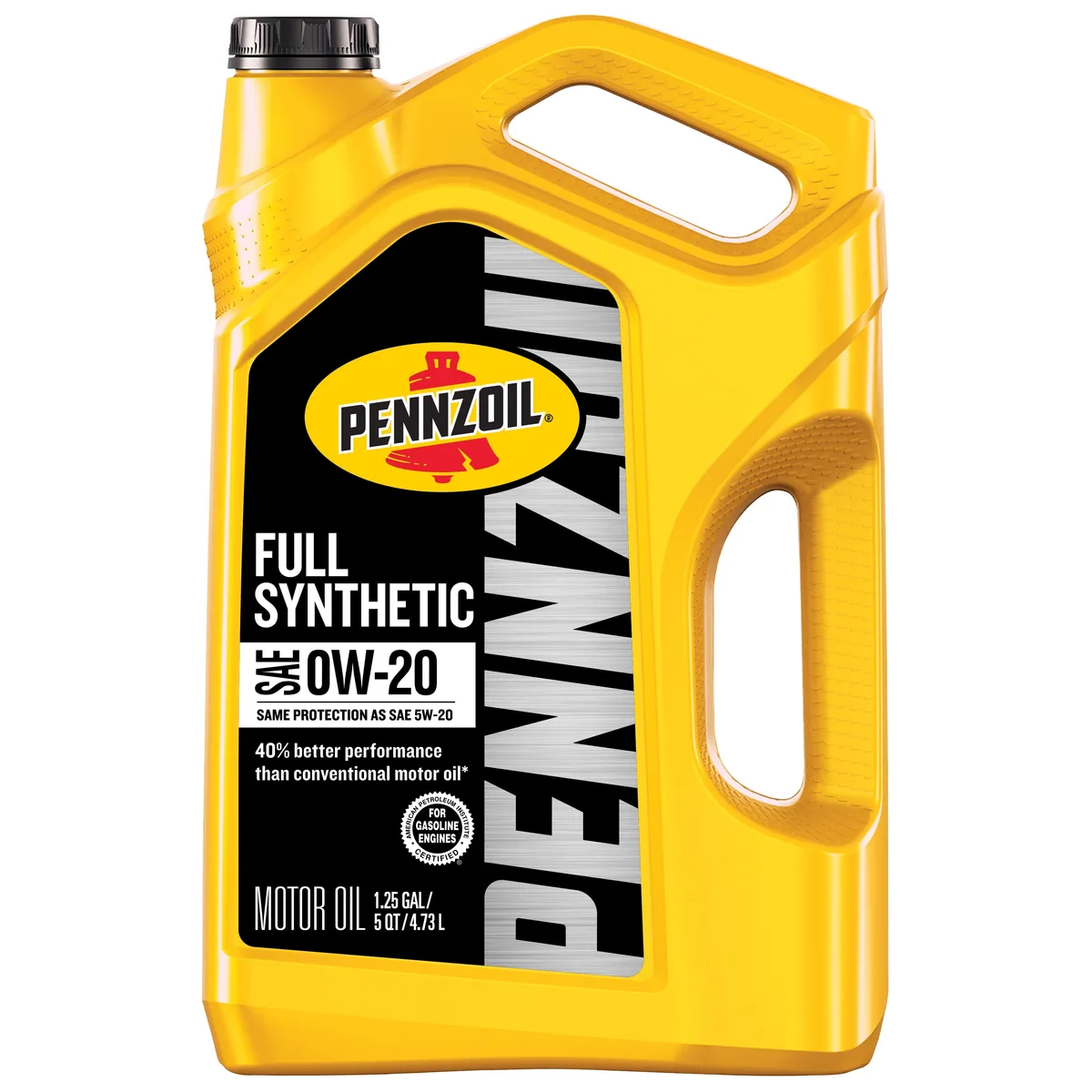
Image source: Web (Bing) / u-buy.com.au
The oil pictured above is exactly what you need. Look for the API certification label on the back of any bottle you buy. It guarantees the oil meets Toyota's requirements.
What Kind of Oil Does a 2015 Corolla Actually Need?
Toyota requires SAE 0W-20 full synthetic oil for the 2015 Corolla. That is printed in the owner's manual and stamped on the oil fill cap under the hood.
The "0W" means the oil stays fluid at extremely low temperatures, down to negative 40 degrees Fahrenheit. That protects the engine during cold starts. The "20" means it retains enough viscosity at operating temperature to maintain a protective film on bearings and cylinder walls.
Using a thicker oil like 5W-30 might seem like a good idea in a hot climate. But the 2ZR-FE engine was designed around 0W-20. Thicker oil reduces flow through the variable valve timing system and can trigger trouble codes.
It also reduces fuel economy by roughly 1 to 2 percent.
Do not use conventional oil. The 2ZR-FE runs hot enough to break down conventional oil faster, leading to sludge formation. Full synthetic resists thermal breakdown and keeps the engine clean for the full oil change interval.
If you own other Toyota models, the same 0W-20 specification applies across many of the brand's four-cylinder engines. Each model has its own specific capacity, but the oil type is consistent.
Step-by-Step: How to Change the Oil and Get the Fill Level Right
Doing this yourself saves money and guarantees the job is done correctly. Start with the engine warm, not hot. Run it for about five minutes so the oil flows freely.
Park on level ground and engage the parking brake.
Here is the sequence that works every time:
- Remove the oil fill cap under the hood. This lets air in and helps the oil drain faster.
- Locate the drain plug under the engine. It faces the passenger side. Place your drain pan underneath.
- Loosen the drain plug with a socket wrench. Turn it counterclockwise. Once it is loose, unscrew it by hand quickly and pull it away from the stream.
- Let the oil drain completely. This takes about five to ten minutes.
- Replace the drain plug. Install a new crush washer. Torque it to 29 ft-lbs.
- Remove the old oil filter. It is on the front of the engine, accessible from above or below. Some oil will spill, so have rags ready.
- Pre-fill the new filter with fresh oil. Rub a little oil on the rubber gasket. Screw it on by hand until snug, then tighten another three-quarters turn. Torque spec is 18 ft-lbs.
- Add the new oil. Pour in about 3.5 quarts first. Replace the oil fill cap.
- Run the engine for about 30 seconds. Shut it off and wait three minutes.
- Check the dipstick. Wipe it clean, insert it fully, pull it out, and read the level. Add more oil in quarter-quart increments until it reaches the full mark.
- Reset the maintenance light if your Corolla has one. With the ignition on and engine off, press the trip reset button until the light blinks and goes out.
The total time for a first-timer is about 45 minutes. After you have done it once, it drops to under 30 minutes.
Common Mistakes That Lead to Overfilling or Underfilling
Adding the full five quarts without checking. A standard jug holds 5 quarts. Your engine needs 4.4. Pouring the whole thing means you are 0.6 quarts over.
Always stop at 3.5 quarts, check, then top up slowly.
Not warming the engine before draining. Cold oil is thick and sticks to internal surfaces. A warm engine lets more oil drain out, giving you an accurate starting point.
Forgetting the crush washer. The original washer crushes slightly to create a seal. Reusing it risks a slow drip. A new washer costs pennies.
Tightening the drain plug too much. The oil pan is aluminum. Overtorquing strips the threads. Use a torque wrench set to 29 ft-lbs.
If you do not have one, tighten until snug plus a quarter turn.
Misreading the dipstick on a slope. Always check on level ground. Even a slight incline shifts the oil in the pan and gives a false reading.
Using the wrong oil filter. Aftermarket filters that do not match the thread pitch or bypass valve spec can leak or restrict flow. Stick with OEM part 04152-YZZA1 or a high-quality equivalent.
How to Read the Dipstick Correctly
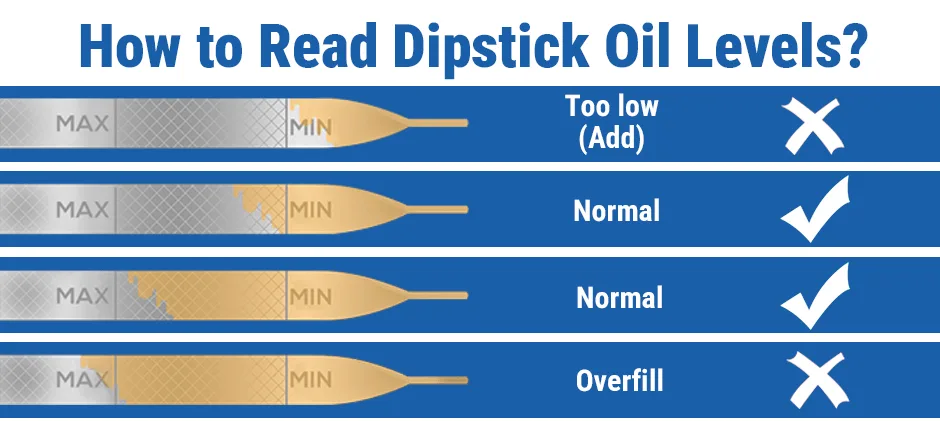
Image source: Web (Bing) / fridayparts.com
The dipstick on the 2015 Corolla has two marks near the bottom. The correct level is between these marks, ideally right at the full mark.
Check it warm, not cold. Run the engine for a minute or two. Shut it off.
Wait three to five minutes for the oil to drain back into the pan. Then pull the dipstick, wipe it clean, insert it fully, pull it out, and read.
Do not check on a cold engine. Cold oil is thicker and clings to the dipstick tube, giving a higher reading than what is actually in the pan.
Level ground is required. A nose-up incline pushes oil toward the back of the pan, giving a falsely low reading. A nose-down incline pushes it forward, giving a falsely high reading.
Oil should cover the dipstick between the low and full marks. If it sits below the low mark, add oil. If it sits above the full mark, you have overfilled and need to drain some out.
What Happens If You Use the Wrong Viscosity
Using 5W-30 instead of 0W-20 is the most common substitution. The engine will run. But the variable valve timing system relies on oil pressure to adjust cam timing.
Thicker oil reduces flow through the VVT actuators, which can trigger a P0010 or P0012 trouble code. Fuel economy drops by roughly 1 to 2 percent. Cold starts become harder on the engine.
Using conventional oil instead of full synthetic causes problems too. The 2RZ-FE runs hot by design. Conventional oil breaks down faster at those temperatures, forming sludge and varnish deposits.
This can cause the oil control rings on the pistons to stick, leading to oil consumption.
Mixing oil types for a top-up is not a crisis. They mix without chemical issues. But for a full change, stick to one type and viscosity.
Mixing different brands or weights dilutes the additive package.
Aggregate owner feedback shows that Corollas running 5W-30 for 50,000 miles or more report higher oil consumption and earlier timing chain tensioner failures. Owners who stuck with 0W-20 full synthetic routinely saw engines reach 200,000 miles without major repairs.
Where to Find Your Car's Specific Oil Spec
Start with the owner's manual in your glovebox. Open to the Maintenance or Specifications section. The oil capacity and type are listed in a table.
This is the most reliable source.
Check the oil fill cap under the hood. On the 2015 Corolla, it says "0W-20." If a previous owner replaced it with an aftermarket cap, the spec might be missing.
Use Toyota's official parts website. Enter your vehicle identification number. It pulls up the exact specifications for your car's engine, including the recommended oil and capacity.
This is best if your owner's manual is missing.
Do not trust generic third-party websites that list oil capacities across multiple makes and models. They often copy data from older years or confuse trim levels. Make sure the source specifies the North American 1.8L 2ZR-FE.
If you are still unsure, call a Toyota dealership's parts department. Give them your VIN. They can confirm the spec in under a minute.
When to Change the Oil: Mileage Intervals
Toyota recommends a 10,000-mile oil change interval under normal driving conditions. But short trips under five miles, stop-and-go traffic, extreme temperatures, and dusty roads all count as severe driving. Under those conditions, cut the interval to 5,000 miles.
The 2ZR-FE engine does not consume oil at an alarming rate when it is healthy. Checking the dipstick every other fuel fill-up catches small leaks before they become big problems.
The oil life monitor in the dashboard measures driving conditions and adjusts the recommended change point. It is a helpful guide. Many owners report it triggers at around 8,000 miles in mixed driving, which is a reasonable target.
What to Buy: Oil, Filter, and Drain Plug Supplies
Image source: Web (Bing) / ebay.com
You need four items for a clean oil change.
- Oil: 5 quarts of SAE 0W-20 full synthetic with API SN or higher certification. Toyota Genuine, Mobil 1, Pennzoil, Castrol, and Valvoline all meet the spec.
- Oil filter: OEM part 04152-YZZA1 or 90915-YZZF3. Aftermarket equivalents from Fram, WIX, or Purolator work if they match the thread size and bypass valve pressure.
- Drain plug crush washer: Toyota part 90430-12031 or a universal 12mm copper or aluminum washer. Replace it every change.
- Optional: A fumoto valve replaces the drain plug with a ball valve. It makes future changes tool-free and reduces the chance of stripping the oil pan.
The total cost runs between $30 and $45. A dealership charges $70 to $100 for the same service.
Verdict: The One Rule That Keeps a Corolla Running Past 200,000 Miles
Every experienced Toyota mechanic gives the same advice. Use the correct viscosity. Hit the right fill level.
Change the oil on a consistent schedule. That is the single rule that matters most for this engine.
The 2ZR-FE is a robust design. It handles daily driving without complaint. But it depends on clean, properly graded oil to keep its variable valve timing system and tight piston clearances working.
Stretching intervals too far is what kills these engines early.
Stick with 0W-20 full synthetic. Fill to exactly 4.4 quarts with a new filter. Change it every 5,000 to 8,000 miles depending on your driving habits.
Check the dipstick monthly. That routine is why so many 2015 Corollas cross the 200,000-mile mark without major engine work.