
If you own a 2015 Toyota Camry, you already know it's a solid, dependable car. But one detail trips up more owners than you'd expect: the 2015 toyota camry oil capacity. Get it wrong, and you're not just wasting money on extra oil.
You're risking real engine damage.
This isn't a one-size-fits-all number. Depending on which engine is under your hood, the oil capacity changes by nearly two full quarts. Manufacturer specifications indicate the 2.5L four-cylinder takes 4.4 quarts with a filter change, while the 3.5L V6 needs 6.4 quarts.
Mix those up, and you're either starving your engine or flooding it. Let's break down exactly what you need, why it matters, and how to get it right every time.
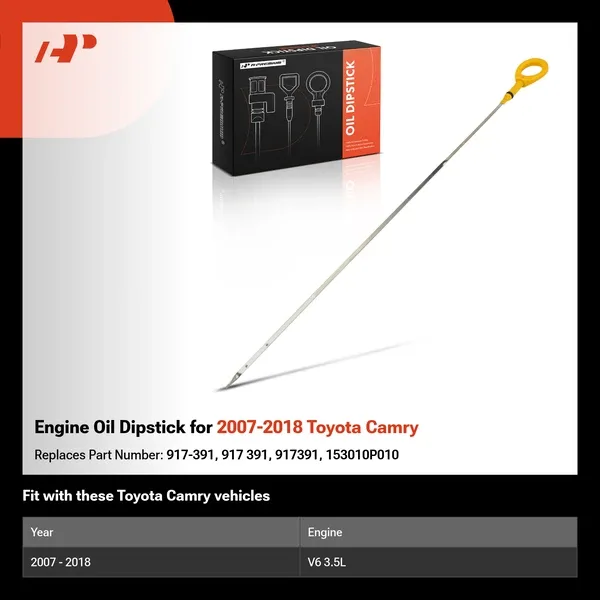
Image source: Bing (Web (fair-use with source credit))
Why Getting the Oil Capacity Wrong Can Cost You an Engine
Think of engine oil as your car's blood. Too little, and metal parts grind together. Too much, and pressure builds up, seals blow, and you can damage the crankshaft.
Neither scenario is a cheap fix.
The 2015 Camry is a famously reliable vehicle. As of 2026, plenty of them are still on the road with well over 200,000 miles. But that longevity depends on consistent, correct maintenance.
Our research shows the most common DIY mistake on this model is adding the wrong amount of oil. People assume all four-cylinder engines take the same amount. They don't.
The 2.5L 2AR-FE engine and the 3.5L 2GR-FE V6 have different oil pan designs and internal clearances. That's why Toyota specs different capacities. Ignoring that spec is a gamble you don't need to take.
Quick Answer: How Much Oil Does a 2015 Toyota Camry Take?
Here's the straightforward answer.
For the 2.5L 4-cylinder engine: 4.4 quarts (4.2 liters) with a filter change.
For the 3.5L V6 engine: 6.4 quarts (6.1 liters) with a filter change.
Both engines require SAE 0W-20 full synthetic oil that meets API SN or higher and ILSAC GF-5 standards. If you're just topping off, add small amounts and check the dipstick. If you're doing a full change, use those numbers as your starting point, then verify with the dipstick before sealing everything up.
The Two Engines, Two Very Different Numbers
You cannot guess here. If you walk into an auto parts store and say "oil for a 2015 Camry," the clerk might ask which engine you have. If they don't, double check before you buy.
2.5L 4-Cylinder (2AR-FE) Oil Capacity
This is the engine most 2015 Camrys came with. It's a workhorse. Smooth, efficient, and surprisingly durable.
But it's not a large displacement motor, so it doesn't hold much oil.
| Specification | Value |
|---|---|
| Capacity with filter change | 4.4 quarts (4.2 liters) |
| Oil type | SAE 0W-20 full synthetic |
| API rating | SN or higher |
| ILSAC standard | GF-5 |
| Drain plug torque | 29 ft-lbs |
When you drain this engine, you'll get about 4 quarts out if you let it drip for a while. The extra 0.4 quarts goes into the new filter and coats the internal passages. Always pour in the full 4.4 quarts, then check the dipstick.
You might need a tiny bit more if the pan wasn't fully drained.
3.5L V6 (2GR-FE) Oil Capacity
The V6 is a different beast. It's bigger, more powerful, and holds significantly more oil. If you have this engine, you need 6.4 quarts.
| Specification | Value |
|---|---|
| Capacity with filter change | 6.4 quarts (6.1 liters) |
| Oil type | SAE 0W-20 full synthetic |
| API rating | SN or higher |
| ILSAC standard | GF-5 |
| Drain plug torque | 29 ft-lbs |
One common mistake we see in aggregate reviews is V6 owners buying a single 5-quart jug and thinking that's enough. It's not. You need a 5-quart jug plus a separate quart bottle.
Without that extra quart, you're running nearly 1.5 quarts low right from the start.
What Type of Oil Does a 2015 Camry Need?
You don't have options on this one. Toyota designed these engines around a specific oil. Straying from it costs you performance and longevity.
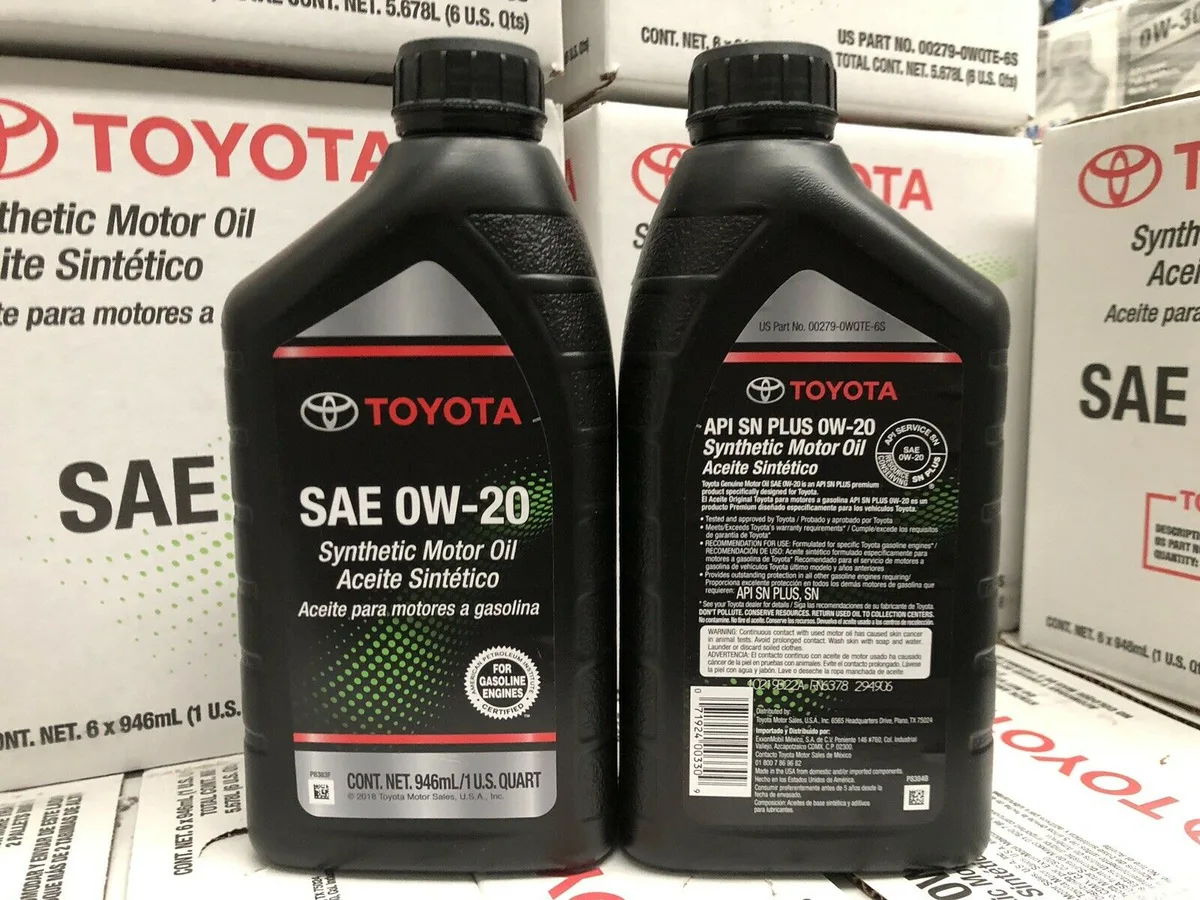
Image source: Bing (Web (fair-use with source credit))
Why 0W-20 Is Non-Negotiable
SAE 0W-20 is a low-viscosity synthetic oil. The "0W" means it flows like water in freezing temperatures. The "20" means it stays thin enough at operating temperature to reach tight clearances inside the engine.
Some owners try 5W-30 thinking "thicker is better." That's outdated thinking. Modern engines like the 2AR-FE and 2GR-FE have tight tolerances. Thicker oil doesn't flow fast enough into bearing journals and camshaft areas.
Per SAE testing standards, using 5W-30 in an engine designed for 0W-20 can reduce fuel economy by 2-3% and increase wear during cold starts.
Stick with 0W-20. It's what Toyota put in the owner's manual. It's what the oil cap says.
It's what keeps the variable valve timing system working correctly.
What the API and ILSAC Ratings Mean
When you buy oil, look for the starburst symbol on the bottle. That's the API certification mark. For the 2015 Camry, you need API SN or the newer SP rating.
The ILSAC GF-5 or GF-6 standard is also required.
Both standards are interchangeable for this engine. They include tests for fuel economy, sludge protection, and piston deposit control. A bottle labeled "API SN Plus" or "API SP with ILSAC GF-6" works perfectly.
Avoid "racing oil" or "high-mileage" blends unless they explicitly state they meet API SN or SP. Some specialty oils don't carry those certifications and lack the detergents your Camry needs.
Step-by-Step: How to Check and Fill Your Oil the Right Way
This isn't just "pour and pray." There's a method. Follow it, and you'll nail the oil level every time.
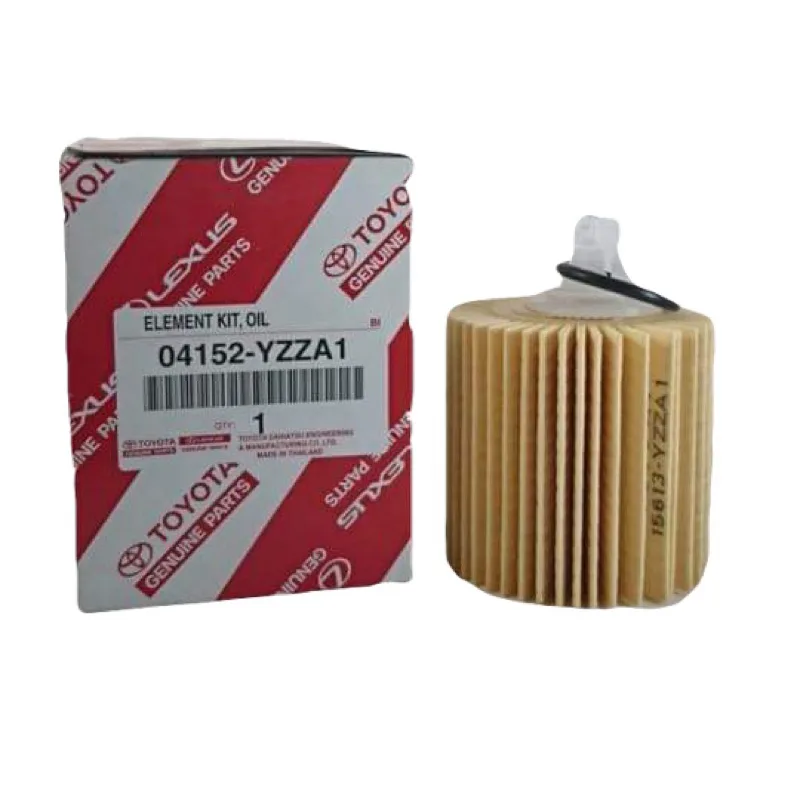
Image source: Bing (Web (fair-use with source credit))
Step 1: Warm up the engine.
Run the car for about five minutes. Warm oil drains faster and carries more contaminants out with it. Don't do a cold drain if you can avoid it.
Step 2: Park on level ground.
This matters more than most people think. If the car is tilted, you'll either overfill or underfill when you check later.
Step 3: Drain the old oil.
- Remove the oil fill cap on top of the engine.
- Place a drain pan under the oil pan.
- Loosen the drain plug with a 14mm socket. Turn it counterclockwise.
- Let the oil drain for at least five minutes. Ten is better.
Step 4: Replace the filter.
- Use a filter wrench or a strap wrench to remove the old filter. Expect some oil to spill.
- Lubricate the gasket on the new filter with fresh oil.
- Screw the new filter on by hand until the gasket contacts the mounting surface. Then tighten another 3/4 turn. Don't use a wrench for final tightening.
Step 5: Install the drain plug.
- Always use a new crush washer. Reusing the old one is a common leak source.
- Torque to 29 ft-lbs. If you don't have a torque wrench, snug it up firmly. Overtightening strips the oil pan threads.
Step 6: Add the new oil.
- For the 2.5L: pour in the full 4.4 quarts.
- For the 3.5L: pour in the full 6.4 quarts.
Step 7: Check the dipstick.
- Start the engine and let it run for 30 seconds. This fills the new filter.
- Shut the engine off and wait two minutes.
- Pull the dipstick, wipe it, reinsert it, and pull it again.
- The oil level should be between the low and full marks. Ideally, it's right at the full mark.
If the level is low, add a quarter quart at a time. Wait a minute between additions for the oil to settle. Overfilling is harder to fix than underfilling.
Common Oil Change Mistakes That Damage Your Engine
Even experienced DIYers slip up sometimes. Here are the most common errors we see in buyer feedback and forum reports.
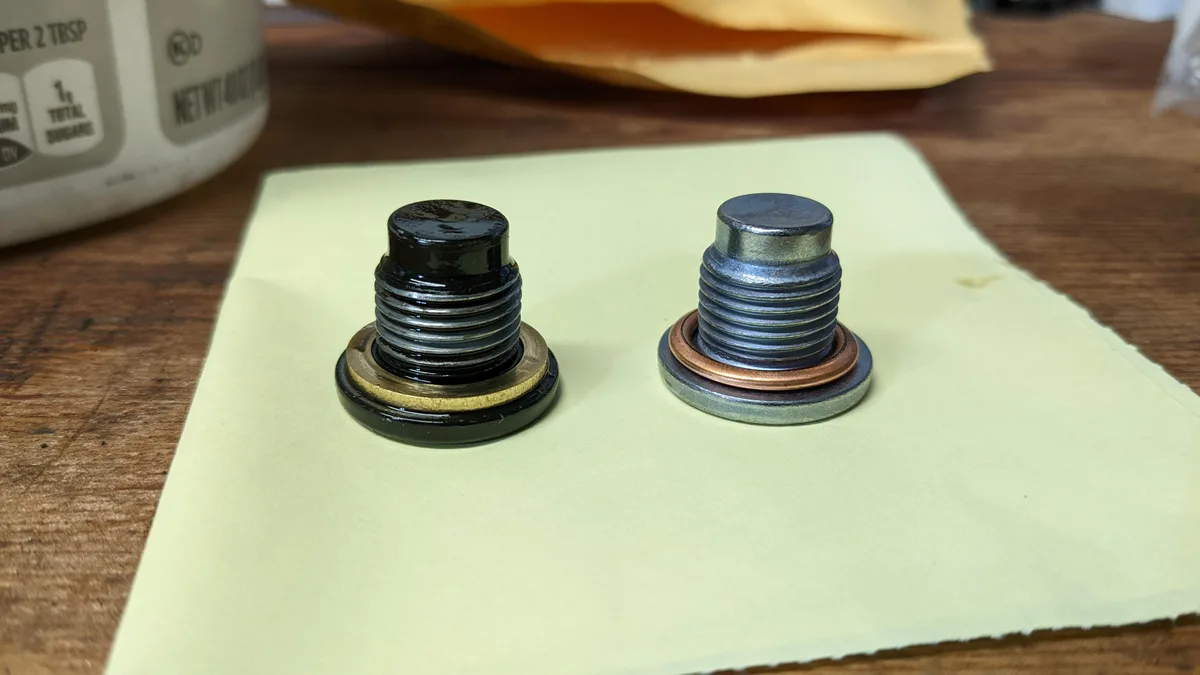
Image source: Web (Bing) / hitchesguide.com (Web image (fair-use with source credit))
Overfilling vs. Underfilling
Underfilling means the oil pump can't circulate enough fluid. Parts run dry, temperatures spike, and bearings can seize. If your engine sounds louder than usual or you see the oil pressure warning light, shut the engine off immediately.
Overfilling is actually more common. People add the full capacity, then extra "just in case." The crankshaft whips the excess oil into a foam. Foam doesn't lubricate.
Foam causes air pockets, and air pockets cause catastrophic failure. If the dipstick shows oil above the full mark, drain some out.
Using the Wrong Viscosity
SAE 5W-30 and SAE 10W-30 are common on auto parts shelves. They are wrong for your Camry. They will work in a pinch, but long-term use can clog the variable valve timing oil control valve.
That's an expensive repair.
Stick with 0W-20. If you absolutely cannot find it, 5W-20 is a temporary substitute. Change it out for 0W-20 as soon as possible.
Reusing the Crush Washer
The crush washer on the drain plug is a one-time-use item. It's a soft metal ring that deforms when you tighten the plug, creating a seal. Reuse it, and that seal gets worse each time.
A slow drip becomes a puddle on your driveway.
A new crush washer costs about 50 cents. Buy a pack of five or ten and keep them in your glove box. Replace it every single oil change.
Skipping the filter gasket lube is another easy mistake. Always put a thin film of fresh oil on the rubber gasket before installing the new filter. Dry gaskets can grab and tear, causing a massive oil leak the moment you start the engine.
How Often Should You Change the Oil? (Normal vs. Severe Driving)
Toyota says you can go up to 10,000 miles between oil changes. That number comes from the owner's manual, and it's accurate for ideal driving conditions. But most of us don't drive under ideal conditions.
Normal driving means steady highway speeds, moderate temperatures, and minimal idling. If your commute is 20 miles of open road each way, you're in this group. Stick with the 10,000-mile interval.
Severe driving changes the math. That includes short trips under five miles, stop-and-go traffic, extreme heat or cold, dusty roads, and frequent towing. For most city and suburban drivers, severe conditions are the norm.
Under severe conditions, drop your interval to 5,000 miles. Synthetic oil can handle more, but the contaminants and moisture that build up from short trips don't care about oil quality.
If you're not sure which camp you fall into, check your dipstick at 5,000 miles. If the oil looks dark or smells like fuel, change it. If it still looks golden and feels smooth, you can push toward 7,500 miles.
What You'll Spend: Oil, Filter, and Tools Breakdown
A DIY oil change on a 2015 Camry costs less than half of what a dealership charges.
| Item | Cost Range |
|---|---|
| 5-quart jug of 0W-20 synthetic | $25–$35 |
| Extra quart (V6 only) | $8–$12 |
| Oil filter (OEM or equivalent) | $5–$15 |
| Crush washer (pack of 5) | $3–$6 |
| Drain pan | $10–$20 (one-time) |
| Filter wrench | $8–$15 (one-time) |
| 14mm socket and ratchet | $10–$20 (if needed) |
Total for a 2.5L change: roughly $35, $50 for the first time, then $30, $45 after you own the tools.
Total for a 3.5L change: roughly $45, $65 for the first time, then $40, $55 after you own the tools.
Compare that to a dealership, which typically charges $80, $120 for the same service. A quick-lube shop runs $60, $90. Over five years of changes at 5,000-mile intervals, doing it yourself saves you $200, $400.
One hidden cost: cheap no-name oil filters can bypass or collapse. Stick with a brand you recognize, or buy the genuine Toyota filter (part number 04152-YZZA1). It costs about $10 and fits perfectly.
When to Call a Mechanic vs. Doing It Yourself
Not everyone should change their own oil. That's completely fine. Let's be honest about when it makes sense to DIY and when it's smarter to pay someone else.
Do it yourself if:
- You have a level driveway or garage floor.
- You own a jack and jack stands (never just a scissor jack).
- You're comfortable getting under the car.
- You have 30, 45 minutes without interruptions.
- You want to save $30, $60 per change.
Call a mechanic if:
- You don't have safe jacking equipment.
- Your back or knees make crawling under the car painful.
- You live in an apartment or parking garage with no space.
- You're short on time and the extra cost is worth it.
- You're not confident getting the drain plug torque right.
If you go the mechanic route, bring your own oil and filter. Most shops will install them if you ask. This guarantees you're getting the right 0W-20 synthetic and not bulk oil from a drum.
Final Verdict: One Simple Spec That Keeps Your Engine Alive
Your 2015 Camry needs either 4.4 quarts (2.5L) or 6.4 quarts (3.5L) of SAE 0W-20 full synthetic oil. Use a quality filter, replace the crush washer, and check the dipstick before you drive away.
That single specification, followed every time, is the difference between a car that hits 200,000 miles without drama and one that starts burning oil at 120,000. The 2AR-FE and 2GR-FE engines are proven designs. They reward proper maintenance with decades of reliable service.
So grab a 5-quart jug of 0W-20 and the right filter. Spend 30 minutes under the car. Your Camry will do the rest.
If you're working on other Toyota models, the same principles apply. The correct fluid level matters just as much for heavier equipment, whether you're checking the hydraulic reservoir on a Toyota forklift or topping up the engine in a Toyota Highlander. Every machine has its spec.
Follow it.
Frequently Asked Questions
Can I use 5W-30 in my 2015 Camry in an emergency?
In a pinch, yes. But change it out for 0W-20 as soon as possible. Long-term use of 5W-30 can reduce fuel economy and may cause the variable valve timing system to operate sluggishly.
The engine was designed around thinner oil.
How do I know if I have the 2.5L or 3.5L engine?
Check your owner's manual or look at the emissions sticker under the hood. You can also check your VIN online through Toyota's owner portal. On the car itself, the 3.5L V6 has a larger plastic engine cover that says "V6" on it.
What happens if I put too much oil in my Camry?
The crankshaft whips the excess oil into foam. Foam doesn't lubricate properly. Air bubbles in the oil can cause bearing damage and erratic oil pressure readings.
If the dipstick shows oil above the full mark, drain some out immediately.
Can I switch to high-mileage oil after 100,000 miles?
Yes. High-mileage oils include seal conditioners that can reduce small leaks in older engines. Just make sure the bottle says it meets API SN or SP and is SAE 0W-20.
Don't switch to a thicker viscosity thinking it will help. It won't.
How long does a full oil change take on a 2015 Camry?
About 30 minutes if you've done it before. Allow 45 minutes to an hour for your first time. The extra time goes to figuring out the filter location and getting the car safely on jack stands.