
Figuring out the 2002 Toyota Tundra oil capacity isn't a one-size-fits-all answer. It depends on which engine is under the hood. Get it wrong and you're looking at expensive damage.
The fix is simple once you know what to look for.
Both engines run on 5W-30 oil, but they hold different amounts. The 3.4L V6 takes 5.1 quarts with a new filter, while the 4.7L V8 takes 6.1 quarts. That one-quart gap is easy to miss and costly to ignore.
Let's walk through exactly what your truck needs and how to get it right.

Image source: Web (Bing) / cargurus.com (Web image (fair-use with source credit))
Quick Answer: Oil Capacities for Both Engines
The 2002 Toyota Tundra oil capacity depends on the engine you have. The 3.4L V6 takes 5.1 quarts with a new filter. The 4.7L V8 takes 6.1 quarts with a new filter.
Always use 5W-30 oil. Confirm which engine is in your truck before filling.
3.4L V6 Oil Capacity
The 5VZ-FE holds 5.1 US quarts (4.8 liters) with a new oil filter. Without the filter, figure on about 4.7 quarts.
4.7L V8 Oil Capacity
The 2UZ-FE holds 6.1 quarts (5.8 liters) with a new oil filter. Without the filter, it's closer to 5.7 quarts. That extra quart matters, so double-check your engine before you pour.
Why Getting This Number Wrong Is a Real Problem
Oil keeps both engines alive. Too little oil means metal-on-metal contact. Too much oil means the crankshaft whips air into the sump, turning the lubricant into foam.
Foam doesn't lubricate. It also doesn't hold oil pressure. The result is the same as running low: premature wear on bearings, cam lobes, and valvetrain parts.
Overfilling creates another headache. Excess oil raises pressure inside the crankcase, which can push past seals and gaskets. On a 20-year-old truck, that's a fast ticket to oil spots on the driveway and blue smoke from the exhaust.
Underfilling is worse in a different way. Low oil level means low oil pressure. That starves the top end of the engine.
In extreme cases, the motor can seize entirely, which means a rebuild or replacement running thousands of dollars.
The fix is simple. Match the number to the engine. Don't guess, don't trust the previous owner's memory, and don't assume both engines use the same amount.
So before you pour a single quart, confirm which engine you actually have.
First, Find Out Which Engine You Actually Have
This step takes thirty seconds and saves you from a costly mistake. The 2002 Tundra came with two engines. Neither looks anything like the other.
Open the hood and look for a metal plate or sticker on the inner fender. It lists the engine code. You're looking for either "5VZ-FE" or "2UZ-FE."
No sticker? Check the engine cover. The V8 has a wider, bulkier cover spanning most of the bay.
The V6 sits lower and looks noticeably smaller.
The easiest tell: the 4.7L V8 says "V8" right on the intake plenum in most models. The 3.4L V6 doesn't advertise anything.
Still unsure? Check your VIN. The 8th character identifies the engine.
A "T" means the 4.7L V8. An "R" means the 3.4L V6. The same-generation 4Runner used these same two engines, so its specs are a useful cross-reference.
Your owner's manual also lists it. But many of these trucks are on their second or third owner by now, so the manual is often missing. That's fine.
The VIN and the fender sticker won't lie.
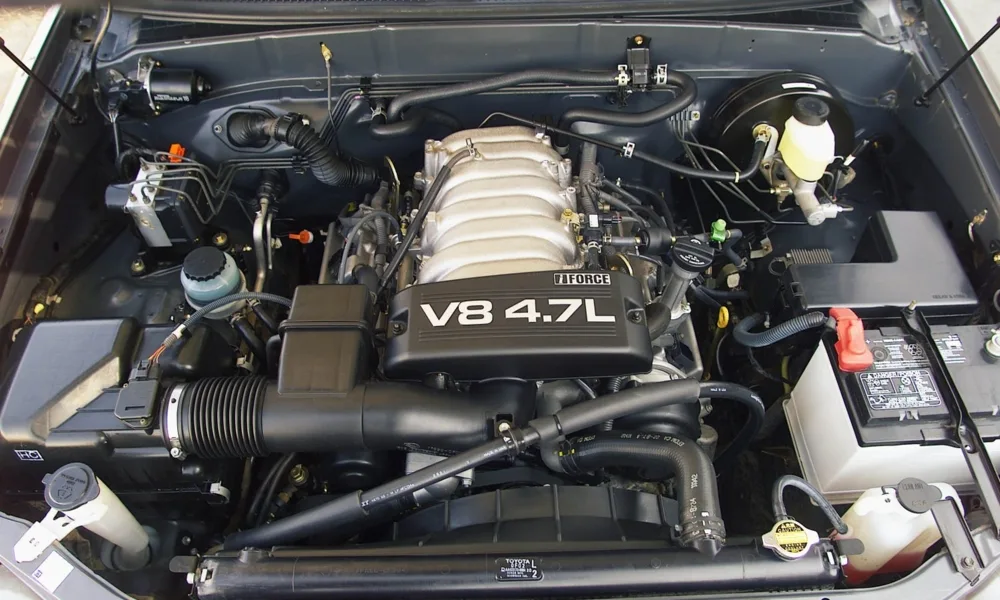
Image source: Bing (Web (fair-use with source credit))
What Kind of Oil Should You Use?
Toyota called for 5W-30 in both engines back in 2002. That recommendation still holds today. Stick with it unless you're in extreme conditions, which we'll cover shortly.
Any major brand that meets the current API spec will protect your Tundra. Paying double for a fancy name doesn't buy extra safety. Buying anything below spec does buy trouble.
Viscosity and Quality Ratings Explained Simply
The "5W" in 5W-30 is the cold-weather rating. The "W" stands for winter. Lower numbers flow better in freezing temperatures.
The "30" is the hot-weather viscosity. Higher numbers stay thicker at operating temperature.
The quality rating matters more than the brand. Look for the API "donut" symbol on the bottle. The API oil standards page breaks down the rating system.
As of 2026, API SP is the current standard. It's backward-compatible, so it covers your 2002 engine without issue.
Don't use 0W-20 in this engine. That's for newer Toyotas. Your 2002 engine was designed around 5W-30, and switching to a thinner oil can increase wear, especially with miles on it.
The newer Tundra models, by contrast, moved to a different oil spec entirely. Don't assume the modern recommendation applies here.
The Real Step-by-Step: How to Change Your Oil Safely
You need a few things before you start. A 20- to 30-millimeter wrench for the drain plug. An oil filter wrench for the filter.
And jack stands or ramps rated for the truck's weight.
The Tundra sits high enough that you can often slide underneath without jacking it up. Still, use ramps if you're not sure. Never trust a bumper jack alone.

Image source: Bing (Web (fair-use with source credit))
Here's the sequence:
- Warm up the engine for three to five minutes. Warm oil drains fast and carries more contaminants.
- Turn off the engine and remove the oil fill cap. This relieves pressure and helps draining.
- Put a drain pan under the engine, not the transmission. On the Tundra, the engine drain plug sits near the rear of the oil pan.
- Loosen the drain plug with a wrench, then unscrew it by hand. Be ready for hot oil.
- Let it drain completely. Give it a full five to eight minutes.
- Replace the crush washer on the drain plug. These are single-use. Reusing one risks a leak.
- Torque the plug to 30 to 40 foot-pounds. Don't guess. A stripped pan is a painful, expensive repair.
- Remove the oil filter. The V8's filter sits on the passenger side, low near the block. The V6's filter is similar but slightly higher.
- Coat the new filter's rubber gasket with fresh oil. Spin it on until the gasket touches, then tighten another three-quarters of a turn.
- Refill with the correct capacity. Start with a little less than the full amount.
- Run the engine for thirty seconds. Check for leaks around the filter and drain plug.
- Shut off, wait five minutes, then check the dipstick. Top up if needed.
That's the whole job. It takes about forty-five minutes the first time and gets faster after that.
Common Mistakes That Cost Tundra Owners Big Money
The most common error is using the V8 capacity on a V6. That's a full quart overfilled. The engine won't like it.
- Overfilling causes foaming. The crank whips air into the oil, and aerated oil loses its lubrication properties.
- Underfilling causes starvation. Low level means low pressure, which kills bearings quickly.
- Skipping the crush washer replacement causes drips. A crushed old washer won't seal properly.
- Overtightening the drain plug strips the pan threads. Once stripped, you're looking at a thread insert or a new oil pan.
- Forgetting to pre-fill the filter causes a dry start. That's a few seconds of metal-on-metal contact on every cold start until oil pressure builds.
- Installing the filter with a dry gasket causes a leak. The gasket can grab unevenly and distort.
Here's a quick reference for the numbers:
| Engine | Capacity with Filter | Capacity without Filter | Engine Code |
|---|---|---|---|
| 3.4L V6 | 5.1 quarts (4.8 L) | ~4.7 quarts (4.4 L) | 5VZ-FE |
| 4.7L V8 | 6.1 quarts (5.8 L) | ~5.7 quarts (5.4 L) | 2UZ-FE |
How to Check the Dipstick Correctly (Yes, There's a Right Way)
Reading the dipstick seems foolproof until you do it wrong and get a false reading. Then you overfill or underfill based on bad information.
Here's the proper method:
- Park on level ground and turn the engine off.
- Wait five minutes after a drive. This lets the oil settle back into the pan.
- Pull the dipstick, wipe it clean with a rag, and reinsert it fully.
- Pull it out again and read the level on the flat side, not the back.
- The level should sit between the low and full marks. Ideally, slightly above center.

Image source: Web (Bing) / fridayparts.com (Web image (fair-use with source credit))
Don't check immediately after running the engine. Hot oil hasn't drained back yet, so the level reads artificially low. That's how people overfill.
Don't check on a slope either. The truck's angle skews the reading.
If the level is low, add a half-quart at a time. Wait a minute, recheck, and repeat. It's better to add twice than to overshoot once.
Cold Weather, Towing, and High Mileage: Adjusting Your Maintenance
Your Tundra's oil needs change with conditions. Cold climates, heavy towing, and high mileage all affect how often you should change oil and what you should use.
In severe cold, some owners drop to 0W-30 for easier cranking. It's not required, but it helps if your truck sits outside overnight in subzero temperatures. If you're in a milder climate, 5W-30 all year beats switching.
Towing pushes your oil harder. Heat breaks down oil faster, and a loaded trailer makes the engine work constantly. Follow the "severe service" schedule in the owner's manual, which calls for more frequent changes.
High mileage changes things too. Once your Tundra passes 150,000 miles, consider a high-mileage oil formula. These contain seal conditioners that help reduce the small leaks common on older engines.
Plenty of these trucks are still on the road with 200,000 or 300,000 miles on the clock. They got there because owners followed the basics. Regular oil changes, correct oil type, and proper level.
Do You Need Synthetic Oil? Pros, Cons, and Honest Recommendations
No, you don't. But you might want it.
Synthetic oil handles heat better and flows better in cold weather. It resists breakdown longer, which means longer drain intervals. The downside is cost.
Synthetic typically runs two to three times the price of conventional.
For a 2002 Tundra used for daily driving, conventional 5W-30 works fine. Change it on schedule and your engine won't know the difference.
For towing, synthetic makes sense. The added heat protection is real. The engine runs hot under load, and synthetic's thermal stability gives you a safety margin.
For high-mileage trucks, synthetic blends offer a middle ground. They cost less than full synthetic and still provide better protection than conventional.
The honest answer: use what fits your budget and your driving. The most important thing isn't the base oil. It's changing it regularly.
And if you're maintaining multiple Toyotas, remember that lighter-duty models like the RAV4 have their own specs.
Used Oil Disposal: Don't Be "That Person"
Used engine oil is hazardous waste. Pouring it down a drain, into a storm drain, or onto the ground contaminates soil and water. It's also illegal in most jurisdictions.
The EPA's guidelines are clear on this.
Most auto parts stores accept used oil for free. Some limit the amount per visit. Call ahead if you're unsure.
Store the old oil in a clean, sealed container. A sturdy jug with a tight cap works fine. Don't mix it with coolant, fuel, or other fluids.
Mixed oil is harder to recycle and many collection sites won't take it.
When to Stop DIY and Call a Professional
Changing oil yourself is simple, but it's not for everyone. Here's when you should delegate.
If your truck sits lower than expected or the previous owner installed oversized skid plates, access can be a nightmare. A lift makes the job trivial. Jack stands and a floor at eye level make it miserable.
If you've stripped the drain plug previously, stop. A shop has the tools to repair the threads without making it worse. Continuing to force a damaged plug is how you end up replacing an oil pan.
If you're short on time, the cost of a professional oil change is hard to beat. Paying for labor and oil is often worth more than an afternoon on your back. Tundra oil changes are straightforward for any reputable shop, so you're not risking much by outsourcing.
Quick Spec Reference Sheet
Keep this handy. It covers the essentials in one place.
| Item | Specification |
|---|---|
| Oil type | 5W-30 conventional or synthetic |
| API rating | API SP or newer (backward-compatible) |
| V6 capacity | 5.1 quarts with filter |
| V8 capacity | 6.1 quarts with filter |
| Oil filter | Toyota OEM or equivalent aftermarket |
| Crush washer | Replace every oil change |
| Drain plug torque | 30-40 foot-pounds |
| Oil change interval | 3,000-5,000 miles depending on conditions |
Frequently Asked Questions
How much oil does a 2002 Toyota Tundra V8 take?
The 4.7L V8 takes 6.1 quarts with a new oil filter. Without a filter, plan on roughly 5.7 quarts. Always confirm the level with the dipstick after filling.
How much oil does a 2002 Toyota Tundra V6 take?
The 3.4L V6 takes 5.1 quarts with a new oil filter. That's exactly one quart less than the V8. Mixing these up is the most common mistake we see.
What kind of oil does a 2002 Tundra need?
Toyota specified 5W-30 for both engines. Choose an oil that meets the current API SP standard. Brand doesn't matter much, but viscosity spec does.
Can I use synthetic oil in my 2002 Tundra?
Yes. Synthetic is fully compatible with these engines. It provides better cold-start flow and heat resistance.
Just make sure it's the correct viscosity.
How often should I change the oil in a 2002 Tundra?
Under normal driving, every 5,000 miles is reasonable. If you tow regularly or drive in dusty conditions, tighten that to every 3,000 miles. The severe-service schedule in your manual is the safe route.
What happens if I overfill my Tundra's engine?
Excess oil causes foaming as the crankshaft churns air into the fluid. Foamed oil loses its ability to protect. You may notice rough running, oil leaks, or a burning smell.
Drain the excess right away.
The Bottom Line: A Simple Routine That Keeps Your Tundra Alive
The 2002 Toyota Tundra is a genuinely tough truck. The 2UZ-FE V8, in particular, is known for crossing 300,000 miles without major issues. That reputation depends on one habit: proper oil maintenance.
Get the engine code right. Fill with the correct capacity. Use 5W-30 meeting current API standards.
Change it on schedule. Check the dipstick after every fill.
That's really it. No special tricks, no expensive additives, no magic oil. Just the right number and the right fluid.
Do that, and your Tundra will keep running long after most modern trucks have moved on to the scrapyard.
If you're working on other Toyotas in your driveway, the same logic applies. Each engine has its own specific requirements, so always confirm before you pour.