
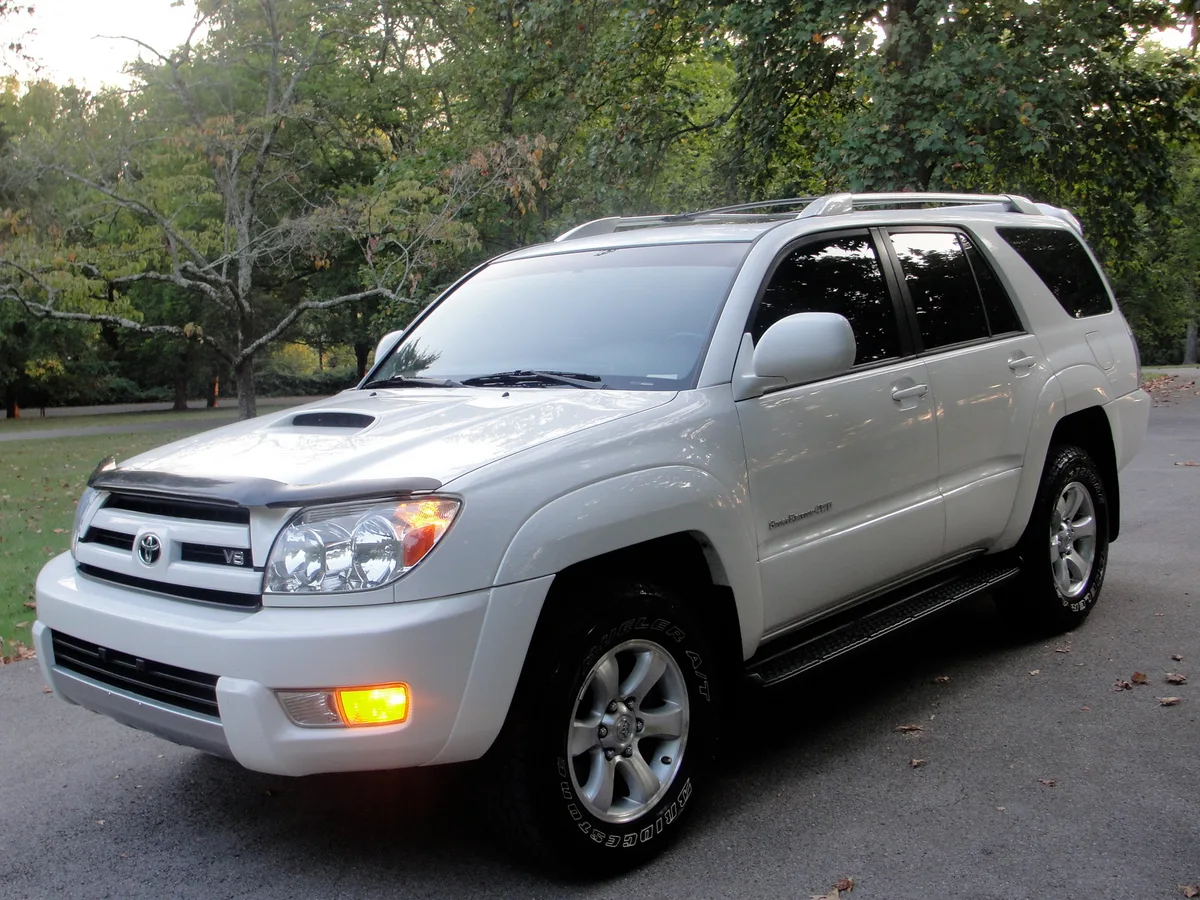
If you own a 2005 Toyota 4Runner, the 2005 Toyota 4Runner oil capacity isn’t just a random number to glance at in the manual. Getting it wrong, even by half a quart, can mean the difference between a smooth-running engine and costly repairs down the road.
Manufacturer specs confirm that the 4.0L V6 takes 6.0 quarts with a filter change, while the 4.7L V8 takes 6.5 quarts. That half-quart gap is easy to miss if you don’t know which engine sits under your hood. Let’s start with why this number matters so much in the first place.
Why Getting the Oil Capacity Wrong Hurts Your 4Runner
Pour in too little oil and your engine starves for lubrication. Bearings, pistons, and camshafts run hotter and wear faster. Low oil pressure can trigger a warning light, but by then the damage may already be done.
Pour in too much oil and you risk foaming. Foamy oil doesn’t lubricate well. Crankcase pressure can blow past seals, causing leaks.
In extreme cases, a severely overfilled crankcase can damage the catalytic converter or even cause an engine failure.
The 4.0L 1GR-FE and 4.7L 2UZ-FE are known for long life, many pass 300,000 miles with proper care. Using the right oil capacity is one of the simplest ways to keep that reputation intact. For reference, later 4Runner models use different specs, so it’s worth checking our guide to the 2018 4Runner oil type if you’ve got a newer rig.
Quick Answer: How Much Oil Your 2005 4Runner Actually Needs (V6 vs V8)
Here’s the short version. Use it as a reference before you pop the hood.
| Engine | Capacity (with filter change) | Capacity (without filter change) | Recommended viscosity |
|---|---|---|---|
| 4.0L 1GR-FE V6 | 6.0 quarts (5.7 liters) | ~5.5 quarts | 5W-30 |
| 4.7L 2UZ-FE V8 | 6.5 quarts (6.2 liters) | ~6.0 quarts | 5W-30 |
Both engines use the same oil grade, 5W-30 conventional or synthetic. The API service rating should be SN or newer. Always check the dipstick after the first pour because residual oil in the engine can vary.
If you're driving a Tundra with a similar V8, the capacity differs, so see our 2016 Tundra oil type guide for that truck.
Which Engine Does Your 4Runner Have? The First Decision Branch
Before you buy oil or start draining, you need to know which engine is in your 2005 4Runner. They look and behave differently under the hood.
Spotting the 4.0L 1GR-FE V6 vs the 4.7L 2UZ-FE V8
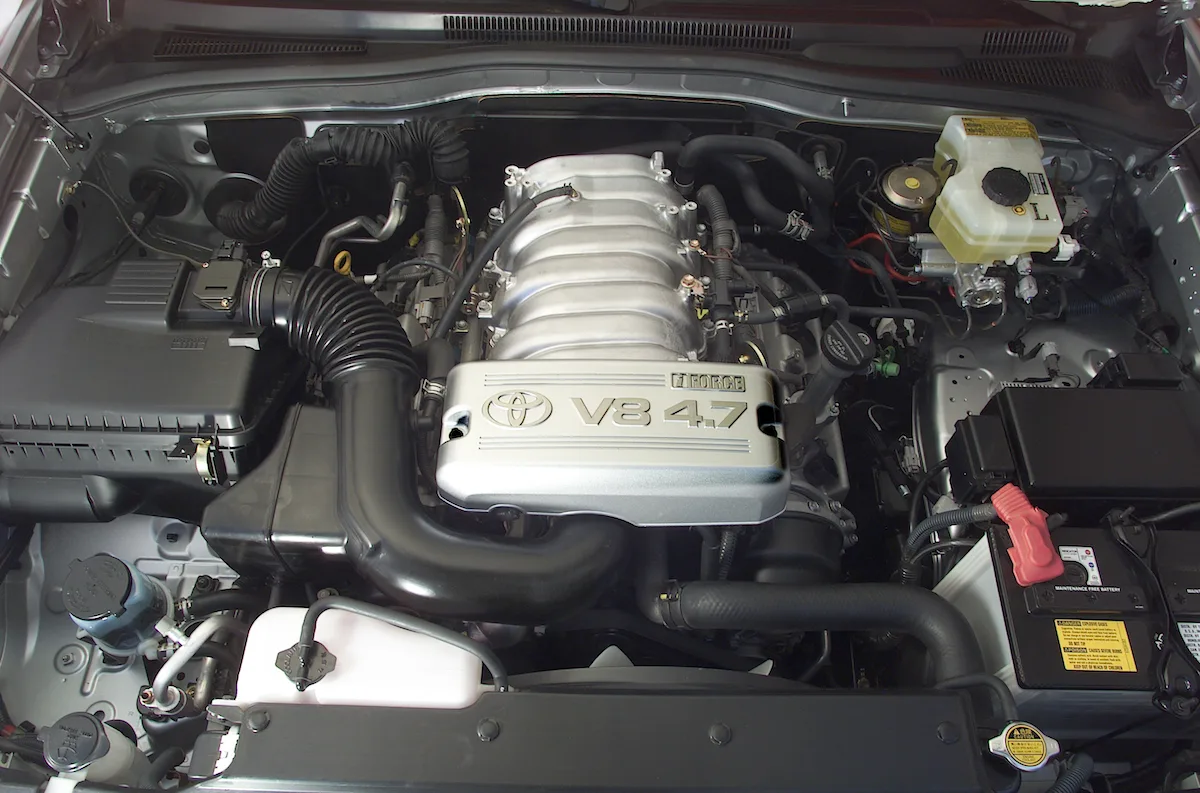
Open the hood and look at the engine cover. The V6 has a smaller, compact plastic cover that says “VVT-i” on it. The V8 has a larger cover that spans almost the entire top of the engine bay and sits over two separate valve covers.
The V8 engine itself looks bigger, it takes up more room side to side. The V6 leaves noticeable gap on either side. The air intake tube on the V8 is also larger in diameter.
VIN Check and Under-Hood Clues
The easiest way to be certain is to check the 8th digit of your VIN. On a 2005 4Runner:
- J (or specific letter for V6) = 4.0L V6
- K (or specific letter for V8) = 4.7L V8
If you don’t have the VIN handy, look at the emissions sticker under the hood. It lists the engine displacement. Also, the oil fill cap location differs: on the V6 it sits front-center; on the V8 it’s offset to the driver’s side on the left valve cover.
Knowing your engine prevents the most common mistake, grabbing the wrong oil capacity. Other Toyota trucks like the Tacoma have different setups, so if you’re working on a 2017, check our 2017 Tacoma oil type page.
Step-by-Step: The Full Oil Change Workflow for a 2005 4Runner
Once you know your engine, the process is straightforward. Here’s the complete workflow with the right tools and steps.
Tools and Parts You’ll Need
| Item | Notes |
|---|---|
| 5W-30 oil | Amount based on engine (6.0 or 6.5 qt) |
| Oil filter | OEM 04152-31090 (V6) or 04152-38010 (V8), or quality aftermarket |
| 14mm socket + ratchet | For drain plug |
| Oil filter wrench | Metal cap-style works best |
| Drain pan | At least 8-quart capacity |
| Funnel | Long neck helps |
| Crush washer | 14mm (Toyota part 90430-12031) |
| Rags and gloves | For cleanup |
Warming the Engine and Draining the Old Oil
Run the engine for 2-3 minutes to warm the oil. Warm oil flows faster and carries more contaminants out. Don’t let it get hot, just lukewarm.
Park on level ground. Jack up the front if needed, but always use jack stands. Position the drain pan under the engine.
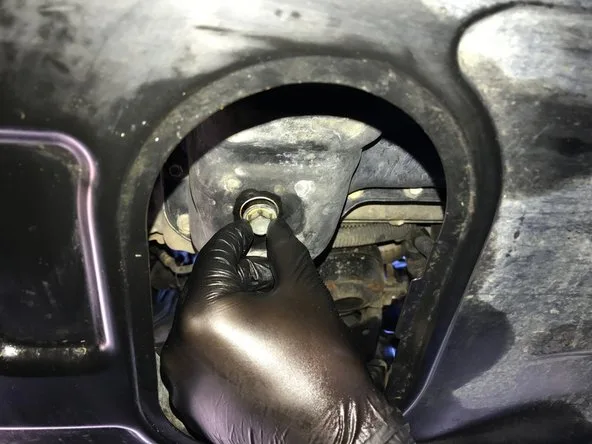
Remove the drain plug with the 14mm socket. Let the oil drain completely, at least 5 minutes.
Replacing the Oil Filter (With the Correct OEM or Equivalent Part)
The oil filter is located on the front of the engine, accessible from the top on the V6 and from underneath on the V8. Use an oil filter wrench to loosen it. Have the drain pan ready because more oil will spill out.
Before installing the new filter, rub a thin coat of fresh oil on the rubber gasket. Screw it on by hand until the gasket contacts the mounting surface, then tighten another ¾ turn. Do not overtighten.
Adding Oil in Stages – How to Avoid Overfilling
Pour in the first 5 quarts for the V6 (or 5.5 for the V8). Then start the engine and run it for 30 seconds to fill the filter and circulate the oil. Shut it off and wait 2 minutes.
Now check the dipstick. Add oil in 0.5-quart increments, checking each time. This step is crucial because the exact amount needed depends on how much oil drained out.
Overfilling is harder to fix than underfilling.
Checking the Dipstick the Right Way
Pull the dipstick, wipe it clean, reinsert fully, then pull again. The oil level should be between the low and full marks. Never add oil above the full mark.
If you’ve added the full manufacturer capacity and it’s low, wait a few minutes and recheck, the oil may still be settling.
For a visual reference, many 4Runner owners find it helpful to see the process on a similar model. Our 2019 4Runner oil type guide includes photos of the engine bay for comparison.
The Exact Capacity Numbers (With and Without Filter Change)
Here’s the full data table for reference. These numbers come from the official Toyota service manual for the 2005 model year.
| Scenario | 4.0L V6 (1GR-FE) | 4.7L V8 (2UZ-FE) |
|---|---|---|
| With new oil filter | 6.0 US quarts (5.7 L) | 6.5 US quarts (6.2 L) |
| Without new oil filter | ~5.5 US quarts (5.2 L) | ~6.0 US quarts (5.7 L) |
| Dry engine (rebuild) | 6.6 US quarts (6.2 L) | 7.0 US quarts (6.6 L) |
| Recommended oil | 5W-30 API SN or newer | 5W-30 API SN or newer |
The “dry engine” figure matters only if you’re rebuilding or replacing the engine entirely. For a standard oil change, always start with the filter‑change capacity and then top off based on the dipstick. This approach works for other Toyota vehicles too, for example, the 2005 Corolla uses a completely different spec, so refer to our 2005 Corolla oil capacity guide for that car.
When choosing oil, look for bottles marked with the API certification seal (the “starburst” symbol). This means the oil meets the latest industry standards from the American Petroleum Institute. The viscosity (5W-30) follows the SAE J300 standard, which ensures proper flow at both low and high temperatures.
Common Mistakes Even Experienced DIYers Make
Even if you’ve changed oil a dozen times on other cars, the 2005 4Runner has a few quirks that trip people up. Let’s run through the ones we see most often.
Mixing Up V6 and V8 Capacities
It’s an easy oversight. Both engines look similar from the outside, and the oil cap doesn’t say how much to pour. If you treat a V8 like a V6, you’ll be half a quart low.
That’s enough to cause a low-oil-pressure situation on steep inclines or during hard cornering. Always double-check your engine before you buy the oil.
Trusting the Number Instead of the Dipstick
The spec says 6.0 quarts for a V6 with filter. But what if your last oil change left an extra half quart in the engine? Or what if you didn’t drain every last drop?
The dipstick is the final authority. Pour the first 5 quarts, run the engine, wait, then add in small doses. Never assume the full capacity fits blind.
Overtightening the Drain Plug or Oil Filter
Many DIYers crank the drain plug with a breaker bar. That strips threads in the oil pan. The correct torque is 29, 33 ft-lb, snug with a short ratchet is enough.
Similarly, the oil filter should be hand-tight plus three-quarters of a turn. If you need a wrench to remove it next time, it’s too tight.
Using the Wrong Viscosity (5W-30 Is Standard, but Know Why)
Some owners think thicker oil protects an older engine better. The 4.0L and 4.7L were designed for 5W-30. Thicker oil like 10W-40 can cause sluggish flow at cold starts and reduce fuel economy.
Stick with the factory recommendation unless you live in extreme heat and consult a mechanic.
Expert Tips for Long Engine Life and Fewer Oil Changes
These aren’t just old wives’ tales. They come from thousands of owner reports and Toyota service bulletins.
Synthetic vs Conventional Oil – What’s Best for a 2005 Engine?
Both work. The 2005 4Runner was filled with conventional oil from the factory. But synthetic provides better protection against sludge and handles temperature swings more consistently.
If your 4Runner has over 150,000 miles and you’ve always used conventional, switching to synthetic is safe. Just make sure it’s still 5W-30 API SN or higher. High-mileage formulations with seal conditioners can help older engines too.
When to Change Your Oil Based on Driving Habits
Toyota recommended an interval of 5,000 miles for normal driving and 3,000 miles for severe service. Severe includes short trips under 10 miles, dusty roads, heavy towing, and stop-and-go traffic. If you mostly drive highways and change oil every 7,500 miles with synthetic, that’s fine.
But check your oil level monthly. The 4.0L V6 can consume a little oil as it ages, especially between 200,000 and 300,000 miles.
The Crush Washer Trick That Prevents Leaks
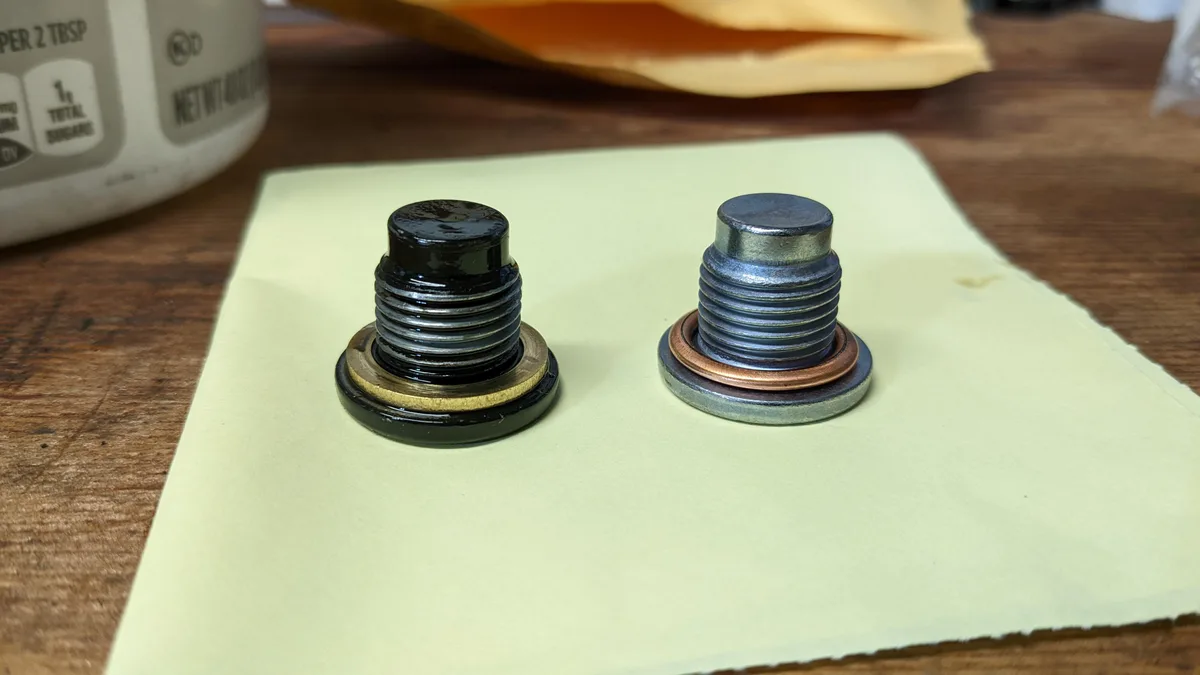
The drain plug uses a crush washer that deforms when tightened to create a seal. Never reuse it. A new washer costs about a dollar.
Reusing an old one is the number one cause of a slow drip after an oil change. If you see oil on your driveway, start by checking the crush washer.
When the Normal Process Changes – Off-Roading, Towing, and Extreme Climates
If you take your 4Runner off-road regularly, your oil change routine needs adjusting. Dust and dirt can enter the engine through the air intake. Change oil more frequently (every 3,000, 4,000 miles) to flush out contaminants.
Mud and water crossings increase the risk of water contamination. Check your dipstick for a milky appearance after deep water. If you see it, change the oil immediately, that’s a sign of water in the crankcase.
Towing heavy loads (5,000+ pounds) generates more heat. Synthetic oil handles higher temperatures better. Consider stepping up to a synthetic 5W-30 or even a 5W-40 if you tow in desert heat.
But stay within Toyota’s approved viscosity range. In extreme cold (below -20°F), a 0W-30 synthetic provides better cold starts. In extreme heat (above 110°F), the standard 5W-30 is still fine as long as you change it on schedule.
Final Decision Guide: A Two-Step Check to Get It Right Every Time
Step one: identify your engine. Check the VIN’s eighth digit or the under-hood sticker. Know whether you have the 4.0L V6 or 4.7L V8.
Step two: use the dipstick, not just the manufacturer capacity. Add oil in stages. Start with 5.0 quarts for a V6 (5.5 for a V8).
Run the engine for 30 seconds. Wait 2 minutes. Check the dipstick.
Add 0.5 quarts at a time until the level sits between the low and full marks.
That’s it. Two steps, three tools (14mm socket, filter wrench, funnel), and 30 minutes of your time. Do it right and your 4Runner’s engine will thank you for another 100,000 miles.
Frequently Asked Questions
How much oil does a 2005 Toyota 4Runner V6 take?
The 4.0L V6 takes 6.0 quarts (5.7 liters) when you also replace the oil filter. Without a new filter, it takes about 5.5 quarts. Always check the dipstick after the first pour to confirm.
How much oil does a 2005 Toyota 4Runner V8 take?
The 4.7L V8 takes 6.5 quarts (6.2 liters) with a filter change. Without a new filter, it takes about 6.0 quarts. Residual oil in the engine can vary, so rely on the dipstick.
What type of oil does a 2005 4Runner use?
Both engines require 5W-30 viscosity oil with an API service rating of SN or newer. Conventional or synthetic both work, though many owners prefer synthetic for better long-term protection.
Can I use 10W-30 in my 2005 4Runner?
Toyota does not recommend 10W-30. The engine was designed for 5W-30. Thicker oil can reduce fuel economy and cause sluggish cold starts.
Stick with 5W-30 unless you live in extreme heat and consult a mechanic.
How often should I change the oil in my 2005 4Runner?
Under normal driving, every 5,000 miles with conventional oil or up to 7,500 with synthetic. For severe conditions (towing, off-roading, short trips), change every 3,000, 4,000 miles. Check the level monthly.
Why is my 2005 4Runner burning oil after an oil change?
If you overfilled the crankcase, oil can be forced past the piston rings and burn. Check your dipstick. Also, an old crush washer can cause a slow leak that looks like burning.
Replace the crush washer and make sure the level is correct.