
If you own a 2021 Toyota Tacoma, you need to know exactly how much oil it takes. Put in too little and you risk starving the engine. Pour in too much and you can cause foaming, pressure spikes, and seal damage.
The 2021 toyota tacoma oil capacity isn't a single number. It depends entirely on which engine is under your hood.
Manufacturer specifications confirm the 3.5L V6 holds 6.4 quarts with a filter change. The 2.7L four-cylinder holds 5.5 quarts. Both require 0W-20 full synthetic oil meeting API SN or SP standards.
Getting this right keeps your engine running smoothly for years. Let's walk through exactly what you need to know as of 2026.
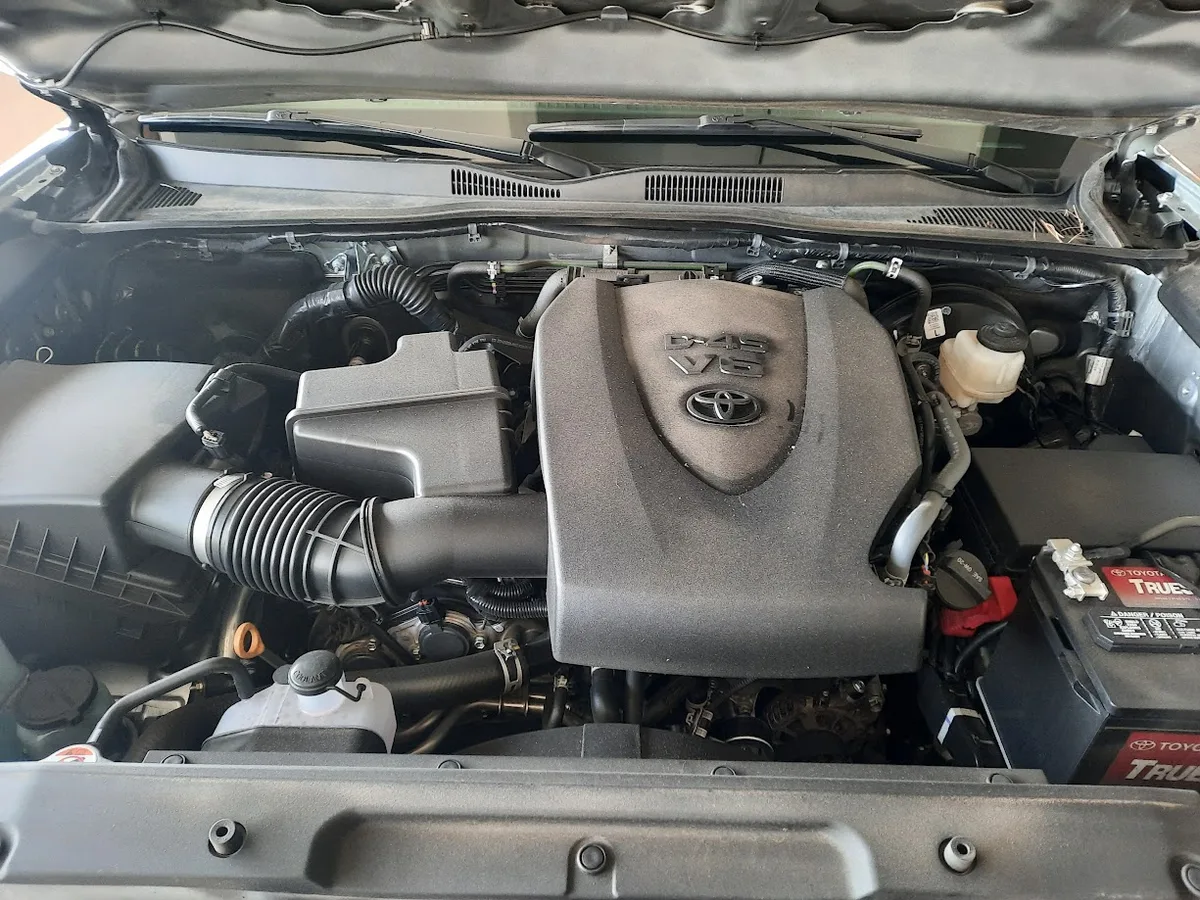
Image source: Web (Bing) / tacomaexplorer.com (Web image (fair-use with source credit))
Quick Answer
The 2021 Toyota Tacoma takes 6.4 quarts of oil with the 3.5L V6. The 2.7L four-cylinder takes 5.5 quarts. Both need 0W-20 full synthetic oil.
Always check your dipstick after filling. Never guess the amount.
Why Getting the Oil Capacity Right Matters for Your 2021 Tacoma
Oil lubricates moving parts, reduces friction, carries away heat, and suspends contaminants. Get the volume wrong and every one of those jobs suffers.
Underfilling is the more obvious danger. Too little oil means the pickup tube can suck air during hard cornering or steep off-road climbs. That causes momentary oil starvation.
Even a few seconds of metal-on-metal contact can score bearing surfaces and shorten engine life. Aggregate reviews from Tacoma owners on forums report that low oil is a leading cause of premature engine wear in these trucks.
Overfilling is sneakier and just as bad. When you pour too much oil in, the crankshaft whips through the excess like a blender. It aerates the oil, turning it into foam.
Foam doesn't lubricate well. It also increases internal pressure, which can blow out seals and gaskets. The Tacoma's variable valve timing system is especially sensitive to oil pressure irregularities.
Manufacturer specifications exist for a reason. Toyota engineers calculated these capacities based on the oil pan volume, filter housing volume, and the oil's thermal expansion characteristics. Straying from their numbers means you are guessing.
And guessing with an engine is expensive.
The Two Engines: 2.7L 4-Cylinder vs. 3.5L V6 Capacities
The 2021 Tacoma came with two engine options. Each has a different oil capacity. Here is the breakdown.
2.7L 4-Cylinder (2TR-FE)
This is the base engine. It is a workhorse known for reliability rather than power. It holds 5.5 quarts of oil with a filter change.
Without replacing the filter, it holds about 5.2 quarts. Always do the filter. It is cheap insurance.
The 2.7L uses a cartridge-style oil filter located on the front of the engine, accessible from above. This makes changes easier than on some vehicles where you have to crawl underneath. The filter housing takes a 14mm hex socket or a dedicated filter cup wrench.
3.5L V6 (2GR-FKS)
This is the popular upgrade. It produces 278 horsepower and handles towing much better. It holds 6.4 quarts of oil with a filter change.
Without the filter, it holds about 6.1 quarts. Again, replace the filter every time.
The V6 uses a spin-on oil filter. It is also located on the front of the engine and is accessible from above with a long reach. You will need a filter wrench to remove it.
The torque spec for the new filter is 18 ft-lbs, which is hand-tight plus a quarter turn.
| Engine | Capacity with Filter | Capacity without Filter | Oil Type | Filter Type |
|---|---|---|---|---|
| 2.7L 4-cylinder | 5.5 quarts (5.2L) | 5.2 quarts (4.9L) | 0W-20 synthetic | Cartridge |
| 3.5L V6 | 6.4 quarts (6.1L) | 6.1 quarts (5.8L) | 0W-20 synthetic | Spin-on |
The Exact Oil Type Your Tacoma Needs
Toyota specifies 0W-20 full synthetic oil for both 2021 Tacoma engines. This is not a suggestion. It is a requirement for warranty compliance and long-term durability.
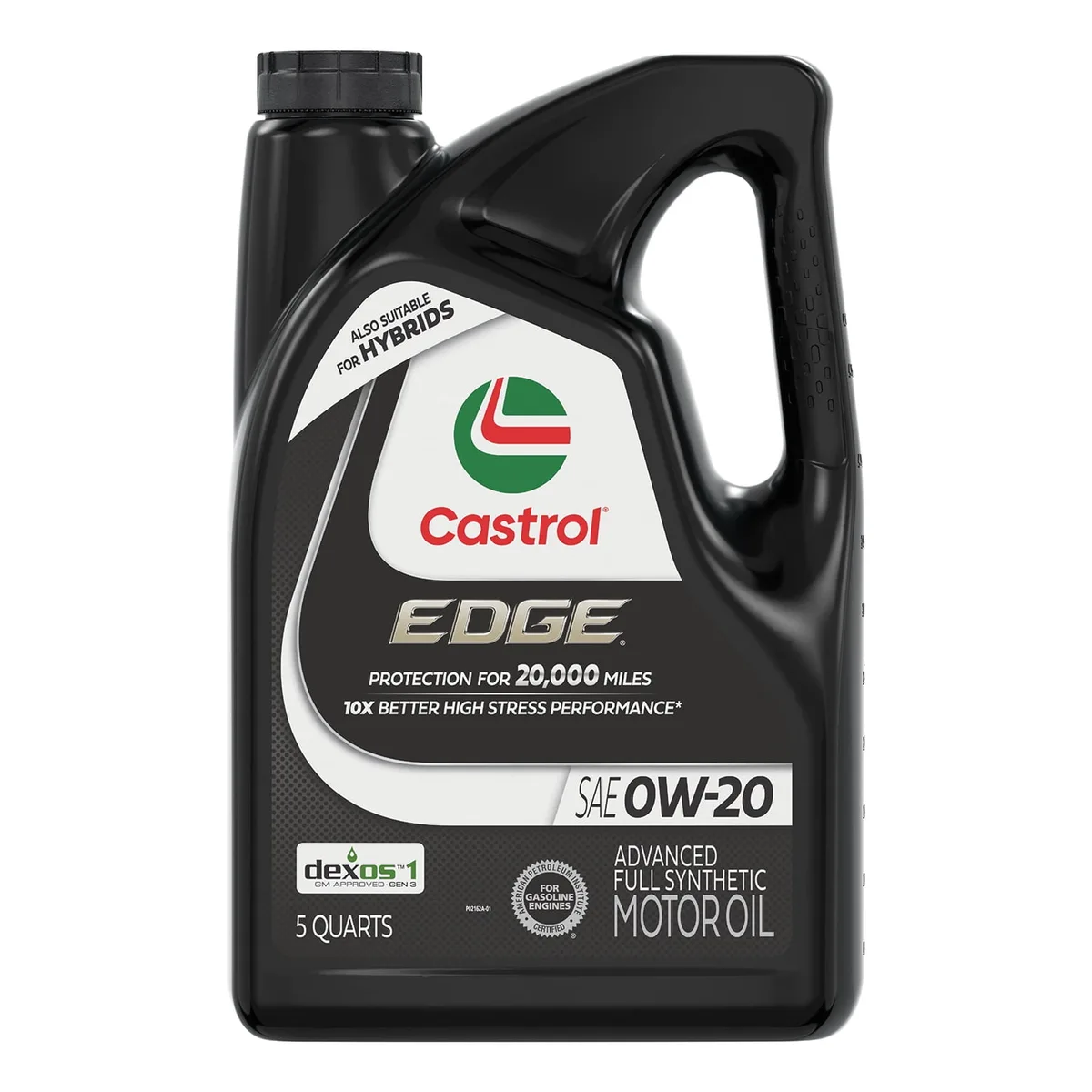
Image source: Web (Bing) / walmart.com (Web image (fair-use with source credit))
What Does 0W-20 Mean?
The "0W" stands for the oil's viscosity at cold temperatures. The "W" means winter. A 0W oil flows easily at temperatures down to -40 degrees Fahrenheit.
This is critical for cold starts. The thinner the oil when cold, the faster it reaches critical engine components. Less wear happens in the first few seconds of startup.
The "20" is the viscosity at normal operating temperature (212 degrees Fahrenheit). A 20-weight oil is relatively thin compared to older standards like 10W-30. Modern engines are built with tighter clearances.
They need thinner oil to flow through narrow passages in the variable valve timing system and around piston rings.
Why Full Synthetic?
Full synthetic oil offers several advantages over conventional or synthetic blends.
- Better thermal stability. It resists breaking down at high temperatures.
- Superior cold flow. It pumps faster in freezing weather.
- Longer change intervals. Toyota recommends up to 10,000 miles under normal conditions.
- Reduced sludge formation. Synthetic oil does not oxidize as quickly.
You can use a synthetic blend in a pinch, but full synthetic is what the engine was designed for.
API Certification
Always look for the API "Starburst" certification mark on the bottle. For 2021 Tacomas, you want API SN Plus or SP. These newer standards include protection against low-speed pre-ignition (LSPI), which can damage modern engines.
Do not use oil labeled only with older standards like SM or SL.
Step-by-Step: How to Change Your Oil and Get the Fill Level Perfect
Changing your own oil saves money and gives you control over quality. Here is the correct process for a 2021 Tacoma.
Tools and Parts You Will Need
Before you start, gather everything. Nothing is worse than realizing you are missing a crush washer mid-job.
- 0W-20 full synthetic oil (6 or 7 quarts depending on engine)
- Toyota OEM oil filter or equivalent high-quality aftermarket
- Replacement crush washer for the drain plug
- 14mm or 15mm socket (confirm your engine)
- Torque wrench
- Oil filter wrench
- Drain pan
- Funnel
- Jack stands or ramps
- Shop towels
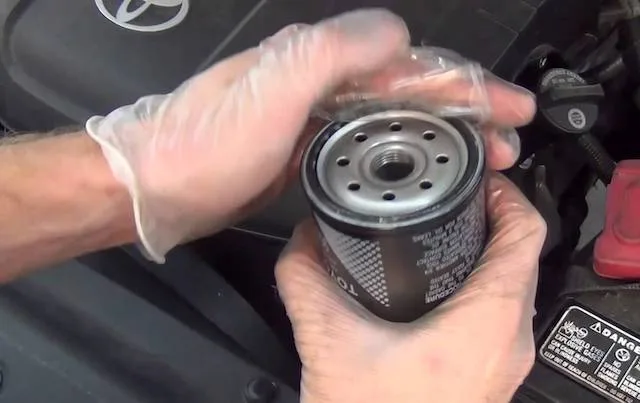
Image source: Web (Bing) / parts.olathetoyota.com (Web image (fair-use with source credit))
Step 1: Warm the Engine
Run the engine for two to three minutes. Warm oil flows faster and carries more suspended contaminants out of the engine. Do not run it until hot.
Warm is fine. Hot oil can burn you.
Step 2: Lift the Truck Safely
Use ramps or jack stands. Never work under a vehicle supported only by a jack. The Tacoma's ground clearance might allow you to reach the drain plug without lifting, but ramps make the job easier and safer.
Step 3: Drain the Old Oil
Place the drain pan under the engine. Remove the oil fill cap on top to allow air in and speed up drainage. Loosen the drain plug with the correct socket.
Remove it by hand once loose. Let the oil drain completely. Wait at least five minutes.
Replace the crush washer on the drain plug. This small copper or aluminum ring compresses to form a seal. Reusing an old one risks a leak.
Torque the plug to 30 ft-lbs for the V6 or 29 ft-lbs for the four-cylinder. Do not overtighten. Stripped threads in an aluminum oil pan are a nightmare.
Step 4: Replace the Oil Filter
For the spin-on filter on the V6, use the filter wrench to loosen it. Spin it off by hand. Oil will spill, so keep the drain pan underneath.
Wipe the mounting surface clean. Lubricate the new filter's gasket with a dab of fresh oil. Screw it on hand-tight, then give it another quarter turn.
Do not use the wrench to tighten it. Hand-tight plus quarter turn is enough.
For the cartridge filter on the four-cylinder, remove the housing cap with the hex socket. Pull out the old element and discard the old O-rings. Lubricate the new O-rings with fresh oil.
Install the new element and tighten the housing cap to 18 ft-lbs.
Step 5: Add the New Oil
Lower the truck. Insert a funnel into the oil fill opening. Pour in about 80 percent of the total capacity.
For the V6, that means about 5 quarts. For the four-cylinder, about 4.5 quarts. Then check the dipstick.
Step 6: Check the Level and Finalize
Run the engine for 30 seconds to fill the new filter. Turn it off and wait two to three minutes for the oil to settle. Pull the dipstick, wipe it clean, reinsert it fully, and pull it again.
The oil level should be between the low and full marks. Add oil in quarter-quart increments until it reaches the full mark.
Do not overfill. If you accidentally add too much, drain some out. It is better to be slightly below full than above full.
Step 7: Reset the Oil Maintenance Light
The 2021 Tacoma has an oil maintenance reminder. To reset it, turn the ignition to ON without starting the engine. Press the odometer button until the trip meter displays.
Turn the ignition off. Then hold the odometer button while turning the ignition back to ON. Continue holding for about five seconds until the light resets.
Common Mistakes That Kill Tacoma Engines
DIY oil changes are rewarding, but they come with pitfalls. Here are the most common mistakes people make with the 2021 Tacoma.
Overfilling
This is the number one mistake. People assume a little extra is fine. It is not.
Overfilling causes oil foaming, pressure surges, and seal leaks. In extreme cases, it can blow out the rear main seal, which costs thousands to repair. Always fill slowly and check the dipstick frequently.
Using the Wrong Viscosity
Some owners think a thicker oil like 5W-30 offers better protection in hot weather. Toyota disagrees. The engine is designed for 0W-20.
Using thicker oil reduces flow through tight passages and can trigger low oil pressure warnings. Modern Toyotas use variable valve timing that relies on precise oil pressure.
Skipping the Crush Washer Replacement
That tiny washer costs roughly a dollar. Reusing an old one that has already been compressed can cause a slow drip. A slow drip can become a fast leak if the washer fails completely.
Replace it every time.
Overtightening the Drain Plug
The oil pan is aluminum. It is soft. Overtightening can strip the threads or crack the pan.
Use a torque wrench set to the correct spec. If you do not own a torque wrench, snug it with a short ratchet and stop as soon as it feels seated.
Double Gasketing the Oil Filter
When you remove the old filter, the rubber gasket sometimes sticks to the engine block. If you install the new filter right on top of the old gasket, you get a double gasket. It will leak under pressure.
Always wipe the mounting surface and visually confirm the old gasket came off.
Forgetting to Tighten the Oil Fill Cap
It sounds silly, but it happens. You finish the job, start the engine, and oil sprays everywhere. Always double-check that the fill cap is snug.
How to Read Your Dipstick Correctly
The dipstick on a 2021 Tacoma is straightforward, but many people misread it. Here is how to get an accurate reading every time.
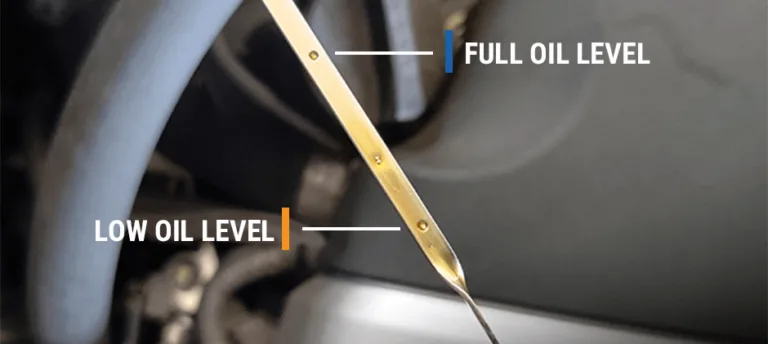
Image source: Bing (Web (fair-use with source credit))
The Right Conditions
The engine should be at operating temperature, turned off, and sitting on level ground. If the truck is parked on a slope, the oil in the pan shifts and gives a false reading. If the engine is cold, the oil has drained down and may read artificially high.
If it was just running, some oil is still in the filter and passages, giving a low reading.
Wait two to three minutes after turning off the engine. This allows oil to drain back into the pan.
The Correct Technique
Pull the dipstick out. Wipe it clean with a lint-free rag. Insert it fully back into the tube.
Pull it out again and look at the oil level on the tip.
The dipstick has two marks: a lower mark indicating low and an upper mark indicating full. The oil should fall between them. Ideally, it should be near the upper mark without going over.
Common Dipstick Mistakes
- Reading the wrong side. The dipstick has oil on both sides. Read the lower of the two streaks. The higher streak is often smeared from insertion.
- Checking immediately after adding oil. You must run the engine first to fill the filter, then wait. Otherwise you will overfill.
- Not wiping first. If you pull and read without wiping, you see oil splashed up the tube, not the actual level.
- Using a cold engine. Cold oil is thicker and may cling higher on the dipstick, giving a false high reading.
When to Change Your Oil: Normal vs. Severe Service
Toyota provides two oil change schedules. Which one applies depends on how you drive.
Normal Service
Under normal conditions, Toyota recommends an oil change every 10,000 miles or 12 months, whichever comes first. Normal conditions include mostly highway driving, moderate temperatures, and no towing.
Severe Service
Severe service includes frequent short trips (under 10 miles), extensive idling, driving in dusty or sandy conditions, off-road use, towing, or driving in extreme temperatures. Under severe service, change the oil every 5,000 miles or 6 months.
Most Tacoma owners fall into severe service. These trucks are often used for towing, off-roading, or daily commuting in stop-and-go traffic. If you are unsure, go with the 5,000 mile interval.
It is cheap insurance.
Tools and Parts You'll Need for a Proper Oil Change
| Item | Specification | Notes |
|---|---|---|
| Engine oil | 0W-20 full synthetic | 6 quarts for V6, 5 for 4-cyl |
| Oil filter | OEM 04152-YZZA3 or equivalent | Spin-on for V6, cartridge for 4-cyl |
| Drain plug crush washer | Toyota part 90430-12031 | Replace every change |
| Socket size | 14mm (V6), 15mm (4-cyl) | Confirm with your truck |
| Torque wrench | 30 ft-lbs (V6 drain), 18 ft-lbs (filter) | Use for accuracy |
| Oil filter wrench | Cap-style or strap | For spin-on filter |
| Drain pan | 8-quart capacity minimum | Larger is better |
Real Scenarios: What Tacoma Owners Actually Run Into
The "I Bought This Used and Have No Manual" Scenario
You just picked up a 2021 Tacoma from a private seller. No owner's manual in the glovebox. Check the engine bay.
The engine code is stamped on a metal tag near the firewall. If you see 2TR-FE, you have the four-cylinder. If you see 2GR-FKS, you have the V6.
That tells you your capacity.
The "I Overfilled and Now It Smokes" Scenario
You poured in the whole 6-quart jug without checking. The dipstick shows oil above the full mark. The engine smells hot.
You might see blue smoke from the exhaust. Stop driving immediately. Drain the excess through the drain plug into a clean container.
Add back in smaller increments until the level is correct.
Environmental and Disposal Considerations
Used motor oil is hazardous waste. Never pour it down a drain, onto the ground, or into the trash. One quart of oil can contaminate 250,000 gallons of water.
Most auto parts stores accept used oil for recycling. Advance Auto Parts, AutoZone, and O'Reilly Auto Parts all have collection tanks. Some municipalities offer curbside pickup for used oil in sealed containers.
Check your local regulations.
Store used oil in a clean, sealed container. Keep it away from children and pets. Label the container clearly.
Do not mix it with antifreeze, brake fluid, or other chemicals. Contaminated oil is harder to recycle.
Frequently Asked Questions
Can I switch between synthetic and conventional oil in my 2021 Tacoma?
Yes, you can switch without damage. But there is no reason to downgrade. Full synthetic offers better protection and longer intervals.
Stick with 0W-20 synthetic.
How do I know if my Tacoma is burning oil?
Check the dipstick every 1,000 miles. If the level drops noticeably between changes, you have consumption. Blue smoke from the exhaust is another sign.
Have a mechanic inspect it.
What does the oil pressure gauge on the dash actually tell me?
It shows oil pressure, not oil level. Normal pressure is around 30 to 60 psi at cruising speed. At idle, it drops to about 10 to 15 psi.
If it falls to zero, stop the engine immediately.
Should I use an oil additive or engine flush?
Toyota does not recommend additives. Modern 0W-20 synthetic oil already contains the necessary detergents and anti-wear agents. Additives can upset the chemical balance.
Save your money.
Can I tow a trailer with 0W-20 oil in my Tacoma?
Yes. The V6 is designed for towing up to 6,800 pounds with 0W-20. Just remember that towing counts as severe service.
Change the oil every 5,000 miles when you tow regularly.
Final Verdict: One Number, Two Engines, Zero Room for Error
The 2021 Toyota Tacoma oil capacity comes down to a simple check. Pop the hood and find your engine code. From there, it is 6.4 quarts for the V6 or 5.5 quarts for the four-cylinder.
Use 0W-20 full synthetic with the API SP certification.
Replace the crush washer. Torque the drain plug to spec. Check the dipstick twice.
Do not overfill. Follow the severe service schedule if you tow or drive short trips. These simple habits keep your Tacoma running strong past 200,000 miles.