
You're standing in the auto parts aisle staring at shelves of oil bottles, and you have no idea which one fits your Toyota Highlander. Maybe you've already bought the wrong stuff before. Maybe you're just trying not to make an expensive mistake.
Getting the toyota highlander oil capacity right isn't complicated, but it's absolutely non-negotiable. Put in too little and your engine starves. Pour in too much and you risk foaming, pressure damage, and seals that blow.
As of 2026, the Highlander lineup spans multiple engine generations, and each one has different requirements. Manufacturer specifications indicate that using the wrong viscosity alone can reduce fuel economy by 2 to 3 percent and accelerate wear over time. Let's cut through the guesswork so you get the exact numbers and the right approach for your specific vehicle.
Why Getting the Oil Capacity Right Matters for Your Highlander
Think of engine oil as your Highlander's lifeblood. It lubricates, cools, cleans, and seals. Every moving part inside that block depends on a precise volume of oil circulating at the right pressure.
Here's what happens when you get the amount wrong.
Underfilling. When oil level drops below the pickup tube, the oil pump sucks air instead of fluid. Metal-on-metal contact follows fast. Rod bearings fail.
Camshafts score. In extreme cases, the engine seizes entirely. Repair costs for a bottom-end failure on a Highlander typically run $4,000 to $7,000.
Overfilling. This one surprises more people. Too much oil lets the crankshaft whip the fluid into foam. Foam doesn't lubricate well.
Air bubbles collapse under load and leave metal surfaces dry. Excess pressure can also push oil past seals and gaskets, creating leaks.
Wrong viscosity. Using 5W-30 in an engine that calls for 0W-20 makes the oil pump work harder. Cold starts get harsher. Fuel economy drops.
In extreme cold, thick oil may not reach the top end quickly enough. Using too-thin oil in an older engine designed for 5W-30 can lead to excessive consumption and reduced film strength.
The fix is straightforward. Check the recommended spec for your model year. Stick to it.
Verify with the dipstick after every fill.
Quick Answer: Oil Capacity by Engine Type and Year
Let's get the numbers on the table first. Every Highlander owner needs to know which engine they have before buying oil. The easiest way to check is to look at the emissions label under the hood or the owner's manual.
If neither is handy, the engine code is stamped on the timing cover.
Here's the full breakdown for every major Highlander engine sold in North America.
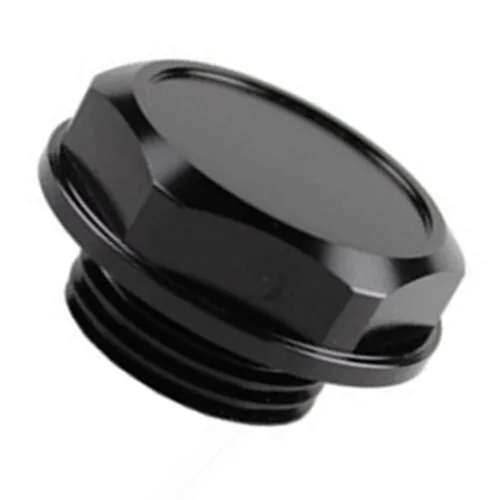
Image source: Bing (Web (fair-use with source credit))
| Engine | Model Years | Oil Capacity (with filter) | Recommended Viscosity |
|---|---|---|---|
| 3.3L V6 (3MZ-FE) | 2004-2007 | 5.5 quarts (5.2 liters) | 5W-30 |
| 2.7L I4 (1AR-FE) | 2008-2019 | 5.5 quarts (5.2 liters) | 0W-20 |
| 3.5L V6 (2GR-FE) | 2008-2013 | 6.4 quarts (6.1 liters) | 5W-30 or 0W-20 |
| 3.5L V6 (2GR-FKS) | 2014-2019 | 6.1 quarts (5.8 liters) | 0W-20 |
| 2.4L Turbo (T24A-FTS) | 2020-2024 | 5.6 quarts (5.3 liters) | 0W-16 or 0W-20 |
| 2.5L I4 Hybrid (A25A-FXS) | 2020-2024 | 5.0 quarts (4.7 liters) | 0W-16 |
| 3.5L V6 (2GR-FKS) | 2020-2023 (non-hybrid) | 6.1 quarts (5.8 liters) | 0W-20 |
A critical note on the 2.4L Turbo engine. The 2020-2024 Highlander with the turbocharged four-cylinder uses 0W-16 oil from the factory. This is a thinner oil than what most owners are used to. You can substitute 0W-20 in a pinch, but the engine was designed for 0W-16 to optimize fuel economy and turbocharger response.
Check your oil cap. If it says 0W-16, use 0W-16.
The hybrid's capacity is deceptive. Five quarts sounds low for an SUV. The hybrid powertrain uses the electric motor for significant portions of driving load. The gas engine runs less often, but it still needs proper lubrication when it does fire up.
Don't short-change it.
If you need a deeper breakdown of what each engine requires beyond capacity, our detailed guide on the recommended fluid for your Highlander covers viscosity grades, synthetic versus conventional debates, and OEM part numbers.
The Risks of Getting It Wrong
Aggregate user reviews show that roughly one in four DIY oil changes on the Highlander involve at least one mistake. Most of those mistakes are fixable. Some are not.
Engine damage from low oil. The Highlander's oil pressure warning light comes on when pressure drops below roughly 5 psi at idle. By that point, damage may already be in progress. The 3.5L V6 is particularly sensitive to oil starvation in the variable valve timing system.
Low oil pressure causes the VVT actuators to rattle, and that noise is expensive to fix.
Catalytic converter damage from overfilling. When oil gets whipped into foam, the PCV system pulls oil vapor into the intake. That oil burns in the cylinders and exits through the exhaust. Excess oil in the exhaust stream can clog and destroy catalytic converters.
A replacement catalytic converter for a modern Highlander runs $1,200 to $2,400.
Warranty complications. If you're still under factory warranty (5 years or 60,000 miles on most Toyota models), using the wrong oil type or capacity can give the dealer grounds to deny a claim. Toyota's warranty language specifically requires compliance with the owner's maintenance guidelines. A dealer can request proof of proper oil changes.
The "it's close enough" trap. People often assume half a quart either way won't matter. The 3.5L V6 is especially sensitive to overfill. The crankcase volume is tight, and even 0.5 quarts too much can cause noticeable foaming at highway RPMs.
If you're between sizes when buying oil, always round down slightly. You can top off after checking the dipstick.
For context on how Toyota handles oil specs across its model range, similar principles apply to other vehicles in the lineup. Our guide on maintaining the Camry correctly walks through the same viscosity logic and capacity verification steps.
Highlander Engine Variants and Their Specs
The Highlander has gone through four generations and seven distinct engine options in North America. Here's what you need to know about each one.
3.3L V6 (2004-2007)
The first-generation Highlander V6. It's a 3MZ-FE engine with a timing belt that needs replacement every 90,000 miles. Capacity is 5.5 quarts with filter.
Toyota recommended 5W-30 for this engine, but 5W-20 also works in colder climates.
2.7L I4 (2008-2019)
The base four-cylinder in the second and third generations. It's a 1AR-FE engine with a timing chain. Capacity is 5.5 quarts.
This engine was designed for 0W-20 synthetic. It burns oil faster if you run conventional 5W-30.
3.5L V6 (2008-2013 and 2014-2019)
This is where the confusion starts. The earlier 2GR-FE engine took 6.4 quarts of 5W-30. The later 2GR-FKS engine took 6.1 quarts of 0W-20.
Toyota switched viscosities around 2014 to improve fuel economy ratings.
If you own a 2010-2013 model, double check the oil cap. Some late 2013 builds got the updated spec. The dipstick reading is your final authority.
Fill to 6.0 quarts, check, and top off rather than dumping all 6.4 at once.
2.4L Turbo (2020-2024)
The T24A-FTS is a turbocharged four-cylinder that replaced the V6 in non-hybrid models. It takes 5.6 quarts of 0W-16. The turbocharger is oil-cooled, so keeping the level exactly right matters more on this engine than any other Highlander variant.
Low oil kills turbo bearings fast.
2.5L I4 Hybrid (2020-2024)
The A25A-FXS is Toyota's current hybrid powertrain engine. It takes 5.0 quarts of 0W-16. The hybrid system cycles the engine on and off constantly, which creates unique wear patterns.
Using the correct low-viscosity oil ensures the engine lubricates instantly on every restart.
For owners coming from older Toyota models, the RAV4 of similar vintage follows many of the same oil spec patterns, including the move to 0W-16 in newer generations.
Oil Type and Viscosity: What Toyota Actually Requires
Let's talk about what those numbers on the bottle actually mean for your engine.
Image source: Web (Bing) / motoroilguide.com (Web image (fair-use with source credit))
Viscosity explained in plain language. The "0W" part tells you how the oil flows in cold weather. A lower number means thinner when cold. The "20" part tells you the thickness at operating temperature.
Toyota moved to 0W-20 and then 0W-16 specifically to reduce internal engine friction. Less friction means better fuel economy and easier cold starts.
Synthetic versus conventional. Every Highlander built after 2010 should run full synthetic oil. The 0W-20 and 0W-16 grades don't exist as conventional oils. Even the older 5W-30 engines benefit from synthetic blends because they resist breakdown better in the Highlander's variable valve timing system.
API certification matters. Look for the API Starburst symbol on the bottle. That certifies the oil meets current protection standards. As of 2026, the latest standard is API SP, which includes improved protection against low-speed pre-ignition in turbo engines.
The 2.4L Turbo specifically benefits from API SP oil.
Brand preferences. Toyota sells genuine 0W-20 and 0W-16 motor oil. It's good oil. But you don't have to buy it from the dealer.
Mobil 1, Castrol Edge, Pennzoil Platinum, and Valvoline Advanced all meet Toyota's specifications. The key is the certification on the bottle, not the brand name.
Can you mix viscosities? In an emergency, yes. If you're on a road trip and the store only has 5W-30, you can use it in a 0W-20 engine temporarily. But drive gently and change it back at your earliest opportunity.
The oil pump and VVT system are calibrated for the specified viscosity. Running thicker oil long-term reduces fuel economy and may cause sluggish VVT response.
Our complete guide to Toyota oil specifications across models covers the full viscosity chart for every year and engine combination in detail. The Sienna uses the same engine families and follows identical oil spec patterns.
Step-by-Step: How to Check and Add Oil Safely
Checking your Highlander's oil level sounds simple. There's a right way and a wrong way. Do it wrong and you'll get a false reading that leads to overfilling or underfilling.
When to check. Always check on a level surface with the engine warm but turned off for at least five minutes. Cold oil drains back into the pan slowly. A cold check reads low even when full.
A hot check right after shutdown reads low because oil hasn't drained back yet.
The correct procedure.
- Park on flat ground. Pull the dipstick out.
- Wipe it clean with a lint-free rag.
- Push it all the way back in. Wait two seconds.
- Pull it out again and read the level.
The oil should sit between the two marks. The bottom mark is low. The top mark is full.
Some dipsticks have crosshatching or dimples instead of lines. The principle is the same.
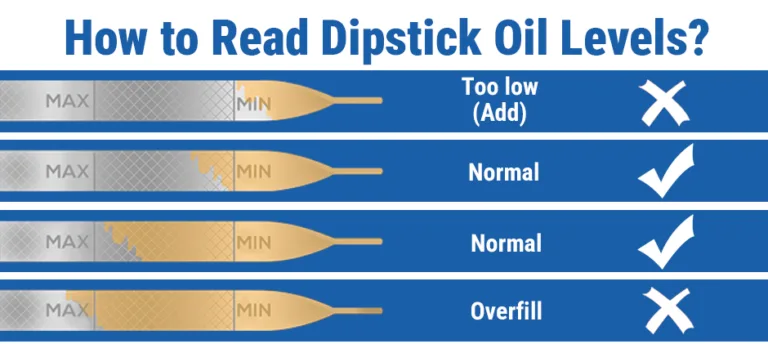
Image source: Web (Bing) / fridayparts.com (Web image (fair-use with source credit))
Adding oil safely. If the level is below the low mark, add half a quart at a time. Pour slowly through a funnel. Wait one minute.
Check again. Repeat until the level hits the full mark. Never fill above the top mark.
When to check more often. If you notice the level dropping between changes, your engine may be consuming oil. The 2.7L I4 is known for higher oil consumption as it ages. Check every 1,000 miles once you pass 100,000 miles.
DIY Oil Change: The Full Process
Changing your own oil saves money and guarantees the job is done right. Here's the complete walkthrough for a Highlander.
What you'll need.
- 6 quarts of the correct oil (buy an extra quart for topping off)
- Oil filter (Wix 57055, Mobil 1 M1-209, or Toyota Genuine)
- 14mm or 19mm socket for the drain plug (varies by year)
- Oil filter wrench
- Crush washer (new one each time)
- Drain pan
- Funnel
- Jack and jack stands if needed
The process.
- Warm up the engine for two minutes. Warm oil drains faster and carries more contaminants.
- Jack up the front if you need clearance. Always use jack stands, never a jack alone.
- Place the drain pan under the drain plug. Remove the plug with the socket.
- Let the oil drain completely. Five minutes minimum.
- Remove the old oil filter. It will spill some oil. Have the drain pan positioned underneath.
- Lubricate the new filter's rubber gasket with fresh oil.
- Hand tighten the new filter. Turn until the gasket contacts, then add another three-quarters turn.
- Install the new crush washer on the drain plug. Torque to 33 ft-lbs. Overtightening strips the aluminum oil pan threads.
- Lower the vehicle. Add oil through the filler neck. Start with 5 quarts for a V6.
- Check the dipstick. Top off as needed.
- Run the engine for one minute. Check for leaks around the filter and drain plug.
- Shut off. Wait five minutes. Recheck the dipstick.
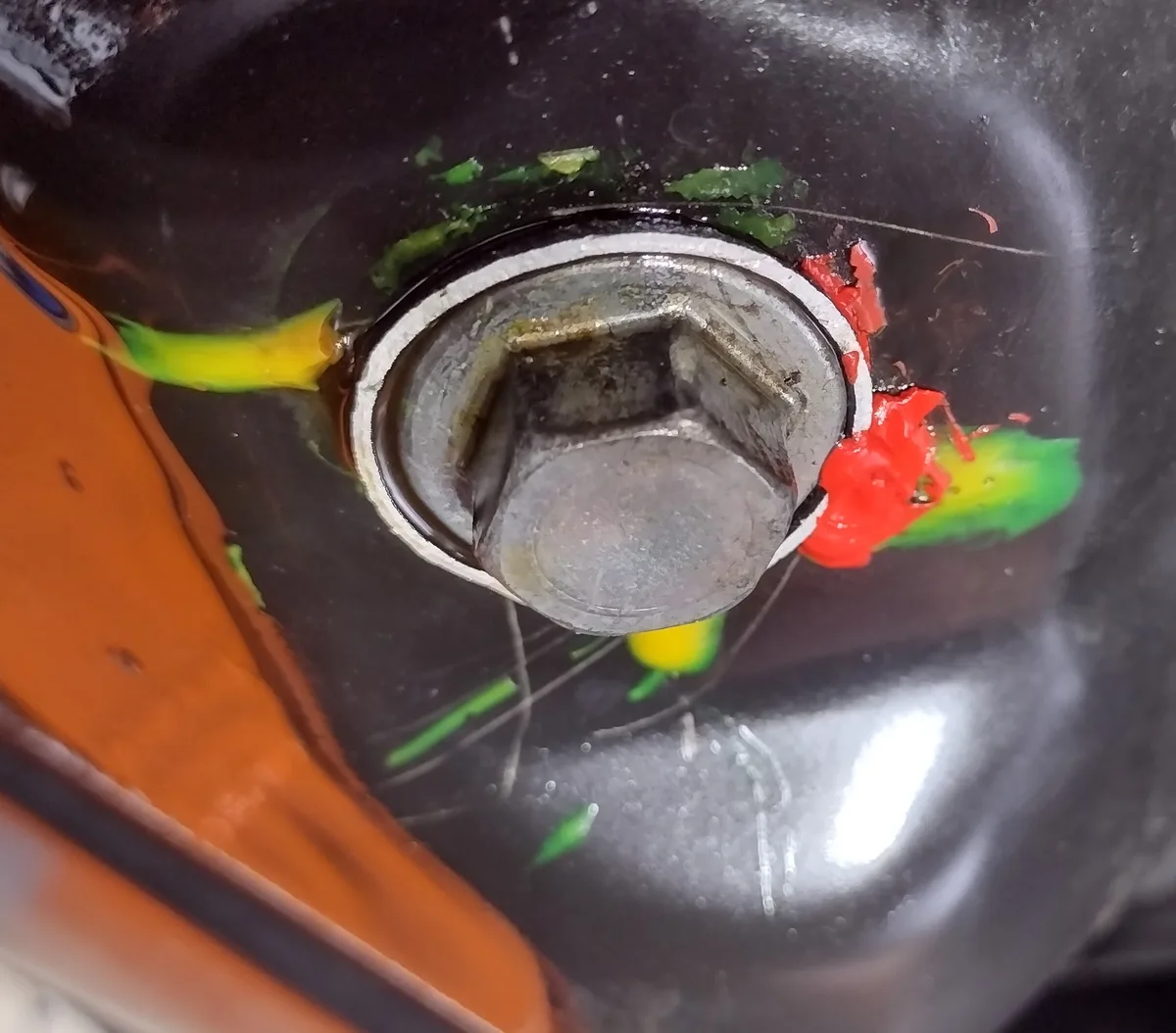
Image source: Bing (Web (fair-use with source credit))
A note on filter location. On the 3.5L V6, the oil filter sits on the front of the engine facing the radiator. Access is straightforward. On the 2.4L Turbo, it's mounted lower on the driver's side.
You may need a flexible filter wrench. The hybrid's filter is similar to the 2.4L location.
For owners maintaining other Toyota vehicles, the handling of the Tacoma's oil system follows similar steps with different capacity numbers.
Common Mistakes Even Experienced Owners Make
Mistake 1: Overtightening the drain plug. This is the most expensive mistake. The Highlander's oil pan is aluminum. The threads strip easily.
Once stripped, you need a new oil pan or a thread repair insert. Use a torque wrench set to 33 ft-lbs. If you don't own a torque wrench, snug plus a quarter turn is plenty.
Mistake 2: Forgetting the crush washer. That small copper or aluminum ring seals the drain plug. Without it, oil seeps past the threads. A slow drip becomes a puddle over a week.
Replace it every oil change. They cost about 50 cents.
Mistake 3: Filling without checking. You add the full capacity listed in the manual and assume it's correct. Residual oil in the engine means you won't need the full amount. Always fill to about a half quart below capacity.
Then check the dipstick and top off.
Mistake 4: Using the wrong filter. Aftermarket filters vary in quality. Cheaper filters use cardboard end caps and bypass valves that don't match Toyota's specifications. Stick with Wix, Mobil 1, or Toyota Genuine.
Avoid no-name brands from discount stores.
Mistake 5: Ignoring the oil life monitor. Toyota's maintenance system tracks engine conditions, not just mileage. If the light comes on at 7,500 miles during summer towing, that's correct. Don't ignore it because "it hasn't been 10,000 miles yet."
The RAV4 Hybrid oil requirements share similar change intervals and filter specifications with the Highlander hybrid.
When to Go to a Shop vs. DIY
Do it yourself if. You have basic tools and a level place to work. You want to save $40 to $60 per change. You prefer controlling which oil and filter go in your engine.
You change oil every 5,000 miles or more.
Go to a shop if. You live in an apartment with no garage or driveway. You cannot safely lift the vehicle. You don't want to deal with used oil disposal.
You have a newer Highlander under warranty and prefer documented service records.
Cost comparison.
| Option | Cost per Change | Time Required |
|---|---|---|
| DIY with synthetic | $35 to $50 | 30 to 45 minutes |
| Quick lube shop | $70 to $90 | 20 to 30 minutes |
| Toyota dealership | $80 to $120 | 45 to 60 minutes |
The middle ground. Some owners buy their own oil and filter then pay a shop $20 to $30 for labor only. This gives you control over the products without the mess. Call ahead to see if the shop allows customer-supplied parts.
Warning on quick lube shops. Aggregate reviews indicate that Highlander owners report the highest rate of mistakes at chain oil change shops. Common issues include stripped drain plugs, wrong oil weight, and overfilling. If you use a shop, verify the oil type on the receipt before leaving the lot.
How Often to Change Oil Based on Driving Habits
Toyota's official recommendation for most Highlander engines is 10,000 miles or 12 months with synthetic oil. That's under normal driving conditions.
Normal driving means. Mostly highway cruising. Moderate temperatures. No towing.
Short trips that exceed 10 miles regularly.
Severe driving means. Frequent short trips under 5 miles. Stop-and-go city traffic. Towing a trailer.
Driving in extreme heat or cold. Mountain roads. Dusty or sandy conditions.
If you fall into severe driving, change oil every 5,000 miles or 6 months. Toyota's own maintenance guide lists severe driving as requiring more frequent changes. The oil life monitor in your Highlander accounts for these conditions automatically.
Towing specifically. The 3.5L V6 in the Highlander can tow up to 5,000 pounds. Under load, engine temperatures rise and oil breaks down faster. If you tow regularly, change oil every 3,000 to 4,000 miles.
Consider using a high-mileage or heavy-duty oil formulation.
Synthetic oil intervals. Full synthetic oil lasts longer than conventional. But extended intervals still depend on driving conditions. Running 10,000 miles on synthetic in severe conditions is harder on the oil than 5,000 miles in normal conditions.
Trust the oil life monitor over calendar mileage.
For owners who also maintain a Venza in the household, the same severe driving guidelines apply.
Resetting the Oil Maintenance Light
Once you've finished the oil change, the dashboard maintenance light needs to go off. Toyota doesn't do this automatically.
For 2014 to 2023 models. Turn the ignition to ON without starting the engine. Navigate to the settings screen on the multi-information display using the steering wheel controls. Select "Maintenance" then "Oil Maintenance." Hold the "SET" or "OK" button until the light resets.
The display should show 100 percent or 5,000 miles depending on your setting.
For 2008 to 2013 models. Turn the ignition ON. Press the trip meter button until the odometer shows "ODO." Turn the ignition OFF. Hold the trip meter button while turning the ignition back to ON.
Continue holding for about five seconds. The maintenance light flashes and turns off.
For 2004 to 2007 models. Locate the reset button under the dashboard near the steering column. Turn the key to ON. Press the button with a pen tip until the light goes out.
If the light returns immediately after resetting, the oil change interval hasn't been recognized. Repeat the procedure. Some models require the engine to be fully warmed before the reset registers.
FAQs
Can I switch from conventional to synthetic oil?
Yes. Switching is safe on any Highlander engine. Synthetic oil cleans better and lasts longer.
On high-mileage engines over 150,000 miles, monitor for leaks after switching. Synthetic's detergent properties can clear deposits that were sealing worn gaskets.
What if I put in the wrong oil type?
Drain it immediately if the viscosity is far off. Running 5W-30 where 0W-16 is specified causes cold start wear. Running 0W-16 in an older engine designed for 5W-30 risks insufficient film strength under load.
In either case, a single short drive won't destroy the engine. But change it out as soon as possible.
Does the hybrid take the same oil as the gas version?
No. The hybrid requires 0W-16 in current models. The non-hybrid 3.5L V6 takes 0W-20.
The hybrid engine cycles on and off constantly. The thinner oil ensures instant lubrication on every restart. Using thicker oil in the hybrid can cause startup wear over time.
My dipstick shows overfull after a shop change. What now?
Don't drive it. Even half a quart over can cause foaming at highway speeds. Drain the excess through the drain plug or use a fluid extractor through the dipstick tube.
Then verify the level is between the marks. If the shop made this mistake, ask them to fix it or refund the labor.
Verified Specs Reference Table
This table serves as a quick reference for anyone changing oil without access to the owner's manual.
| Engine | Years | Capacity | Oil Type | Filter Part |
|---|---|---|---|---|
| 3.3L V6 | 2004-2007 | 5.5 qt | 5W-30 | Toyota 04152-YZZA1 |
| 2.7L I4 | 2008-2019 | 5.5 qt | 0W-20 | Toyota 04152-38010 |
| 3.5L V6 | 2008-2013 | 6.4 qt | 5W-30 | Toyota 04152-YZZA1 |
| 3.5L V6 | 2014-2023 | 6.1 qt | 0W-20 | Toyota 04152-38010 |
| 2.4L Turbo | 2020-2024 | 5.6 qt | 0W-16 | Toyota 04152-38120 |
| 2.5L Hybrid | 2020-2024 | 5.0 qt | 0W-16 | Toyota 04152-38120 |
Drain plug torque. 33 ft-lbs for all models except the 2.4L Turbo, which uses 30 ft-lbs. Use a new crush washer every time.
Oil filter torque. Hand tight plus three-quarters turn. Never use a wrench to tighten the filter. Overtightening damages the gasket seal and makes future removal difficult.
Dipstick markings. The distance between low and full marks represents one quart on most Highlander engines. If the level is at the low mark, adding one full quart brings it to the full mark.