
If you own a 2012 Toyota Sienna, you already know it's a workhorse that hauls your family, gear, or side hustle without complaint. But here's the thing that trips up more owners than you'd expect: the 2012 toyota sienna oil capacity isn't a single number you can just memorize and move on. It depends entirely on which engine is under your hood, and getting it wrong can lead to some expensive engine trouble.
Manufacturer specifications confirm there are two distinct powertrains in this model year. Each one needs a different amount of oil. The 3.5-liter V6, which is what most Siennas came with, takes 6.4 quarts.
The rarer 2.7-liter four-cylinder takes 5.5 quarts. That is a full quart difference. As of 2026, we still see owners who dump in six quarts of the wrong viscosity and pay the price.
Let's walk through exactly what your Sienna needs so you do not join that club.
Quick Answer: How Much Oil Does a 2012 Sienna Take?
Here is the table you came for. No fluff, no commentary.
| Engine | Displacement | Oil Capacity (with filter) | Recommended Viscosity | API Rating |
|---|---|---|---|---|
| 2GR-FE (V6) | 3.5 liters | 6.4 quarts (6.0 liters) | SAE 0W-20 | SN or higher, Resource Conserving |
| 1AR-FE (I4) | 2.7 liters | 5.5 quarts (5.2 liters) | SAE 5W-20 or 0W-20 | SN or higher, Resource Conserving |
If you skip the filter change and just do a drain-and-refill, knock off about 0.2 quarts from each number. That is not recommended, but if you are in a pinch, that is the adjustment.
The most common mistake we see is people trusting a generic online spec that says "6.6 quarts" and just pouring away. That number is for a different Sienna model year or a different engine variant. Stick to the numbers above, and you are golden.
Buying oil is straightforward. For the V6, grab a 5-quart jug and a 1-quart bottle, then use about half of a second quart to hit 6.4. For the four-cylinder, a 5-quart jug plus a single quart (you will use about half of it) gets the job done.
If you cannot find 0W-20 at your local parts store, 5W-20 is acceptable for the V6 in warmer climates but will hurt cold-start performance below freezing. For the four-cylinder, 0W-20 and 5W-20 are interchangeable as long as you pick one and stick with it.
Why Getting This Wrong Can Cost You Thousands
This is where we need to be direct. Engine oil is the lifeblood of your Sienna's powertrain. Overfill it, and the crankshaft whips the oil into a froth inside the crankcase.
Aerated oil does not lubricate properly. Foam cannot build oil pressure the way liquid can. Within minutes of running with foamed oil, you can spin a rod bearing or cook a camshaft journal.
Those repairs run well into the thousands.
Underfill it, and you starve the oil pump pickup tube. The 2GR-FE engine is particularly sensitive here because its variable valve timing system relies on consistent oil pressure to advance and retard the cam timing. Low oil triggers a P0012 or P0017 code.
The engine goes into a limp mode that makes highway driving miserable.
Even if you avoid catastrophic failure, running with incorrect oil level costs you fuel economy and shortens engine life. That 2012 Sienna can easily hit 250,000 miles with proper care. Mess up the oil, and you are looking at major work before 150,000.
The difference between a smooth-running engine and a ticking time bomb is often just a quart of oil.
The Two Engines — Which One Do You Have?
Before you buy a single quart of oil, you need to confirm which engine lives under your hood. Do not guess. Do not assume because you saw a spec online.
Get under the hood and look.
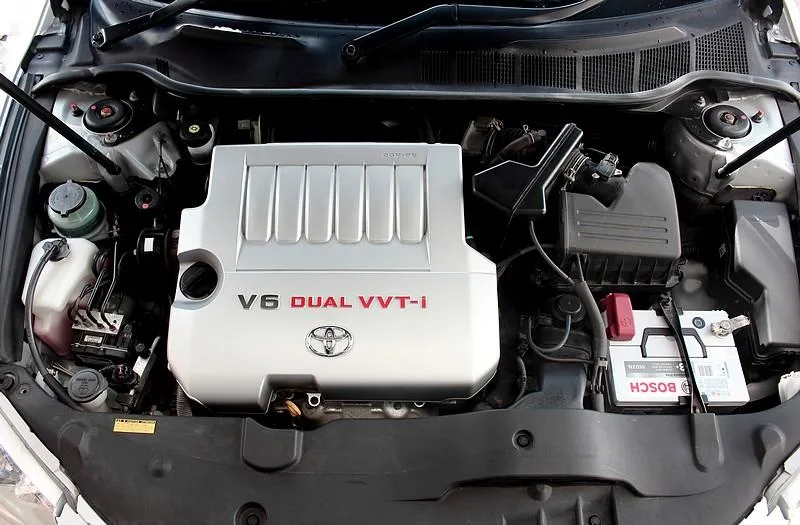
Image source: Bing (Web (fair-use with source credit))
Method 1: Check the emissions label. Open the driver's door and look at the sticker on the doorjamb. The engine family code will tell you. For the V6, it includes "2GR." For the four-cylinder, it includes "1AR."
Method 2: Look at the engine itself. Stand in front of the van and locate the engine cover. On the V6, you will see a wide plastic cover that spans nearly the entire engine bay. On the four-cylinder, the cover is narrower and sits more toward the passenger side.
Method 3: Count the ignition coils. This is the fastest method. Remove the plastic engine cover. If you see six ignition coils in a row, you have the 3.5L V6.
If you see four, you have the 2.7L four-cylinder. Simple.
Method 4: Check your VIN. The eighth character of your VIN tells the engine. A "2" or "3" means V6. A "4" means four-cylinder.
You can decode it on any free VIN checker online.
Once you know which engine you have, everything else falls into place. The oil filter is also different between the two engines, so confirm the correct part number before you head to the store.
Complete Oil Specs: Capacity, Viscosity, and Certification
We already covered the capacity numbers, but the chemical specs matter just as much. Toyota specifies API SN certification with the "Resource Conserving" label for the 2012 Sienna. As of 2026, the newer API SP standard has replaced SN, and it is backward-compatible.
Any modern synthetic or blend labeled API SP will exceed the original spec for this engine.

Image source: Web (Bing) / ebay.co.uk (Web image (fair-use with source credit))
Viscosity deep dive for the V6:
0W-20 is thin when cold. That "0W" means it pumps easily at subzero temperatures. The "20" means it holds its viscosity up to operating temperature.
Toyota spec'd this oil for one main reason: fuel economy. A 0W-20 oil reduces parasitic drag on the rotating assembly compared to a thicker oil.
Can you run 5W-30 in a pinch? Yes. Should you do it long term?
No. The variable valve timing (VVT) system on the 2GR-FE is calibrated for the flow characteristics of 0W-20. Thicker oil can cause delayed cam phasing, which triggers check engine lights and reduces power.
Oil filter specifications:
The OEM filter for the V6 is Toyota part number 04152-38020 or 04152-YZZA1. These are the same filter, just different packaging revisions. The thread size is M20 x 1.5, and the bypass valve setting is matched to the 2GR-FE's oil pump.
Aftermarket filters from Wix, Mobil 1, and Purolator are acceptable as long as they specify compatibility with the 2GR-FE. Avoid the cheapest no-name filters. A bad filter can collapse internally and starve the engine of oil.
For more details on what goes into the engine, check out our guide on the correct oil type for your Sienna. The spec covers viscosity, certification, and what to avoid.
When to change it:
Toyota's official interval for the 2012 Sienna is 10,000 miles under normal driving conditions with synthetic oil. If you do a lot of short trips, tow a trailer, or drive in dusty conditions, cut that to 5,000 miles. Oil is cheap.
Engines are not.
The API certification program provides the current standards for engine oil. Any oil you buy should carry the API donut logo on the back of the bottle.
If you have experience with other Toyota models, the same general maintenance philosophy applies across the lineup. The routine upkeep for a RAV4 follows similar principles. Each model has its own spec, but the discipline of checking and changing on schedule is universal.
Step-by-Step: How to Do the Oil Change Right
You can do this yourself. It takes about 30 minutes and saves you a trip to the shop. Here is the process.
What you need:
- 6 quarts of 0W-20 synthetic oil (for the V6) or 5.5 quarts (for the I4)
- One oil filter (OEM or quality aftermarket)
- 15mm socket for the drain plug
- Oil filter wrench
- Drain pan
- Funnel
- Crush washer (new)
- Rags and gloves
Step 1: Warm the engine. Run the engine for about two minutes. Warm oil drains faster and carries more suspension out of the pan. Do not do this on a stone-cold engine.
Step 2: Lift the vehicle. Use ramps or jack stands. Never rely on just the scissor jack. The car needs to be level so the oil drains completely.
Step 3: Remove the oil fill cap. This relieves pressure inside the crankcase and helps the oil drain faster. Set it somewhere clean so you do not drop dirt into the engine.
Step 4: Drain the oil. Place the drain pan under the oil pan. Use the 15mm socket to loosen the drain plug. Turn it counterclockwise.
Let the oil drain completely, about five minutes.
Step 5: Replace the crush washer. This is a small copper or aluminum washer that seals the drain plug. Replace it every time. It costs pennies.
A worn washer can drip.
Step 6: Remove the oil filter. Use the filter wrench. The filter is on the front of the engine, accessible from underneath. It will be full of oil, so angle it carefully into the drain pan.
Step 7: Install the new filter. Lubricate the rubber gasket with a little fresh oil. Hand-tighten the filter until the gasket contacts the mounting surface, then give it another three-quarter turn. Do not use a wrench.
Overtightening is a common mistake.
Step 8: Refill with oil. Use the funnel. Pour in 6 quarts for the V6 or 5.5 quarts for the I4. Replace the oil fill cap.
Step 9: Check the level. Start the engine and let it run for 30 seconds. Turn it off. Wait five minutes for the oil to settle.
Pull the dipstick, wipe it, reinsert it, then pull it again. The level should be between the low and full marks.
Step 10: Reset the maintenance light. Turn the key to the "ON" position without starting the engine. Press the trip reset button until the oil light stops flashing. The exact procedure is in your owner's manual.
Mistakes to Avoid (Especially the Overfill Trap)
The overfill trap is the most expensive mistake you can make. When you pour in that extra half quart "just to be safe," you are creating foam. Foam does not lubricate.
The engine overheats. The bearings fail.
Here are the common mistakes we see:
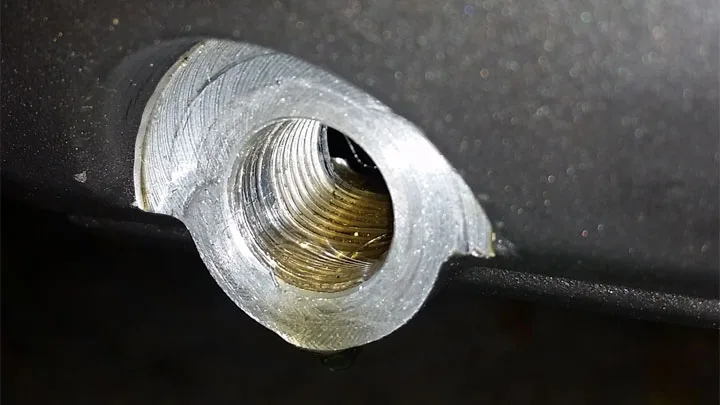
Image source: Bing (Web (fair-use with source credit))
Overfilling. Do not add oil past the full mark on the dipstick. If you accidentally overfill, drain some out. The difference between 6.4 quarts and 6.6 quarts is a problem.
Underfilling. Do not assume a 5-quart jug is enough. It is not for the V6. Buy the extra quart.
Using the wrong viscosity. 0W-20 is spec for a reason. 5W-30 is not a substitute. It will hurt your fuel economy and can trigger VVT codes.
Not replacing the crush washer. A reused washer can leak. A slow drip means you are losing oil pressure over time.
Overtightening the drain plug. The spec is 29 ft-lbs. That is "snug plus a quarter turn," not "stand on the wrench." Stripped threads mean a new oil pan. A new pan costs hundreds.
Overtightening the oil filter. Hand-tight is enough. If you use a wrench to tighten, you will crush the gasket or split the housing.
Skipping the filter change. Every other oil change is not good enough. The filter traps contaminants. If you skip it, those contaminants circulate through the engine.
Trusting the dipstick on a cold engine. The oil level reads higher when cold. Check it after the engine has been off for five minutes. That gives the oil time to settle in the pan.
If you have ever worked on a Toyota Camry or a Toyota Highlander, the same principles apply. The oil type for a 1997 Camry is different, but the process of checking and changing is identical.
Pro Tips for Getting the Most Out of Your Oil Change
These tips come from years of working with Toyota engines. They are not in the manual, but they make a difference.
Use a magnetic drain plug. The 2GR-FE engine is known for producing fine metal particles during break-in. A magnetic plug catches those particles before they circulate. It costs about $10 and is worth every penny.
Keep a log. Write down the mileage, date, and oil brand every time you change the oil. When you go to sell the van, that log proves you took care of it. Buyers love seeing records.
Check the oil between changes. The 2GR-FE does not burn oil in normal use, but it can if you push it hard. Check the dipstick every 2,000 miles. It takes 30 seconds.
Use the same brand of oil. Mixing brands is fine chemically, but it is better to stick with one. Different additive packages can interact in unpredictable ways.
Warm the oil, but do not overheat it. Two minutes of idle is enough. Do not drive the car to warm it up for an oil change. Hot oil burns.
Watch the oil pressure gauge. If you have an aftermarket gauge, watch it after the change. If the pressure is lower than normal, you may have a leak or a clogged filter.
Use a funnel every time. Oil on the exhaust manifold smells bad and can smoke. It is also a fire hazard. The funnel costs $3 and saves you the hassle.
When to Walk Away and Hire a Pro
DIY oil changes are great. But sometimes it is smarter to call a mechanic.
If you do not have a level surface. Changing oil on a slope means the oil does not drain fully. You end up with the wrong amount in the engine.
If you do not have proper tools. A 15mm socket, a filter wrench, and a drain pan are the minimum. If you are borrowing tools from a neighbor, it is easier to pay a shop.
If you are short on time. A rushed oil change is a bad oil change. If you are in a hurry, you will forget the crush washer or overfill the engine.
If the drain plug is stripped. If you try to remove the drain plug and it just spins, stop. A stripped plug needs a professional. Do not try to force it.
If you see metal in the oil. If the drained oil looks like metallic paint, there is internal damage. Do not just change the oil and hope. Take it to a mechanic.
If the check engine light is on. A P0012 or P0017 code related to VVT timing means the oil system is compromised. Fix the underlying issue before you change the oil.
FAQs — What Real Owners Actually Ask
Can I use synthetic blend instead of full synthetic?
Yes. The 2012 Sienna does not require full synthetic. Toyota spec'd 0W-20, which is available as a synthetic blend from most major brands.
The benefit of full synthetic is longer intervals and better cold-start protection. If you change oil every 5,000 miles, a blend is fine.
What happens if I accidentally use 5W-30?
In an emergency, it will work. But do not leave it in for the full interval. 5W-30 is thicker than spec. It will reduce fuel economy and can cause sluggish VVT operation.
Drain it and replace with 0W-20 as soon as you can.
Do I need to use Toyota brand oil?
No. Toyota does not manufacture oil. They license their brand to a major oil company.
Any quality brand that meets API SN or SP standards is fine. Mobil 1, Pennzoil, Castrol, and Valvoline are all good choices.
How often should I check the oil level?
Every 2,000 miles or every fuel fill-up, whichever comes first. It takes 30 seconds. A quick check can catch a slow leak before it becomes a problem.
Can I use a different oil filter brand?
Yes. Wix, Mobil 1, and Purolator make filters that meet or exceed Toyota's specs. Avoid the cheapest no-name brand.
The filter is the only thing between the oil pump and the engine bearings.
My oil light came on but the dipstick shows full. What is wrong?
This is usually a sensor issue. The oil pressure sensor on the 2GR-FE is known to fail. The oil level sensor on the bottom of the oil pan can also fail.
Have a mechanic test the oil pressure with a manual gauge. Do not drive it if the light is on.
The oil change interval says 10,000 miles. Is that safe?
For a 2012 Sienna with synthetic oil under normal driving conditions, yes. But "normal" means no short trips, no towing, no extreme temperatures. If you drive in stop-and-go traffic or take short trips under 10 miles, stick to 5,000-mile intervals.
Final Verdict: The One Thing You Must Remember
Here is the one thing you need to remember above all else: 6.4 quarts for the V6, 5.5 quarts for the four-cylinder, and 0W-20 oil for both. That is the formula for a long, healthy engine.
Check your engine before you buy oil. Confirm the VIN or count the coils. Do not guess.
The extra 30 seconds of checking saves you hours of engine work.
If you take care of the oil, the 2012 Sienna will take care of you. It is a reliable, durable van that will easily hit 250,000 miles with proper maintenance. The difference between a van that lasts and a van that dies early is often just a quart of oil and a 30-minute oil change every 5,000 miles.
For more information on keeping your Toyota running smoothly, check out our guides on the oil type for a Toyota Highlander and the specs for a Toyota RAV4. The principles are the same. The numbers are different.