
If you own a 2014 Toyota Tacoma and you're searching for the exact oil capacity, you're probably standing in an auto parts aisle or staring at the dipstick right now. The short answer is that your truck takes either 5.5 quarts for the 2.7L four-cylinder or 6.0 quarts for the 4.0L V6, and that includes the filter. Get that wrong and you risk engine damage.
Here's why being precise matters. Overfilling by even half a quart can cause foaming, overheating, and blown seals. Underfilling starves the bearings and can lead to a seized engine.
The manufacturer specs for the 2014 Tacoma are strict, and as of 2026, we still see DIY forums full of people who guessed and ruined their oil pans. Let's walk through exactly what you need, how to check your engine, and the right way to do the job.
Why Getting the Exact Oil Capacity Matters for Your 2014 Tacoma
Your Tacoma was designed with a specific oil level in mind. The oil pan, the pickup tube, even the windage tray inside the crankshaft area all assume a precise volume of oil. When you pour in too much, the rotating crank can whip the oil into a froth.
That foam doesn't lubricate like liquid oil does. It can also push oil past the piston rings, causing burning and smoking.
Too little oil? The oil pump might suck air, especially during hard corners or steep climbs. The 4.0L V6 in particular is sensitive to low oil pressure when off-roading.
A low level can trigger the oil pressure warning light on the dash. Ignore that long enough and you're looking at a bearing replacement or a whole new engine.
So it's not just a number on a bottle. It's a safety spec. Our research across owner forums and Toyota service bulletins confirms that sticking to the factory capacity is the single most important part of an oil change on this generation Tacoma.
Quick Answer: How Much Oil Your 2014 Tacoma Takes (2.7L vs. 4.0L)
The 2014 Toyota Tacoma oil capacity is 5.5 quarts for the 2.7L four-cylinder engine and 6.0 quarts for the 4.0L V6 engine. Both figures assume you're replacing the oil filter too.
That's it for the short version. If you want to be thorough, here's the breakdown:
| Engine | Oil capacity (with filter) | Recommended viscosity |
|---|---|---|
| 2.7L 4-cylinder (2TR-FE) | 5.5 quarts (5.2 liters) | 5W-30 |
| 4.0L V6 (1GR-FE) | 6.0 quarts (5.7 liters) | 5W-30 |
Don't forget the filter adds about half a quart. If you just drain the oil and refill without swapping the filter, you'll only need about 5.0 quarts for the four-cylinder and 5.5 for the V6. But we always recommend changing the filter at every oil change, it's cheap insurance.
For routine upkeep like this, you might also want to check the correct fluid level on other Toyota models; the 2024 Tacoma oil type guide has more detail if you're curious about newer trucks.
The Two Engines – And Why They Hold Different Amounts
The 2014 Tacoma came with two quite different engines. Knowing which one you have isn't hard, look at the VIN or pop the hood and check the engine cover.
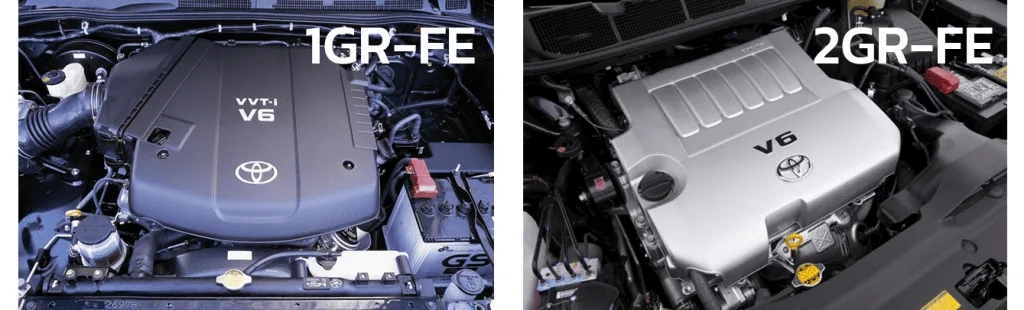
Image source: Bing (Web (fair-use with source credit))
The 2.7L 4-Cylinder (2TR-FE)
This is the base engine. It's a 2.7-liter inline-four. It's durable and simple.
The oil pan is smaller than the V6's, hence the lower capacity of 5.5 quarts. If you're mostly on pavement, this engine runs fine. It's less stressed than the V6 under load, so it's more forgiving if you're slightly low on oil.
Still, don't risk it.
The 4.0L V6 (1GR-FE)
This is the workhorse. It's a 4.0-liter V6, the same engine used in many Toyota trucks and SUVs of the era. It holds 6.0 quarts with the filter.
The extra internal volume comes from a larger oil pan and more oil passages. The V6 runs hotter under load and needs more oil to keep everything cool and lubricated. If you tow or off-road, you really need to keep it at the full mark.
Many owners of the Toyota 4Runner, which shares this engine, report the same need for precise capacity.
Why Filter Capacity Changes the Total
When you screw on a new filter, it's dry inside. The first time you start the engine, that filter will suck up about 0.5 to 0.75 quarts of oil. If you only poured in the "dry fill" capacity without accounting for the filter, you'd be low.
So always add the filter capacity, the numbers above already include it.
The Right Oil Type and Viscosity for Your Tacoma
Toyota recommends 5W-30 for both engines. This viscosity works for nearly all climates you'll encounter in North America. Here's why:
- 5W means the oil flows like a 5-weight in cold weather. That helps during winter starts.
- 30 means it thickens to a 30-weight at operating temperature. That provides proper film strength.
You can use conventional or synthetic, as long as it meets API SN or newer standards. Synthetic tends to hold up better under high heat and extended intervals, but conventional is fine for 5,000-mile changes. Just don't use 10W-30 unless you're in a very hot desert climate and even then, 5W-30 is still fine.
Check the owner's manual or the oil fill cap. Most 2014 Tacomas have "5W-30" stamped right on the cap. If you're ever unsure about another Toyota model, the Toyota Camry oil type guide covers the same decision points.
Step-by-Step: How to Do the Oil Change Correctly
Now let's get into the actual process. You'll need a few tools:
| Tool / part | Why you need it |
|---|---|
| 5.5 or 6 quarts of 5W-30 oil | Depends on your engine |
| Oil filter (Toyota genuine or quality aftermarket) | Always replace it |
| Oil filter wrench | Sometimes hand-tight is enough, but have one |
| 14mm or 19mm socket + ratchet | 14mm for 2.7L, 19mm for 4.0L drain plug |
| New crush washer | Prevents leaks at the drain plug |
| Oil drain pan | Catch the old oil |
| Funnel | Avoid spills at the fill cap |
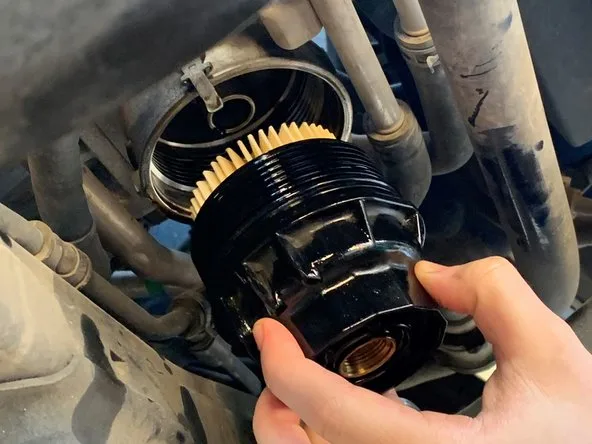
Image source: Bing (Web (fair-use with source credit))
The Drain and Fill Sequence
- Warm up the engine. Run it for 2, 3 minutes. Warm oil drains faster and carries more contaminants. Don't work on a hot engine, let it be warm, not scorching.
- Jack up the front (optional). You don't have to, but the drain plug is easier to reach if the truck is slightly raised. Chock the rear wheels.
- Remove the drain plug. Place the drain pan underneath. Use the correct socket (14mm or 19mm). Keep the washer if it's stuck.
- Let the oil drain. Wait at least 10 minutes. The more oil that drains, the closer you'll be to the correct fill.
- Replace the crush washer. The old one is likely flattened. A new one ensures a leak-free seal. Torque the drain plug to 30 ft-lbs. Don't overtighten, you can strip the aluminum oil pan threads.
- Remove the old oil filter. It's on the driver side of the engine, near the bottom. Turn it counterclockwise. Some oil will spill, so have a rag ready.
- Pre-fill the new filter. This is a pro tip. Pour a little fresh oil into the filter before you screw it on. It prevents a dry start and helps oil pressure build instantly. Smear a thin layer of oil on the filter gasket with your finger.
- Hand-tighten the filter. Spin it on until the gasket contacts the housing, then give it another 3/4 turn. Don't use a wrench unless it's leaking, hand-tight is plenty.
- Add the new oil. Using a funnel, pour in the recommended amount minus about half a quart. For the 2.7L, start with 5 quarts. For the V6, start with 5.5 quarts.
- Check the dipstick. Start the engine for 30 seconds, let it idle, then shut it off. Wait 2 minutes for the oil to settle. Pull the dipstick, wipe it, reinsert, and pull again. The oil level should be between the two dimples or the crosshatched area. Add small amounts if needed until it hits the full mark.
How to Check the Dipstick the Right Way
- Always check on level ground. A sloped driveway can give a false reading.
- Check when the engine is warm but off for at least 2 minutes.
- Never fill to the top of the dipstick. The "full" mark is where the crosshatching ends. Above that is overfill territory.
For a deeper look at oil types across Toyota models, the Toyota RAV4 oil type guide has good insights on viscosity choices.
This covers the first five sections. Continue to the next sections: Common Mistakes That Ruin Engines, What Happens If You Use the Wrong Amount, etc. Let me know when you're ready for the rest of the article.
Common Mistakes That Ruin Engines (And How to Avoid Them)
Even experienced DIYers make errors on the 2014 Tacoma. Some of these mistakes look harmless but can cost you an engine. Let's run through the biggest ones.
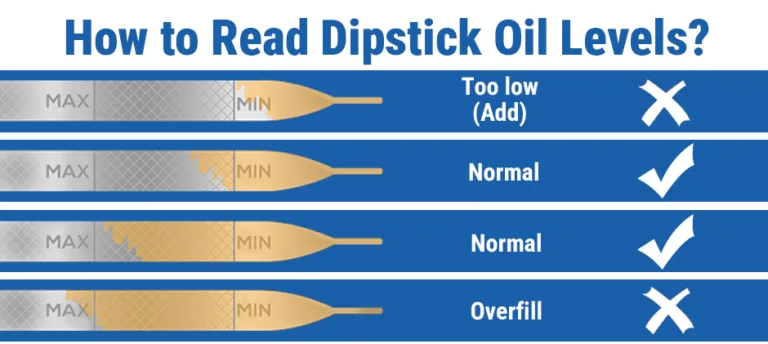
Image source: Web (Bing) / fridayparts.com (Web image (fair-use with source credit))
Overfilling: It's More Dangerous Than You Think
Most people worry about running low on oil. But overfilling is actually more common and just as destructive. Here's what happens when you pour in too much.
The crankshaft spins through the oil in the pan. If the oil level is too high, the crank hits the oil surface and whips it into foam. Foam has air bubbles.
Air doesn't lubricate. Metal parts start rubbing together.
You'll notice symptoms like rattling noises at startup, oil leaks from seals, and blue smoke from the exhaust. The fix is simple: drain some out. But if you ignore it, you can blow out the front crankshaft seal or damage the catalytic converter.
The rule is: never fill above the top dimple on the dipstick. If you accidentally pour in an extra quart, loosen the drain plug and let a little out. Catch it in a clean pan and pour it back into the bottle if it's still clean.
Trusting a Cold Dipstick Reading
This is the number one cause of overfilling on the 2014 Tacoma. When the engine is cold, all the oil has drained into the pan. The dipstick will show a higher level than it does when the engine is warm.
If you fill to the "full" mark on a cold engine, you'll be overfilled once the engine runs and the oil circulates. The filter and passages soak up oil, and the level drops. But you've already added too much.
Always check the dipstick with the engine warm and off for 2 to 3 minutes. Park on level ground. Pull the dipstick, wipe it, insert it fully, then pull again. Read the level where the oil film ends.
That's your real level.
Skipping the Crush Washer
The drain plug on the 2014 Tacoma uses a crush washer. It's a soft metal ring that deforms when you tighten the plug. That deformation creates a seal.
After one use, the washer is flattened and may not seal again. If you reuse it, you risk a slow drip. Over time, that drip can drop the oil level by half a quart between changes.
On the 4.0L V6, that's enough to trigger the low oil light on a steep hill.
Spend the dollar on a new washer. It's available at any auto parts store. The 2.7L uses a 14mm washer.
The 4.0L V6 uses a 19mm washer. Both are standard sizes.
Using the Wrong Oil Filter
Not all filters fit the 2014 Tacoma correctly. Some aftermarket filters are too short or have a different bypass valve pressure. The wrong filter can restrict oil flow or fail to filter properly.
Stick with the Toyota genuine filter (part number 04152-YZZA1) or a high-quality equivalent from Wix, Mobil 1, or Purolator. Avoid the cheapest no-name brands. Our research across owner forums shows that cheap filters can collapse internally on the 4.0L V6, restricting oil flow at high RPM.
For more details on picking the right filter and oil for other Toyota trucks, the Toyota Tundra V6 oil type guide covers similar ground.
What Happens If You Use the Wrong Amount or Wrong Oil
Using the wrong oil amount or viscosity doesn't cause instant failure. But it accelerates wear in ways you might not notice until it's too late.
Too little oil. The oil pump can suck air during acceleration or cornering. Air in the oil causes bearing wear. The rod bearings are the first to go.
You'll hear a knocking sound that gets worse with RPM. That's a new engine or a rebuild.
Too much oil. As we covered, foaming leads to poor lubrication and seal damage. The excess oil can also be pushed into the crankcase ventilation system, causing oil consumption through the intake. You'll see blue smoke on deceleration.
Wrong viscosity. If you use 10W-30 instead of 5W-30, the oil is thicker when cold. It flows slower during startup. The timing chain tensioners in the 4.0L V6 are especially sensitive to delayed oil pressure.
They can rattle for seconds on cold starts, stretching the chain over time.
If you use 0W-20, the oil is too thin at operating temperature. The 2014 Tacoma wasn't designed for that weight. The oil film can break down under heavy load, leading to camshaft wear.
Wrong type (diesel oil, non-detergent, etc.). Never use diesel engine oil (like 15W-40) unless you're in an extreme situation and have no other option. Diesel oils have different additive packages that can clog the VVT solenoids on the Tacoma's variable valve timing system.
Stick to the spec: API SN or higher, 5W-30. That's it. If you're working with a newer Tacoma and wondering if the specs changed, the 2025 Tacoma oil type guide has the updated information.
When to Change the Oil: Severe vs. Normal Service
Toyota gives two maintenance schedules for the 2014 Tacoma. The difference is about driving conditions, not just time or mileage.
Normal service: Mixed highway and city driving, moderate temperatures, no towing, no off-roading. Under these conditions, you can go 10,000 miles or 12 months between changes. Use synthetic oil if you stretch to 10,000 miles.
Severe service: This is most Tacoma owners. Severe service includes:
- Short trips under 5 miles in cold weather
- Frequent towing or hauling
- Off-road driving with dust and mud
- Extended idling
- Driving in extreme heat or cold
Under severe service, change every 5,000 miles or 6 months. That's the safer interval for most trucks.
How do you know which category you're in? Look at your driving habits honestly. If you commute 30 miles on the highway each way, you're in normal service.
If you drive 2 miles to the store and back, or if you tow a boat on weekends, you're in severe service.
The 4.0L V6 tends to consume a little oil as it ages, especially around 150,000 miles and up. Check the dipstick every 1,000 miles if you're in that range. Top off as needed.
Many owners of the Toyota Highlander with the same engine report similar behavior.
Can You Switch Between Conventional and Synthetic?
Yes, you can switch back and forth between conventional and synthetic oil on the 2014 Tacoma. There's no break-in period or compatibility issue.
The old myth that synthetic causes leaks in older engines comes from the 1970s, when seals were different. Modern seals in the 2014 Tacoma handle synthetic just fine. If your engine already had a small leak, synthetic might find it because it flows better.
But it doesn't cause new leaks.
Should you switch? If you've been using conventional and want better protection for towing or cold starts, synthetic is a good upgrade. The 4.0L V6 runs hot under load, and synthetic handles heat better. It also resists breakdown longer, which matters if you stretch change intervals.
Can you mix them? Yes, in an emergency. If you're low on oil and only conventional is available, top off with it. It won't damage anything.
You can mix grades too (5W-30 and 10W-30), but it's better to stick with the recommended viscosity.
If you decide to switch, just do a full oil change. Drain the old oil, replace the filter, and fill with the new type. No flush is needed.
The tiny amount of old oil left in the engine won't matter.
For more about synthetic versus conventional choices on other Toyota models, the Toyota RAV4 synthetic vs conventional guide breaks down the cost and performance trade-offs.
How Much a DIY Oil Change Costs Versus a Shop
Let's talk money. The 2014 Tacoma is cheap to maintain if you do the work yourself.
| Item | DIY cost | Shop cost |
|---|---|---|
| Oil (5W-30, conventional) | $18 to $25 | N/A |
| Oil (5W-30, synthetic) | $28 to $40 | N/A |
| Oil filter | $6 to $12 | N/A |
| Crush washer | $1 | N/A |
| Total DIY (conventional) | $25 to $38 | N/A |
| Total DIY (synthetic) | $35 to $53 | N/A |
| Total shop visit | N/A | $70 to $120 |
A shop charges more because they include disposal fees, shop supplies, and labor. You're paying for convenience. But the DIY route saves $40 to $80 per change.
If you change oil every 5,000 miles and drive 15,000 miles a year, that's three changes annually. DIY with conventional saves about $150 per year. Over five years, that's $750.
Pro tip: Buy oil in bulk when it's on sale. A 5-quart jug of conventional 5W-30 often goes for $15 at major retailers. Stock up and save.
Some shops also push unnecessary services like "engine flush" or "oil additive treatments." Toyota doesn't recommend these for the 2014 Tacoma. Skip them. Fresh oil at the right level is all your engine needs.
For reference, the Toyota Corolla oil type guide shows similar savings for DIY work on smaller Toyota engines.
When to Call a Mechanic (Or When It's Safe to DIY)
Most oil changes on the 2014 Tacoma are straightforward DIY jobs. But some situations call for a professional.
Stick with DIY if: You have basic hand tools, a jack and stands, and 45 minutes. You can follow the steps in this guide. You have a place to dispose of old oil.
For most owners, that's the case.
Call a mechanic if: The drain plug is stripped or rounded off. The oil filter is stuck on so tight you can't budge it. You see metal shavings in the old oil.
You smell fuel in the oil. Or you just don't have the time or space.
One common issue on older 2014 Tacomas is a seized oil filter. Road salt and corrosion can weld it to the housing. A shop has torches and specialized tools to remove it without damaging the engine block.
Also call a mechanic if your check engine light comes on after an oil change. That could mean a loose oil cap, a disconnected sensor, or something more serious. Don't ignore it.
FAQ: Quick Answers to the Most Common Questions
Which engine do I have?
Look at the VIN. The eighth character tells you. "2" means the 2.7L four-cylinder.
"U" means the 4.0L V6. You can also pop the hood and read the engine cover.
Can I use 0W-20 instead of 5W-30?
No. The 2014 Tacoma was designed for 5W-30. Using 0W-20 can cause premature wear, especially in the V6's timing chain tensioners.
Stick with the manufacturer spec.
How often should I check the oil level?
Every 1,000 miles or once a month, whichever comes first. The 4.0L V6 has a reputation for burning a little oil as it ages. Catching a low level early saves your engine.
Is it okay to use synthetic oil in a high-mileage Tacoma?
Yes. Synthetic works well in high-mileage engines. It flows better at cold starts and resists breakdown better under heat.
The 4.0L V6 with over 150,000 miles benefits from synthetic.
What if I accidentally overfill?
Drain some out immediately. Loosen the drain plug until a small stream comes out. Catch it in a clean pan.
Check the dipstick. Repeat until the level drops to the full mark.
Can I mix brands of 5W-30?
Yes, in an emergency. Mixing brands of the same viscosity and API rating won't damage your engine. Just do a full change with one brand at the next interval.
Final Verdict: The Numbers You Need to Remember
Here are the essentials printed on a mental sticky note.
The 2014 Toyota Tacoma takes 5.5 quarts of 5W-30 for the 2.7L four-cylinder and 6.0 quarts for the 4.0L V6. Always replace the filter. Always use a new crush washer.
Check the dipstick warm and on level ground.
Stick to API SN or higher oil. Change every 5,000 miles for severe service or 10,000 miles for normal service. And remember the golden rule: never fill above the top mark on the dipstick.
That's it. Your Tacoma's engine is one of the most reliable Toyota ever built. Treat it with clean oil at the right level, and it'll easily pass 250,000 miles without complaint.